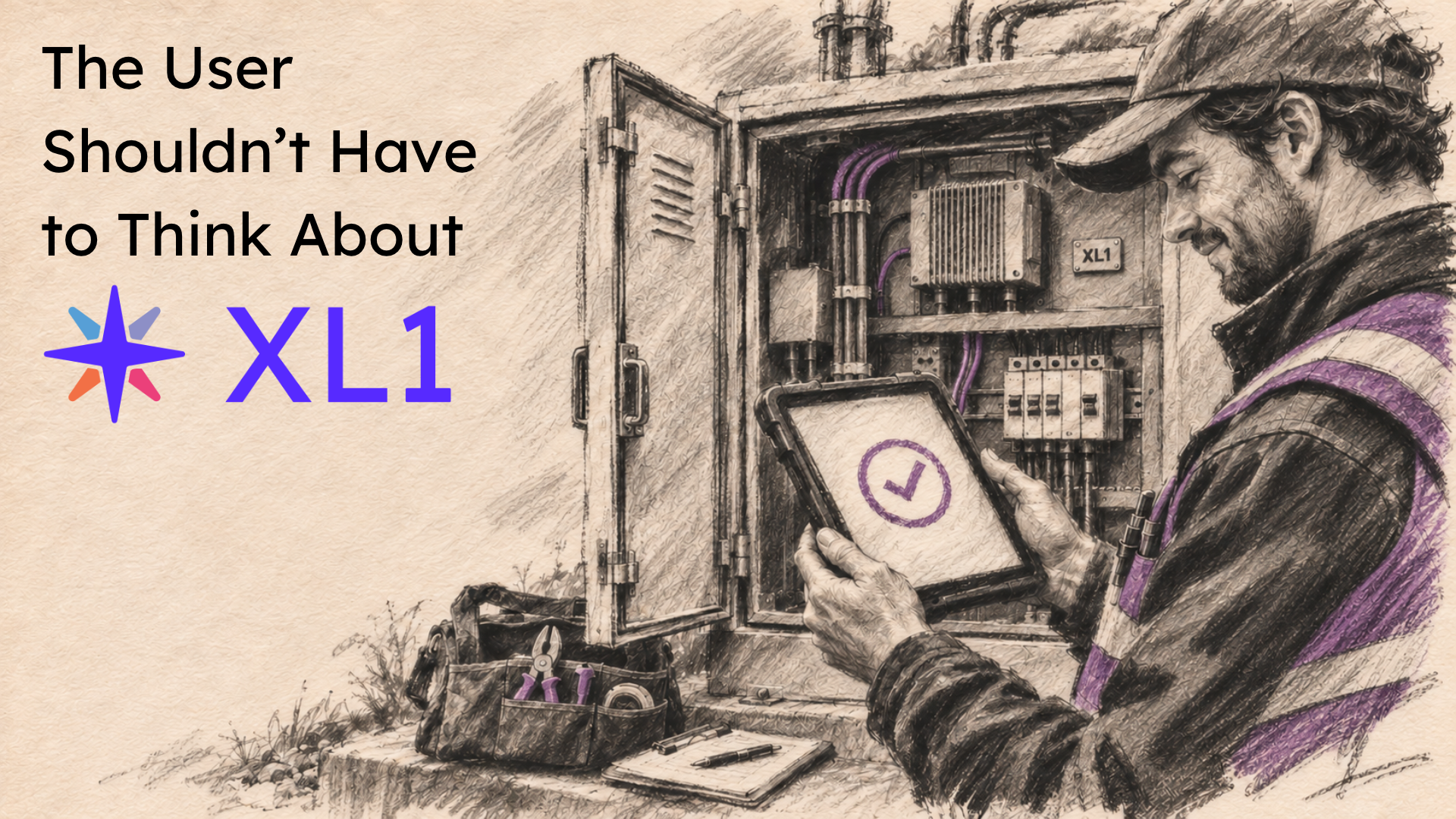
A field technician finishes an inspection, attaches the results, and taps Submit. The application asks them to acquire a token before the record can be processed. A task that should have take
A field technician finishes an inspection, attaches the results, and taps Submit. The application asks them to acquire a token before the record can be processed. A task that should have taken seconds now involves understanding a wallet balance and finding out how to fund it. The technician still has six inspections to complete before heading home.
For some blockchain applications, managing tokens is an expected part of participation. An inspection tool serves a different purpose. Its users need to understand what they are submitting and whether the submission succeeded. Making them manage the infrastructure bill introduces another job into their working day.
For developers building on XYO Layer One, that creates a practical product decision. XL1 pays for on-chain activity, so someone needs to provide it. The application’s design determines how much of that responsibility reaches the person using the product.
Consider a hypothetical inspection service built with XYO Layer One. A company subscribes to the service, and its technicians use an app to submit records. The developer could explore a model in which the service funds its own submissions and includes those operating costs in the subscription. Alternatively, customers might manage their own transaction funding because they want direct control over their blockchain activity.
Those approaches serve different needs. A business purchasing software for hundreds of employees may prefer centralized billing and administration. A customer already operating blockchain infrastructure may want control over balances and transaction approval. The choice belongs in the product’s commercial design, alongside decisions about accounts and permissions.
Funding transactions through a service would require an appropriate implementation, including authorization and control over who can spend its balance. It should be treated as an application architecture to evaluate, rather than an automatic fee-sponsorship feature of XYO Layer One. Paying for a submission also needs to remain distinct from identifying who supplied the inspection record.
Once a service takes responsibility for transaction costs, it also takes responsibility for having enough XL1 available when customers need it. A subscription payment arriving in the company’s bank account does not replenish the account submitting blockchain transactions. Someone needs to monitor that balance and establish a process for funding it.
XYO Layer One’s transaction-fee documentation explains that gas covers processing and inclusion by a block producer, with the amount depending on transaction size and the scripts processed. A transaction with insufficient gas is not included in the blockchain. Developers therefore need to understand the submissions their application generates and account for their costs.
In the inspection example, a busy Monday morning could bring far more submissions than a quiet Friday afternoon. The operator should plan for that workload and establish alerts early enough to act. Customers should be able to finish their work without discovering the service’s funding problem themselves.
A simpler interface still needs to communicate what happened. If the technician’s phone has saved a report locally, the application should say so. If the service has received it but the blockchain transaction is awaiting inclusion, the status should reflect that stage. Calling the inspection record complete too early could cause a supervisor to rely on evidence that has not yet been anchored.
This becomes especially important when something fails. The application should preserve the technician’s work and explain whether another action is necessary. Where its design allows a retry, it should also account for the possibility that an earlier submission succeeded even though the confirmation did not reach the phone.
These are application responsibilities. Developers need to decide how their service tracks progress and reconciles the result before choosing the words displayed beside a green check mark. Users can have a straightforward experience while still receiving an accurate account of their submission.
An application that funds transactions also needs rules governing access to that funding. Otherwise, an automated script or a malfunctioning device could consume resources intended for customers. Authentication and spending limits become part of operating the service, with controls that fit the work customers actually perform.
For the inspection platform, that might mean restricting submissions to authorized staff and investigating an account that suddenly generates an unusual volume of requests. The operator would need a recovery process that lets legitimate work resume without losing reports already collected. A convenient interface depends on those operational decisions being made before a problem occurs.
At XYO, XL1 gives activity on XYO Layer One a native means of payment. Developers then have room to decide how that cost fits into the products they build. A customer-facing application should make that decision deliberately, with a funding model it can sustain and transaction statuses its users can trust.
The technician finishing the last inspection of the day should be able to see that the report was received and understand whether any work remains. XL1 can support the transaction behind that result while the technician gets on with the next assignment.