For many Nigerian small businesses, the problem is no longer how to get online. They are already there. They have Instagram pages, WhatsApp catalogues, TikTok accounts, paid ads, product vide
For many Nigerian small businesses, the problem is no longer how to get online. They are already there.
They have Instagram pages, WhatsApp catalogues, TikTok accounts, paid ads, product videos, and sometimes even influencers pushing their brands. Yet, after the posts go up and the ad budget runs out, many still face the same brutal question: where are the customers?
That question sits at the heart of TikTok’s latest pitch to Nigerian SMEs.
At the launch of digital commerce labs in Lagos, TikTok unveiled Symphony, a free AI-powered content creation tool that can generate complete advertisements from simple text prompts in minutes. The message was straightforward: small businesses no longer need expensive agencies, video crews, or advanced marketing skills to create professional content.
But beneath the product demonstration lies a more important question: if creating content is becoming easier than ever, why are so many businesses still struggling to grow?
The real reason many SMEs fail is not lack of content
During the presentation, TikTok cited a statistic that deserves more attention than the AI tools themselves. According to the company, 40% of SMEs fail because they cannot generate enough demand for their products. Another 19% struggle with competition, while 17% point to weak product offerings.
Those numbers tell an important story.
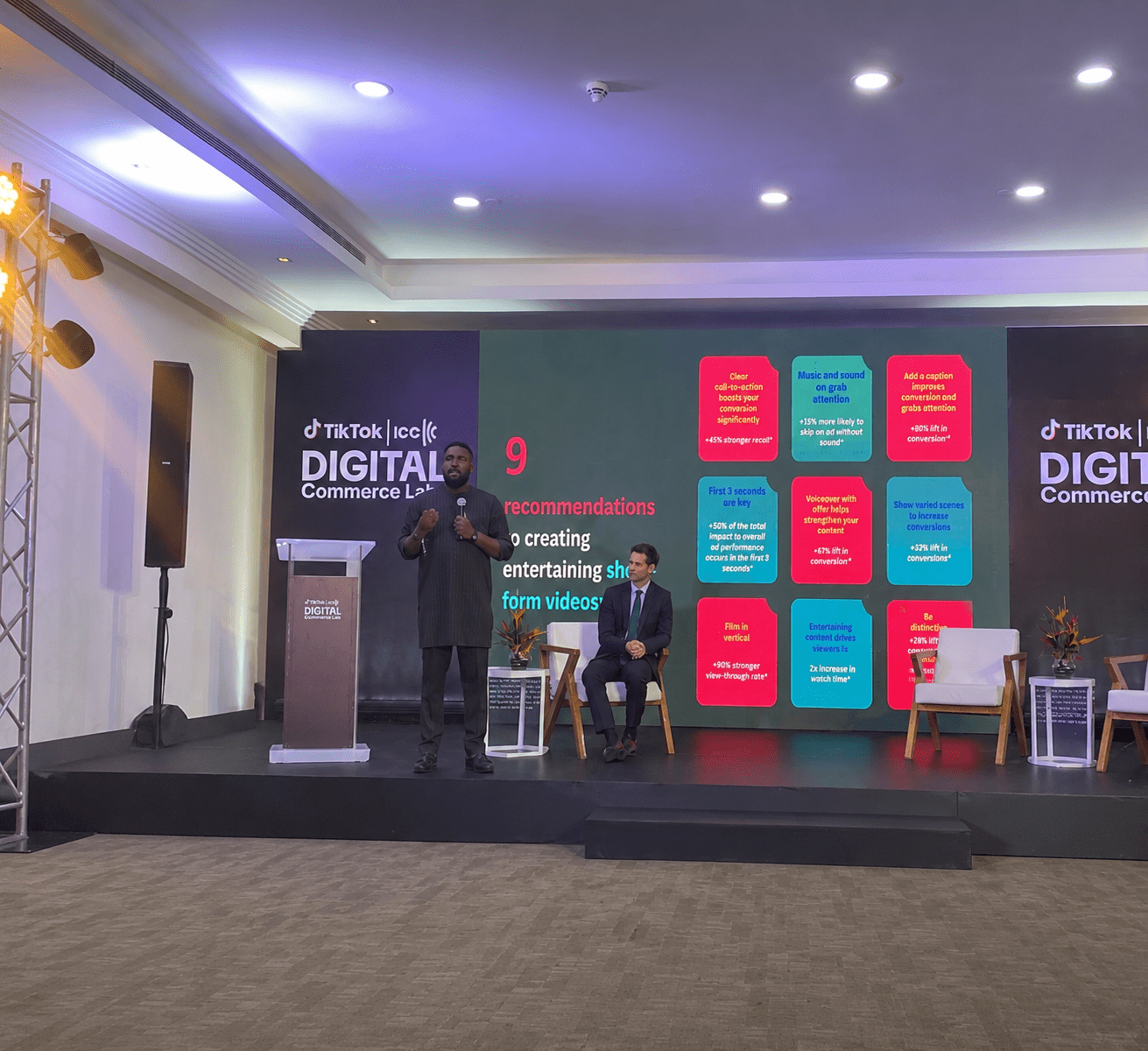
For years, the conversation around small business growth has focused heavily on visibility. Businesses were told they needed websites, social media pages, influencers, and digital advertising. Yet TikTok itself noted that about 60% of SMEs already use social media.
This distinction matters because AI tools such as Symphony primarily solve the production side of marketing. They help businesses create content faster and more affordably. They do not automatically create customer demand.
A business can now generate ten advertisements in a day. But if the product is poorly positioned, overpriced, or targeted at the wrong audience, AI will only help distribute those problems faster.
TikTok’s strongest argument is that it has fundamentally changed how businesses reach customers.
Traditional social platforms rewarded audience size. Businesses that started earlier accumulated followers and enjoyed a significant advantage over newer accounts. TikTok believes its recommendation engine has changed that equation.
“When you start on TikTok, it’s the age of content,” the presenter said. “It’s not about the followers that you have. It’s about the quality of the content.”
A business with 500 followers can potentially compete with a business that has 500,000 followers if its content performs well. In theory, this creates a more level playing field.
An entrepreneur at the event, fashion retailer Oluwatobi Anointing, described how consistent content creation helped build her business from university days into a growing online fashion brand.
“I was posting my business for three months every day, and nobody bought anything from me,” she said. “But I kept showing up.”
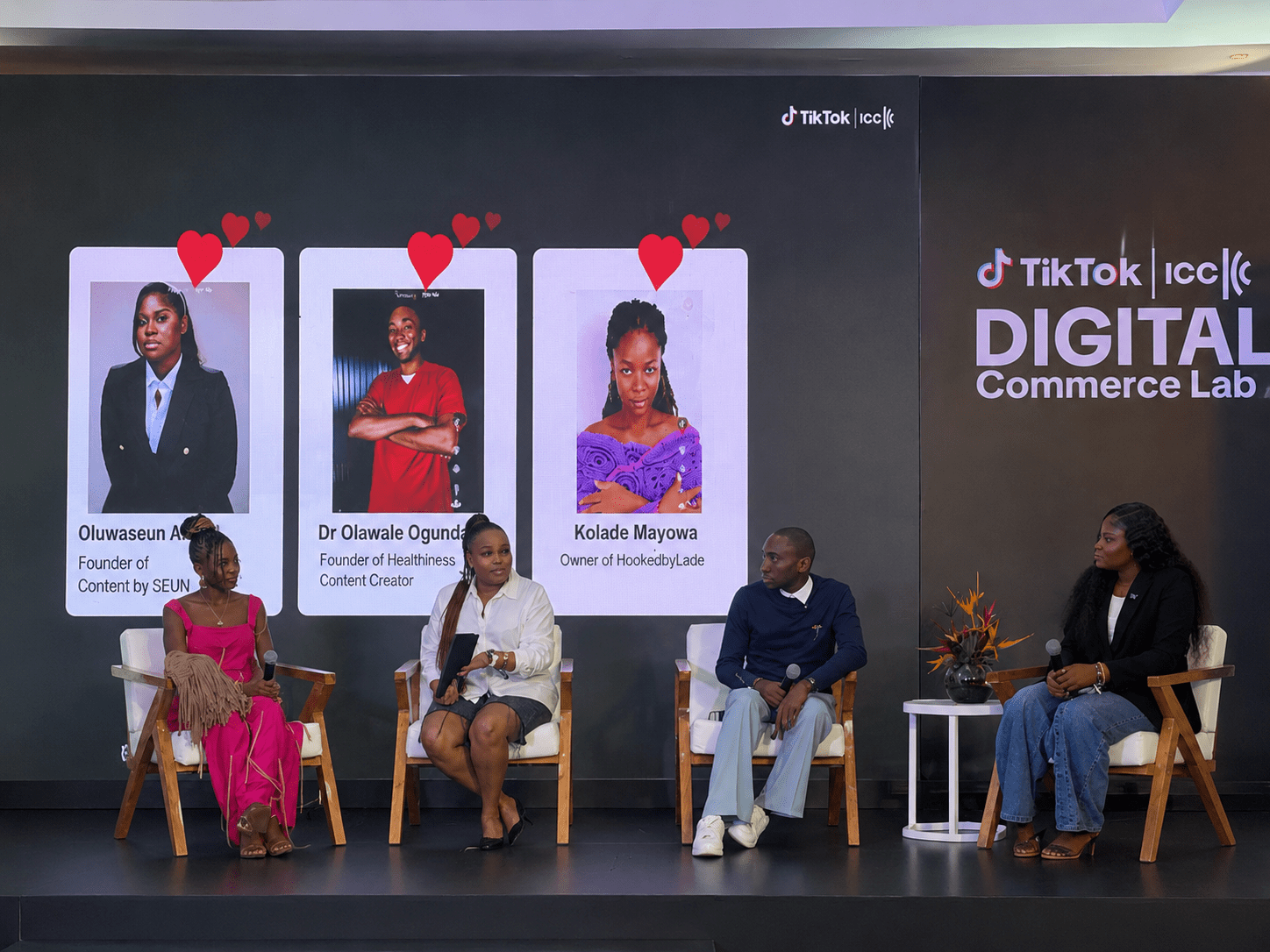
Medical doctor and founder of Healthkraft Africa, Dr Olawale Ogunlana, explained that his most successful content was not necessarily entertaining.
“I also realised that that type of voice was a voice of reason that was needed. So some people are always saying, oh, do I need to be funny to create content on TikTok? No. The answer is actually no. You just need to be real. You need to answer real questions. You need to solve real problems for people,” he said.
All this explains something important about TikTok’s ecosystem: success often comes from consistency and relevance rather than production quality alone. Ironically, that may limit the impact of AI-generated content.
As more businesses gain access to tools that can instantly create advertisements, content itself becomes less scarce. The competitive advantage shifts back to storytelling, authenticity, and understanding customer behaviour. In other words, if everyone can create content with AI, content creation is no longer the differentiator.
TikTok’s bigger ambition is advertising automation
The most significant announcement from the event may not have been Symphony at all.
Alongside its content-generation tools, TikTok showcased a broader suite of AI-powered advertising products designed to automate marketing decisions. The company says its systems can analyse billions of behavioural signals to determine who should see a particular product.
Advertising platforms increasingly believe that algorithms can make better marketing decisions than humans. Meta has moved aggressively in this direction with Advantage+ campaigns. Google continues expanding AI-driven advertising through Performance Max. TikTok is now pursuing a similar strategy.
The vision is simple: business owners focus on running their companies while AI handles customer targeting, campaign optimisation, product recommendations, and media buying.
“I want to run an ad for my product. This is the website link. Please help me run my ad,” the presenter said while demonstrating a new AI-assisted advertising workflow. “It just does it.”
For resource-constrained SMEs, this is a big deal.
Many small business owners do not have dedicated marketing teams. They are simultaneously founders, salespeople, customer service representatives, logistics managers, and accountants. Removing technical barriers to advertising could allow them to compete more effectively.
TikTok also revealed that Nigeria has approximately 9.8 million monthly active users on the platform, and they spend an average of 70 minutes there. That concentration of attention represents a significant opportunity for businesses.
Symphony may make it easier for businesses to create advertisements. TikTok’s ad automation tools may make it easier to distribute them. But the fundamentals of building a successful business still involve creating value, understanding customers, and staying resilient through uncertainties.
Read Also: 59% of Nigerian TikTok users follow football as 64% of women access sports through TikTok