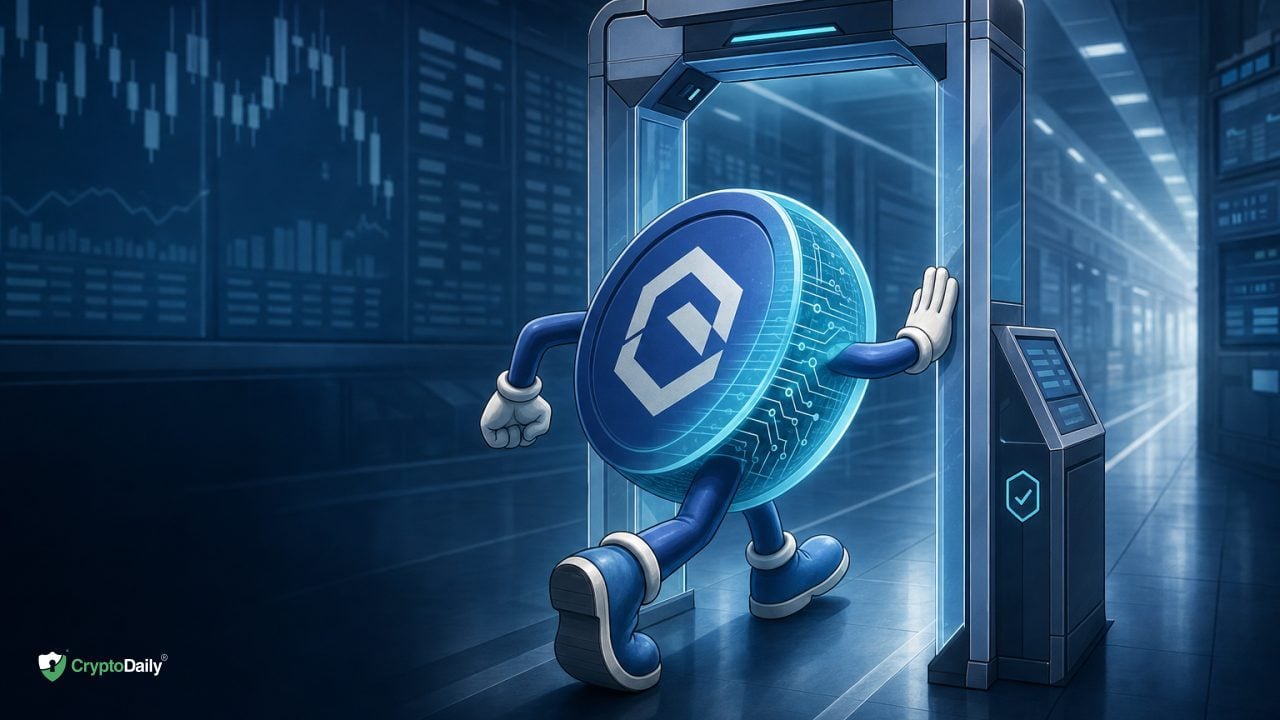
Altcoin narratives tend to run hot when liquidity is abundant and uncertainty cools down. But in 2026, the market’s center of gravity is shifting toward assets and projects that can stand up
Altcoin narratives tend to run hot when liquidity is abundant and uncertainty cools down. But in 2026, the market’s center of gravity is shifting toward assets and projects that can stand up to institutional due diligence and regulatory scrutiny.
This article explains the emerging push for stock-market-style token disclosures, how Blockworks’ Token Transparency Framework (TTF) fits in, and what these standards could mean for the next altcoin cycle. You’ll get practical checklists, a comparison to existing processes, and ways founders and investors can adapt now.
Timing matters: market flows and new industry coalitions are aligning to make transparency a front-and-center driver of listings, liquidity, and risk management.
Yes—if the goal is a deeper, more durable altcoin season fueled by institutional participation, stock-market-style transparency (or something close to it) could become a de facto requirement. The Token Transparency Framework is the clearest attempt to standardize disclosures across crypto, but it’s voluntary and not a substitute for securities registration. Still, it can reduce information asymmetry, speed diligence, and make altcoin liquidity more investable.
- More than 40 firms formed the Transparency Alliance to back standardized token disclosures (CoinDesk).
- TTF uses B‑1 one‑time and B‑2 continuous filings, labeling completeness rather than quality (Blockworks).
- TTF’s dashboard showed 48 filings as of June 18, 2026, signaling rapid uptake (Blockworks).
- Meanwhile, May 2026 spot+derivatives volumes fell 3.45% to $4.41T while RWA perps hit a record $211B—flows are selective and data-driven (CoinDesk Research).
What is the Token Transparency Framework and how does it mirror stock filings?
The Token Transparency Framework (TTF) is a public disclosure template designed to standardize the information crypto projects share with markets. Spearheaded by Blockworks, it breaks disclosures into two filing types: B‑1, a one‑time, S‑1‑style filing for new or evolving tokens; and B‑2, a continuously updated report intended for more mature protocols. Crucially, filings are labeled “complete” or “partial” for transparency of scope; they’re not graded for quality or investment merit (Blockworks).
The framework borrows the spirit of stock-market disclosure—clarity on supply, governance, treasury, code audits, and risk—without claiming legal parity with SEC registrations like S‑1 or S‑3 (SEC). It’s an industry-led signal to institutions that the sector is ready to supply consistent, comparable data across projects.
Momentum is tangible: the live TTF dashboard logged 48 filings by June 18, 2026, after templates launched in mid‑2025 (Blockworks). That acceleration suggests protocols and exchanges see practical value—either for listings, market making, or buy-side diligence.
Why could disclosure be the unlock for the next altcoin season?
In prior cycles, altcoin rallies leaned on momentum, retail enthusiasm, and narrative density. Today’s liquidity is choosier. In May 2026, aggregate CEX spot+derivatives volumes slipped 3.45% to $4.41 trillion, while RWA perpetuals set a new high at $211 billion—an institutional tell that capital prefers cleaner theses with measurable cash flows or collateral structures (CoinDesk Research).
For altcoins to capture that bid, counterparties need visibility into unlock schedules, treasury policies, governance mechanics, and security posture. That’s the market gap TTF aims to close. On May 27, 2026, more than 40 firms—including Coinbase, Kraken, and Binance.US—joined the Transparency Alliance to support these standards, a signal from major venues and service providers that consistency beats opaque, project-by-project data hunts (CoinDesk).
In practice, standardized disclosures can shorten the diligence cycle for listings, reduce basis risk for market makers, and make it easier for risk committees to allocate to altcoins. None of this guarantees a rally. But it lowers friction where it matters: onboarding, market depth, and the confidence to hold positions across a token’s full emissions curve.
How would TTF change what investors see before buying a token?
Most investors cobble together details from whitepapers, GitHub commits, governance forums, block explorers, and social media. TTF centralizes the must-knows in a fillable, comparable format. A B‑1 filing should surface the project’s mission, token mechanics, allocation tables, vesting schedules, treasury controls, governance rights, audit history, and key risks. B‑2 filings keep these sections current—vital when treasuries shift stables or governance charters evolve (Blockworks).
For investors, the benefit is less detective work and fewer nasty surprises. Instead of reverse-engineering emissions from on-chain clues, you can quickly compare two projects’ float dynamics, lockups, and governance incentives. The label of “complete” or “partial” tells you whether you’re seeing the whole picture or need to pull extra threads.
- Checklist for buyers using TTF:
- Confirm total supply, current circulating supply, and time-based emissions curve; map dates to catalysts.
- Scrutinize team/investor vesting cliffs and any off-chain side letters affecting unlocks.
- Review treasury composition (stables vs volatile assets), custody setup, and spending policy.
- Check governance: token vs multisig control, quorum requirements, and emergency powers.
- Read audit summaries and bug bounty scope; match versions to deployed contracts.
- Note any legal or regulatory disclosures, especially jurisdictional constraints.
The upshot is comparability. When tokens disclose in the same language, allocators can price risk faster—and reward the projects that actually manage it.
How does TTF compare with exchange listings and traditional S‑1s?
It helps to separate categories: TTF is an industry template, exchange listings are venue-specific processes, and S‑1s are formal securities registrations. They overlap in spirit—investor-relevant information—but diverge in purpose, scope, and legal effect.
Area TTF (B‑1 / B‑2) Typical CEX Listing SEC S‑1 (Equities) Purpose Standardize token disclosures; improve comparability Assess eligibility, risk, and compliance for trading Register securities for public offering Legal status Voluntary, industry-led; not a registration Venue policy; can require documents and attestations Regulatory filing with legal liability Update cadence B‑1: one-time; B‑2: ongoing updates Periodic reviews; ad hoc updates pre/post listing Initial S‑1; ongoing 10‑K/10‑Q/8‑K equivalents Scope Tokenomics, governance, treasury, risks, audits KYC/AML, legal opinions, security checks, tokenomics Business, financials, risk factors, MD&A, governance Labeling “Complete” vs “Partial” for disclosure breadth Pass/fail listing decision; possible conditions N/A; formal acceptance by regulator
Think of TTF as a public, comparable dossier that can slot into multiple workflows—exchange vetting, market-making risk models, or allocator IC memos. It is not a compliance shield, nor does it convert a token into a security or non-security. It simply reduces ambiguity where ambiguity has been expensive.
What are the trade-offs and blind spots of voluntary standards?
Voluntary standards work when incentives line up. Many projects will file to access listings or capital; others may avoid disclosures that highlight concentrated ownership, governance centralization, or thin audits. This selection bias can skew comparisons if you only look at filers.
Completeness labels help, but they don’t verify truthfulness. TTF doesn’t replace audits (financial or code) and can’t force synchronized off-chain reporting from affiliated entities. Teams might also “optimize” narratives around metrics that look good on paper yet miss economic reality, like high DAO participation with low tokenholder turnout.
Jurisdictional complexity is real. A token touching multiple countries may face conflicting disclosure norms or constraints on sharing sensitive commercial data. And while B‑2 promises ongoing updates, execution rigor is yet to be tested over multi-year market cycles.
Pro tip: Treat a TTF “Complete” label as a map, not a seal of approval. Cross-check on-chain data, governance records, and audit repositories before sizing a position.
How can teams and communities prepare for higher disclosure expectations?
If you’re a founder or DAO contributor, assume counterparties will expect TTF-level clarity even if they don’t say so. Start by building a durable disclosure muscle: who owns which sections, what sources of truth are canonical, and how updates propagate to exchanges, market makers, and the community.
- Team checklist for disclosure readiness:
- Draft a B‑1 package: supply schedules, allocation tables, vesting mechanics, governance design, and risk factors.
- Stand up live data: an on-chain dashboard for circulating supply, treasury balances, and unlock timelines.
- Document security: audit reports, diff notes across contract versions, and active bug bounty parameters.
- Codify treasury policy: custody arrangements, stablecoin allocation rules, and emergency procedures.
- Formalize governance: quorum thresholds, proposal types, and controls for admin keys and multisigs.
- Legal hygiene: jurisdictional analysis and consistent wording on rights, restrictions, and disclaimers.
Getting this right isn’t just optics. It can improve business operations, cut listing friction, and reduce the rumor tax during volatile periods. Communities that know the roadmap—and the numbers behind it—tend to hold conviction longer.
How might deeper transparency affect liquidity, valuation, and listings?
Transparent tokens are easier to underwrite. Market makers can quote tighter spreads when unlock schedules and treasury policies are explicit. Exchanges can green-light listings faster when disclosures reduce unknowns. And buy-side desks can model risk-adjusted returns with fewer caveats, which lowers hurdle rates for allocation.
The near-term signal is encouraging: by mid‑June 2026, 48 TTF filings were live, and a coalition of 40+ firms publicly supported the approach (Blockworks; CoinDesk). If exchanges and custodians start integrating TTF fields into their onboarding templates, projects that file early could move through pipelines faster than peers.
Valuation-wise, better data cuts both ways. Some tokens will re-rate down as risks are clarified. Others may earn a premium for clean governance, prudent treasuries, and measured emissions. Either way, price discovery gets sharper—which is the point if the goal is a resilient altcoin season rather than a fleeting melt-up.
Common Mistakes
- Assuming “complete” equals “good.” Completeness is about breadth, not merit. Still verify claims and evaluate incentives.
- Ignoring unlock mechanics. Emissions cliffs can swamp catalysts; map vesting to likely liquidity and MM capacity.
- Relying on a one-time PDF. If there’s a B‑2, track updates; policies, treasuries, and governance can change quickly.
- Overfitting to metrics. High DAO proposal count or audit badges don’t guarantee robust security or user alignment.
- Skipping on-chain validation. Cross-check treasury addresses, supply data, and governance votes with block explorers.
For ongoing coverage of token standards, listings, and market structure, visit Crypto Daily.
Frequently Asked Questions
Is TTF a legal requirement or a path to compliance?
No. TTF is voluntary and industry-led. It can complement regulatory obligations or exchange requirements but is not a substitute for registrations, licenses, or legal opinions in any jurisdiction.
Will regulators adopt or recognize TTF?
It’s possible regulators may view standardized market disclosures positively, but there is no formal endorsement. TTF can, however, make supervisory conversations easier by demonstrating consistent, publicly accessible information.
How does TTF handle sensitive partnerships or competitive data?
Projects may withhold information they deem sensitive, which is why filings can be labeled “partial.” Investors should weigh the reasons for omissions and, when necessary, request additional, private diligence materials under NDA.
What if a token refuses to file under TTF?
That’s a choice. Some projects might rely on other disclosure channels or bespoke data rooms. The market response will vary; exchanges, market makers, and institutions could prefer tokens with standardized, public filings for speed and comparability.
Does a B‑2 continuous filing mean real-time on-chain updates?
Not necessarily. B‑2 is an ongoing disclosure commitment, but cadence and depth depend on the project. Best practice is to pair B‑2 updates with verifiable on-chain dashboards for supply, treasury, and governance activity.
Can NFTs or gaming tokens use TTF?
Yes. The framework is token-agnostic. Projects tied to creators or games may need extra sections—for example, IP licensing or revenue-sharing mechanics—but the core pillars (supply, governance, treasury, security, risk) still apply.
How should I factor TTF into portfolio sizing?
Use TTF to sharpen risk assessments—then size positions based on liquidity, unlock overhang, and governance health. Treat it as one input alongside on-chain analytics, team track record, and broader market conditions.
Disclaimer: This article is provided for informational purposes only. It is not offered or intended to be used as legal, tax, investment, financial, or other advice.