Why Are Banks Moving Deposits On-Chain Now Tokenized deposits are moving from pilots to planned networks. On September 24, 2026, The Clearing House announced Quant as the technology provider
Why Are Banks Moving Deposits On-Chain Now
Tokenized deposits are moving from pilots to planned networks. On September 24, 2026, The Clearing House announced Quant as the technology provider for its On-Chain Money Initiative. On the same day, UK Finance announced the first live customer transactions using tokenized sterling deposits.
This guide explains what these digital bank deposits are, how they work, and what the news does and doesn't confirm. It also covers who can use them today and what remains open for QNT holders.
Tokenized deposits are bank deposits in digital form. According to The Clearing House's September 24, 2026 announcement, Quant was chosen for a planned US network, with access for participating institutions expected in the first half of 2027. The announcement does not state that QNT is required.
What Are Tokenized Deposits?
A tokenized deposit is a bank deposit recorded in digital form that can move on a blockchain or similar ledger. It is still the bank's liability, meaning the bank owes that money to the customer.
Insurance follows the usual rules. A proposed FDIC rule would treat tokenized deposits that meet the legal definition of a deposit like any other deposit, so standard limits and ownership rules still apply.
Tokenized deposits vs. stablecoins differ. Separate companies issue stablecoins, and reserve assets back them instead of a bank's deposit book.
How Do Tokenized Deposits Work?
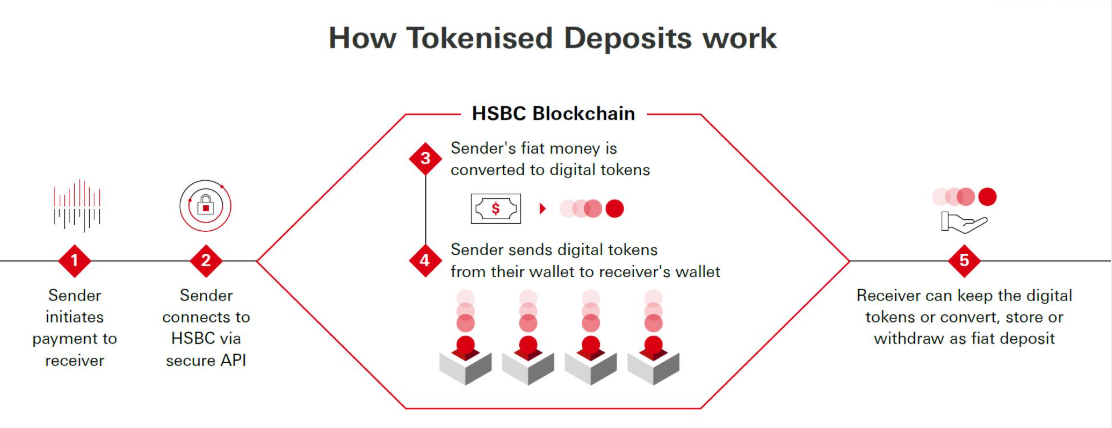
A simple example shows the idea. This flow is illustrative and is not the confirmed design of the US network.
A customer asks Bank A to send money to a customer of Bank B.
Bank A checks the payment and issues a matching deposit token.
A shared network passes the instruction between both banks' systems.
Bank B receives the token and credits its customer.
Clearing and settlement follow the network's own rules.
Rules can sit inside the payment itself. Funds can stay locked until a condition is met, then release automatically. Settlement means the final transfer of value between banks. Programmable rules aim to make that step faster and cleaner.
Speed needs context. RTP already supports immediate payments in the US, so the aim is not only faster payments. The goal is programmable, around-the-clock settlement that connects with rails banks already use.
What Does a Tokenized Deposit Look Like for a Bank Customer?
The UK pilot gives the clearest real example so far. According to UK Finance's September 24, 2026 announcement, two live remortgage completions used tokenized sterling deposits. In each case, the deposit funds were locked and then released automatically once the completion conditions were met. UK Finance said this reduces manual checks and settlement delays.
For a borrower, the practical effect is that money moves only when the agreed conditions are satisfied. Reports on the pilot also note that customers kept earning interest on their funds until completion. The pilot was linked digitally with HM Land Registry, which UK Finance said could improve the efficiency of future transactions.
Why Did The Clearing House Pick Quant?
The Clearing House is a bank-owned operator that runs US payment networks, including RTP and CHIPS. Its September 24, 2026 announcement says Quant will supply the interoperability, orchestration, and transaction-management layer for the On-Chain Money Initiative, which the organization first announced in June 2026.
That layer coordinates clearing and settlement while connecting to the RTP and CHIPS networks banks already use. According to the same announcement, access for participating institutions is expected in the first half of 2027. The Clearing House has not said how many institutions will join at launch, as noted by Blockchain Reporter.
The announcement does not describe a competitive selection process or scoring criteria, so the exact reasons for the choice are not public. The stated reasoning is narrower. Sal Karakaplan, Chief Strategy Officer of The Clearing House, said that interbank infrastructure for tokenized deposits needs proven technology that can scale. The announcement also points to Quant's track record in regulated settings, including work with central and commercial banks in the UK.
Quant also offers tokenized deposits-as-a-service. As reported by Fintech Futures, Quant has been contracted to provide a bank-side solution for any US institution that processes through The Clearing House and lacks its own tokenized deposit tools.
How Does Quant Overledger Connect Banks?
Overledger is Quant's interoperability platform, meaning it helps different systems work together. It links systems, while the underlying ledgers still record the balances.
Quant says banks connect through APIs, which are standard software links. A March 2026 integration lets Murex clients issue and settle tokenized deposits inside existing software, according to the companies.
What Has the UK Pilot Actually Shown?
UK Finance announced on September 24, 2026, that seven banks had completed the first live customer transactions using tokenized sterling deposits. The Great British Tokenised Deposit (GBTD) initiative covered two remortgage completions and online marketplace payments.
Participants included Barclays, HSBC UK, Lloyds, Monzo, Nationwide, NatWest, and Santander. Quant built the platform, with EY and Linklaters among the supporting firms. According to Unchained, the live pilot phase began in September 2025 with six banks, and Monzo joined as the seventh participant later.
UK Finance said more pilots are expected over the next few months, including tests of digital asset settlement that link tokenized customer money with digital assets.
This is a real result, but a small one. The sources reviewed for this article do not include transaction values, measured cost savings, or fraud figures. A handful of live transactions does not prove national scale.
What Benefits Do Banks Expect?
The Clearing House says the network targets corporate treasury, liquidity management, cross-border payments, and digital asset settlement. It also says the initiative responds to demand from businesses and financial institutions for more speed, automation, and flexibility in how money moves. These are stated goals, not measured results.
Claims about lower fraud or lower costs still need independent evidence. Pilot data will matter more than marketing. Useful evidence would include transaction volumes, settlement times, error rates, and cost comparisons against current methods.
Tokenized Deposits vs Stablecoins: Which Risks Differ?
Feature
Tokenized Deposits
Stablecoins
Issuer
Commercial bank
Token issuer
Main risk
Bank credit risk
Issuer and reserve risk
Insurance
Standard deposit rules
No pass-through cover proposed
Payment links
Existing bank rails
Mostly public chains
Bank credit risk means the bank itself could fail. Stablecoin risk adds the issuer's reserves and its redemption promise. Neither model is risk-free.
Who Can Use Tokenized Deposits Today?
For most retail readers, access is limited at this stage. In the US, the On-Chain Money Initiative is a planned network, and The Clearing House expects access for participating institutions in the first half of 2027. Nothing in the announcement describes a product open to individual customers.
In the UK, live use so far has been limited to the pilot transactions run by the seven participating banks. The sources reviewed do not explain how customers were selected or when wider access will open.
Realistic next steps for retail readers are simple. They can follow official updates from The Clearing House and UK Finance, and they can check their own bank's announcements for any tokenized deposit plans. Corporate treasury teams are the group the US network targets first.
Does the Quant Partnership Require QNT?
Bank adoption does not automatically create token demand.
Item
Status
Quant selected by The Clearing House
Confirmed
RTP and CHIPS connectivity
Planned
Network access in the first half of 2027
Expected
QNT is needed for transactions
Not disclosed
An older description of Overledger said transactions were powered by QNT, with fiat payment options for corporate customers. The 2026 announcements do not say whether that applies here. CryptoSlate reported that The Clearing House and Quant do not say participating banks must hold QNT, pay network fees in it, or use it as a settlement asset.
At first, the news seemed like a clear win for the token. On a second read, that view becomes less certain. A bank network may not need a token at all.
What readers can check before drawing token-utility conclusions:
Fee model: whether network fees are paid in QNT, in fiat, or in another form.
Transaction requirements: whether any step needs QNT to be held, locked, or used.
Participation terms: whether the final participation requirements mention the token.
Deposits-as-a-service terms: how banks without their own tools will pay Quant.
Launch details: which institutions join at launch and what they use.
Primary documents: updates published by The Clearing House and Quant, not social media posts.
What Are the Main Risks and Open Questions?
Timing: access is only expected in the first half of 2027, and delays happen.
Rules: US legal treatment is still being clarified.
Vendor concentration: one provider sits at the center of the network.
Token link: QNT's role has not been confirmed.
Scale: pilots do not always grow into live systems.
Evidence: claimed fraud and cost savings lack independent measurements.
Design: reports note that final features and participation requirements may still change.
A pilot is not a launch. Regulators and banks will set the pace.
Editorial Analysis: What Should Readers Watch Next?
This section is CoinGabbar editorial analysis based on the announcements cited above. It is not a quote from an outside expert.
The stronger signal is that banks picked a connection layer, not a new currency. Institutional blockchain adoption seems to favor tools that fit old systems.
The main concern is vendor concentration. If one platform fails, many banks could feel it. The biggest unknown remains QNT's role. And the first-half 2027 timeline matters more than any headline.
Readers should verify details on the official pages linked above before drawing conclusions.
Conclusion: What Tokenized Deposits Mean for Banking
Tokenized deposits turn ordinary bank balances into programmable digital money. Quant now supplies technology for a live UK pilot and a planned US network.
What remains uncertain is the US launch timing and QNT's role. The UK pilot has live results, while the US plan is still ahead of launch. Further official updates will settle both.
Disclaimer
This article is for informational purposes only and is not financial advice. Crypto assets and tokenized products carry high risk, and outcomes remain uncertain. Readers should research independently and consult a licensed adviser before making any decision.