Tokenized Stocks Objections: Why 33 Firms Challenge OKXICE Listings Wall Street is saying “not like this” to some of crypto’s newest products. A public notice from OKXICE, a new venue for tra
Tokenized Stocks Objections: Why 33 Firms Challenge OKXICE Listings
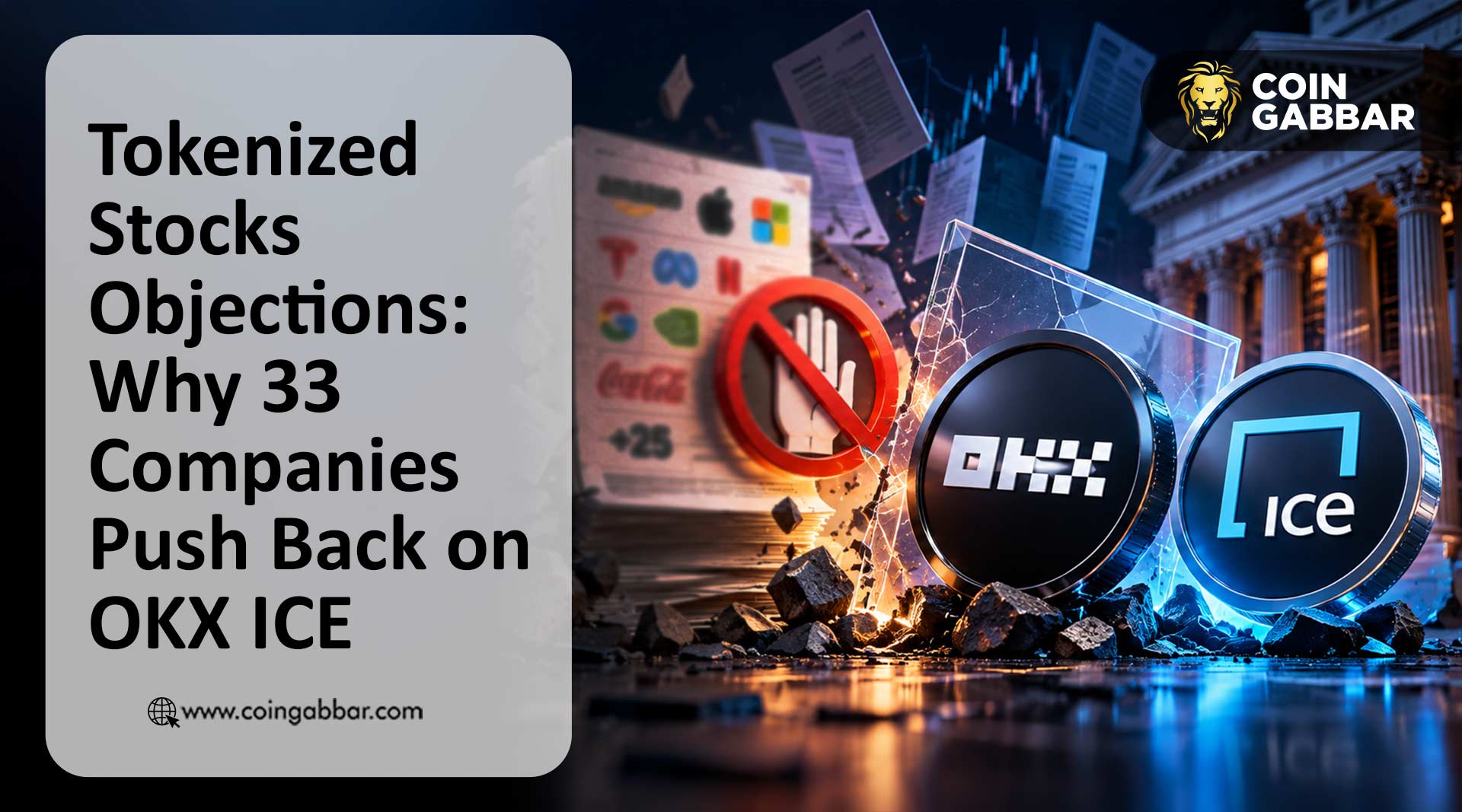
Wall Street is saying “not like this” to some of crypto’s newest products. A public notice from OKXICE, a new venue for trading tokenized US stocks, lists 33 companies that have formally objected to third-party tokens of their shares, including JPMorgan, AMD, Coca-Cola, and Dell.
These tokenized stocks objections do not necessarily mean companies reject tokenization itself.
Here is a plain-language guide to the rule behind them, the full list, and what traders should know.
Who Objected on OKXICE
TheOKXICE public notice, dated 27 October 2026, names 33 issuers that formally objected.
The list is a required disclosure under the SEC order, so it can change as more companies respond. Our own grouping of the full list:
Group
Companies
Banks (3)
JPMorgan, Goldman Sachs, Wells Fargo
Chips and hardware (11)
AMD, Broadcom, Qualcomm, Intel, Arm, Marvell, Applied Materials, Applied Optoelectronics, Western Digital, Sandisk, Dell
Software, cloud and AI (12)
Microsoft, Alphabet, Oracle, IBM, Adobe, Intuit, Cisco, CoreWeave, Applied Digital, AppLovin, Cerebras, IonQ
Other sectors (7)
Coca-Cola, McDonald’s, Caterpillar, UnitedHealth, Moderna, Verizon, Rocket Lab
The 30-Day Window Explained
The SEC created this process in itsSeptember 2026 exemptive order.
Before a platform lists a token of a stock made by an unaffiliated third party, it must send the issuer a written notice, and trading cannot start until at least 30 calendar days after the issuer receives it.
The letter goes to the address of the issuer’s principal executive offices, and the sender can request proof of delivery.
If the issuer objects in writing within 30 days, the platform cannot offer that token
The operator must update its public disclosure within five business days
If the issuer stays silent, trading can begin once other conditions are met
So silence works as permission, even without any endorsement. A company still weighing the risks may therefore prefer to object first.
OKXICE is a joint venture, with 50% owned by Intercontinental Exchange and 50% by OKX’s US arm, according to thevenue’s notice page.
Trading runs through Uniswap v4 pools on X Layer, paired with stablecoins such as USDC, around the clock.
Only approved wallets holding a non-transferable credential can trade after identity and sanctions checks.
A third-party tokenizer holds the real shares one-for-one through a registered broker-dealer, and the venue is not registered with the SEC.
There is no order book, and the venue publishes all trades from the past 30 days, updated within 10 minutes.
What an Objection Does and Does Not Mean
The SEC’s own examples of issuer concerns include keeping an accurate shareholder register when shares move on-chain and possible price distortions in the underlying stock, since pool prices follow asset ratios rather than the main market.
Those worries explain why these tokenized stock objections can come from companies that are not opposed to blockchain.
The order also requires listed tokens to give holders the same dividends and voting rights as the real shares, with proxy materials passed on at no cost to the issuer.
An objection also works one venue at a time, as thefull SEC order frames it. Each platform must send its own letter, and the order runs five years, until September 2031, while the SEC collects public comment.
In plain terms, “no” can mean “not comfortable with someone else tokenizing our shares," which is different from “we reject tokenization”.
Risks Traders Should Check
The filing lists risks that apply even to approved tokens. Prices may drift away from the real stock outside regular market hours, pool liquidity can be thin, and liquidity providers may be lightly capitalized.
Tokens are claims held through a tokenizer, so a broker-dealer failure could delay or limit recovery.
The same filing also says administrators can upgrade contracts without a timelock and that one core contract was audited internally only.
Anyone watching the Tokenized Stocks Objections story should treat these as separate from the objection issue.
Trading pauses whenever the underlying stock is halted
Strict volume caps apply: 0.25% of prior-month average volume for the largest stocks, 2.5% for others
Transactions on the blockchain are final
Conclusion
The 33 tokenized stocks objections show how much control the SEC framework gives companies and how cautious many large firms remain about third-party tokens.
Objections are not a verdict on tokenization itself, and the rules may change as the SEC reviews comments.
Check the venue’s latest filing, understand the risks, and remember that this article is not financial advice.
Disclaimer
This article is for educational and informational purposes only and is not financial or investment advice. Crypto assets are high risk, their prices can be very volatile, and you can lose some or all of your money. Always do your own research and consider speaking with a licensed financial advisor before making investment decisions.