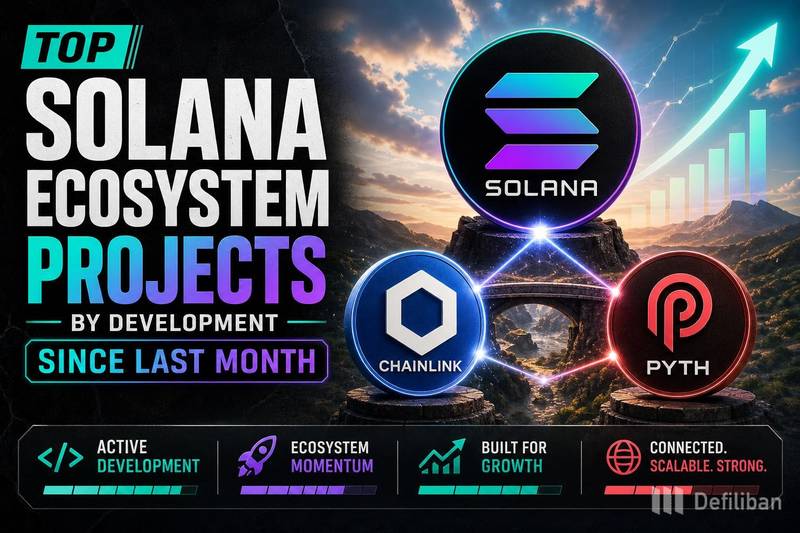
Solana ecosystem projects continue to attract developer attention, with SOL, PYTH, and cross-chain tools like Chainlink's LINK among the most actively discussed tokens in development-tracking
Solana ecosystem projects continue to attract developer attention, with SOL, PYTH, and cross-chain tools like Chainlink's LINK among the most actively discussed tokens in development-tracking circles over the past month. Evaluating which projects lead in development momentum requires a clear methodology and careful interpretation of publicly available repository data.
How Development Activity Is Measured Across Solana Projects
Tracking development momentum in the Solana ecosystem relies on observable signals from public code repositories. The most common metrics include 30-day commit velocity, merged pull request counts, and the number of active contributors pushing code within a given window.
For this evaluation, "since last month" refers to the trailing 30-day period from the current date. Projects must have at least one public repository on GitHub with consistent activity to qualify.
Scope matters when defining "Solana ecosystem." Native Solana projects like the SOL core client and Pyth Network's oracle infrastructure fall squarely within the ecosystem. Chainlink (LINK), by contrast, operates across multiple chains but maintains Solana-specific integrations, making it an ecosystem-bridging project rather than a Solana-native one.
TLDR KEYPOINTS
- Development activity is best evaluated through commit velocity, contributor count, and shipped milestones over a defined 30-day window.
- SOL and PYTH are Solana-native projects; LINK's relevance comes from cross-chain oracle integrations.
- Raw commit counts alone do not indicate project quality; readers should cross-reference with release notes and roadmap progress.
SOL, PYTH, and LINK: Positioning Within the Ranking
Solana (SOL)
The Solana core client and validator software repositories remain among the most actively maintained codebases in the ecosystem. Month-over-month contributor activity and release cadence serve as the primary indicators, with network upgrades and runtime improvements driving commit volume. Solana's market profile on CoinGecko reflects its standing as a top-tier Layer 1 blockchain by both developer engagement and market capitalization.
Pyth Network (PYTH)
Pyth Network's oracle infrastructure operates natively on Solana, providing price feeds used across DeFi protocols. Its development activity reflects both core oracle updates and expanding integration support for new data sources. Pyth's cross-protocol reach positions it as a critical infrastructure layer that benefits from the broader growth of Solana-native DeFi.
Chainlink (LINK)
Chainlink's development spans multiple blockchains, so isolating Solana-specific activity requires examining cross-chain integration repositories rather than the full Chainlink codebase. LINK's inclusion in Solana ecosystem rankings reflects its bridging role, not native Solana development. Readers interested in how cross-chain infrastructure intersects with broader market dynamics may find context in coverage of events like the Cyber Revolution Summit in the Philippines, where multi-chain interoperability has been a recurring theme.
What Developer Activity Rankings Actually Tell You
Commit counts are a starting point, not a conclusion. A project can show high commit volume from dependency updates, documentation changes, or automated tooling, none of which reflect meaningful product progress. Release notes and shipped milestones provide stronger signals of execution quality.
Development pace and token price often diverge. A project with accelerating code output may see flat or declining token performance if market sentiment is driven by other factors. This divergence is visible across the broader crypto landscape, including in how capital raises like Ripple's planned SPAC can shift attention independently of development fundamentals.
For ongoing monitoring, readers should track three inputs each month: merged pull request counts from primary repositories, net change in unique contributors, and whether announced roadmap milestones were delivered on schedule. Tools like Coin Metrics can supplement GitHub data with on-chain network activity metrics for a more complete picture.
Development activity rankings are analytical tools, not investment recommendations. They highlight where engineering resources are being deployed but cannot predict token price outcomes.
Disclaimer: This article is for informational purposes only and does not constitute financial or investment advice. Cryptocurrency and digital asset markets carry significant risk. Always do your own research before making decisions.
Read original article on defiliban.io