The United States-Iran ceasefire memorandum and the expected reopening of the Strait of Hormuz helped push Bitcoin (BTC) above the $65,000 psychological resistance level on June 15. At the ti
The United States-Iran ceasefire memorandum and the expected reopening of the Strait of Hormuz helped push Bitcoin (BTC) above the $65,000 psychological resistance level on June 15.
At the time of writing, Bitcoin was trading near $66,800 after climbing 4.9% in the past 24 hours while XRP jumped more than 13% overnight to change hands near $1.28, as per CoinGecko.
With Kevin Warsh taking office and the CLARITY Act moving closer to becoming law, optimism about a broader crypto market recovery is growing across social media.
Related: LIVE: Clarity Act enters final stage after Senate Committee vote
The shift in sentiment is also being reflected in public interest. Following the announcement of the U.S.-Iran peace deal, Google searches for both "crypto" and "Bitcoin" surged. However, they dropped later during the day.
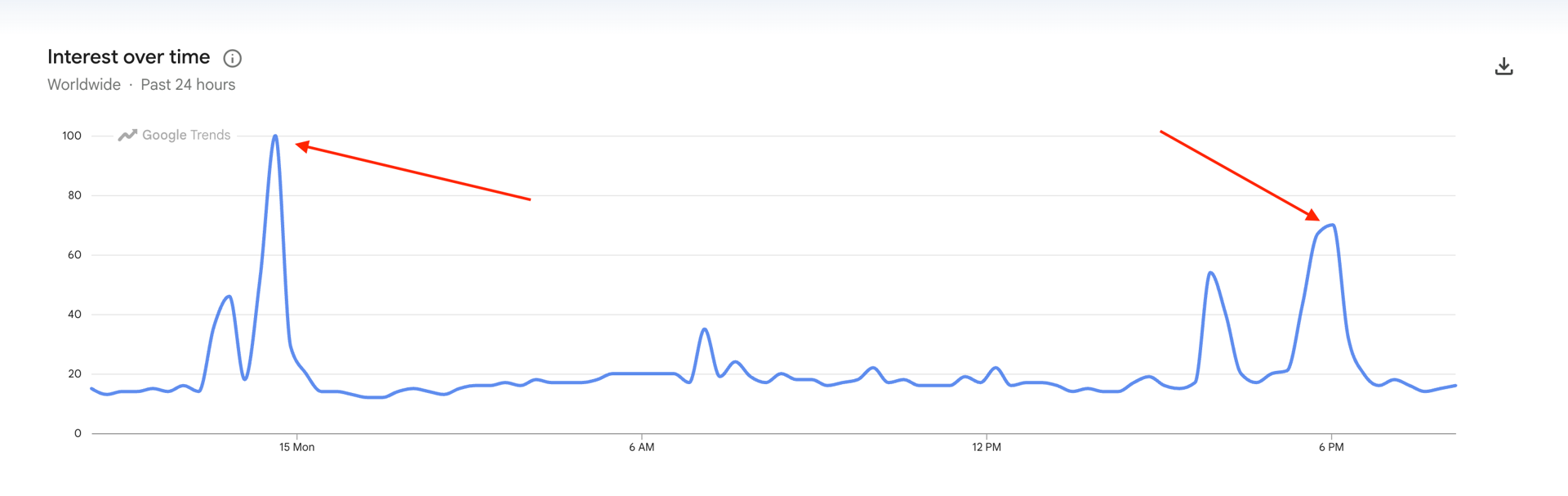
Google searches for "crypto" surged following the US-Iran peace deal
Google Trends
As geopolitical tension seems to be easing, investors are once again starting to pay close attention to the market. In fact, early trading hours on June 15 also saw inflows into Bitcoin spot ETFs after $330 million in outflows last week.
Where does the market stand right now?
The total crypto market capitalization is standing at $2.28 trillion, which is 47% down from its peak of $4.27 trillion reached on October 5 2025. For most of 2026, fear has dominated the market with altcoins failing to outperform Bitcoin.
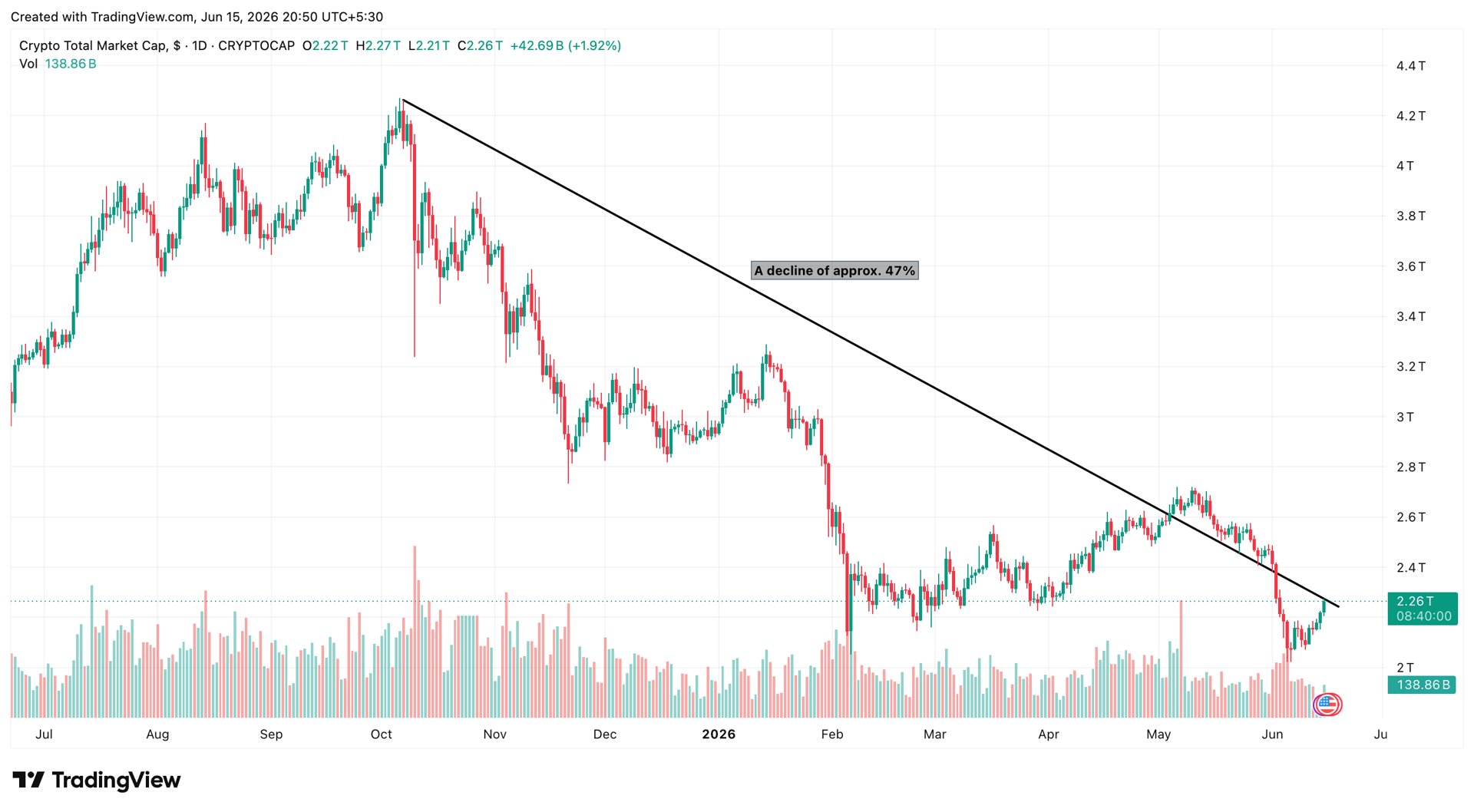
Total crypto market capitalization
TradingView
Crypto exchange trading volumes have been gradually declining, with Bitcoin accounting for the largest share of market activity. Crypto funding rates remain close to neutral, with the average funding rate at -0.002%.
It simply means fewer people are actively buying and selling crypto. Conviction remains weak at the moment despite the positive headlines.
Related: AI coins surge after Elon Musk rings the bell
Even though sentiment across the crypto market remains cautious, money continues to flow into stablecoins. Its market is now worth around $317 billion, making it larger than the foreign exchange reserves of many countries.
According to VISA data, stablecoin supply has grown from just $6.8 billion in 2020 to more than $300 billion in 2026, highlighting the increasing demand for digital dollars.
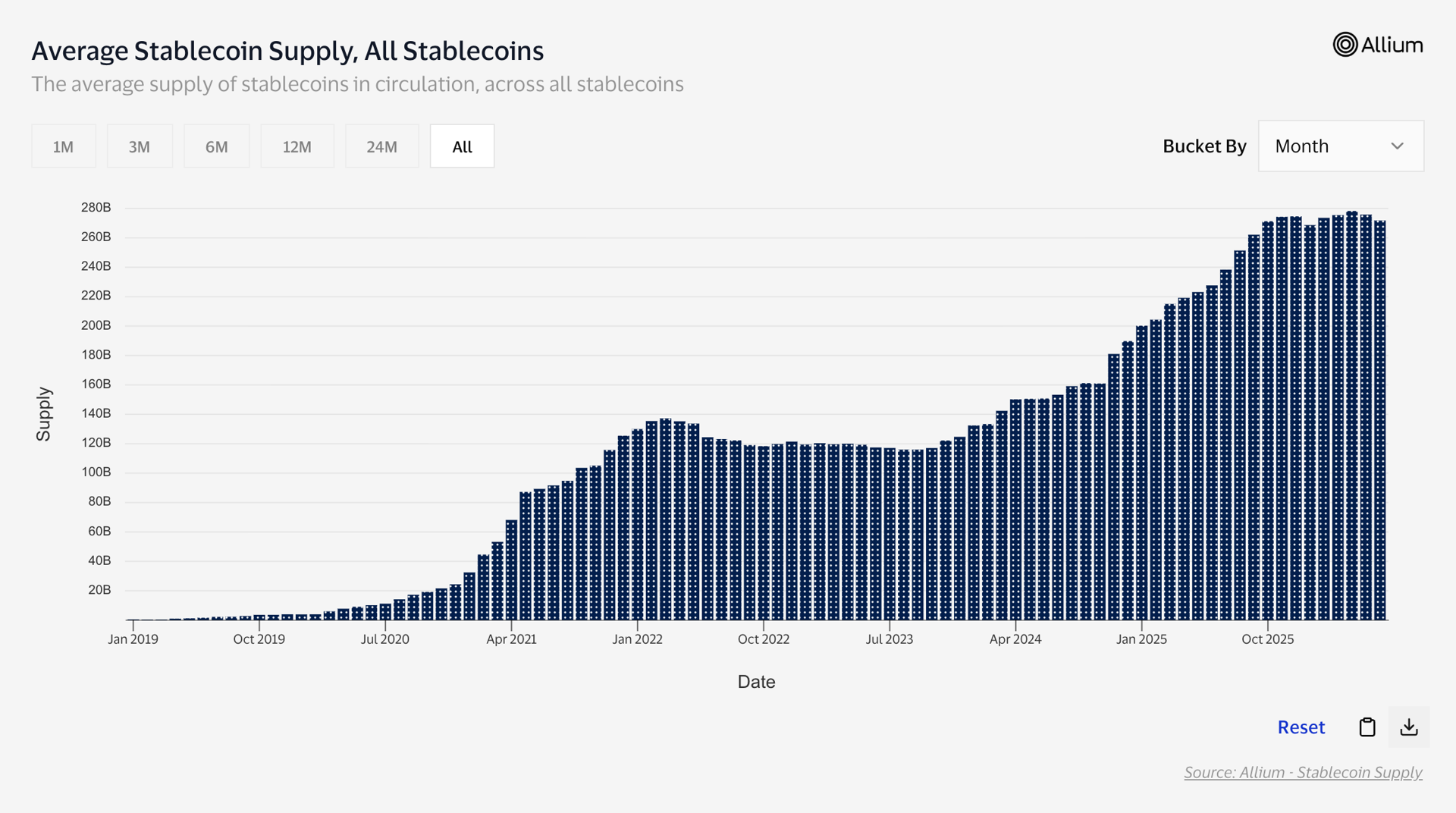
Average stablecoin supply has seen a gradual increase over the past few years
Visa
Trending on TheStreet Roundtable:
Is crypto ready to bounce back?
Bitcoin is down nearly 50% from its all-time high. Total market cap has shed over $600 billion. Sentiment is deep in extreme fear territory. But is a recovery possible? Analysts think so; they put the odds at 40-50% for a full recovery this year.
The catch is it won't happen on its own. Two specific conditions need to fall into place for the market to turn around. Here's what to watch.
1. Inflation cooling down
U.S. inflation jumped to 4.2% year-on-year in May 2026, its highest level in three years, largely driven by increased energy costs tied to Middle East tensions.
To put that in perspective, inflation was sitting at just 2.4% in February, before the war. That spike hit equity markets hard, and crypto followed suit.
Now, what does the Fed do about it? That's the real question. According to the CME FedWatch tool, there's a 98.6% chance the Fed holds rates steady at its June 17 meeting, so no relief there.
Looking further ahead to July 29, the picture doesn't get much better. There is an 84.3% chance rates stay the same, and actually, a 12.3% chance they go higher.
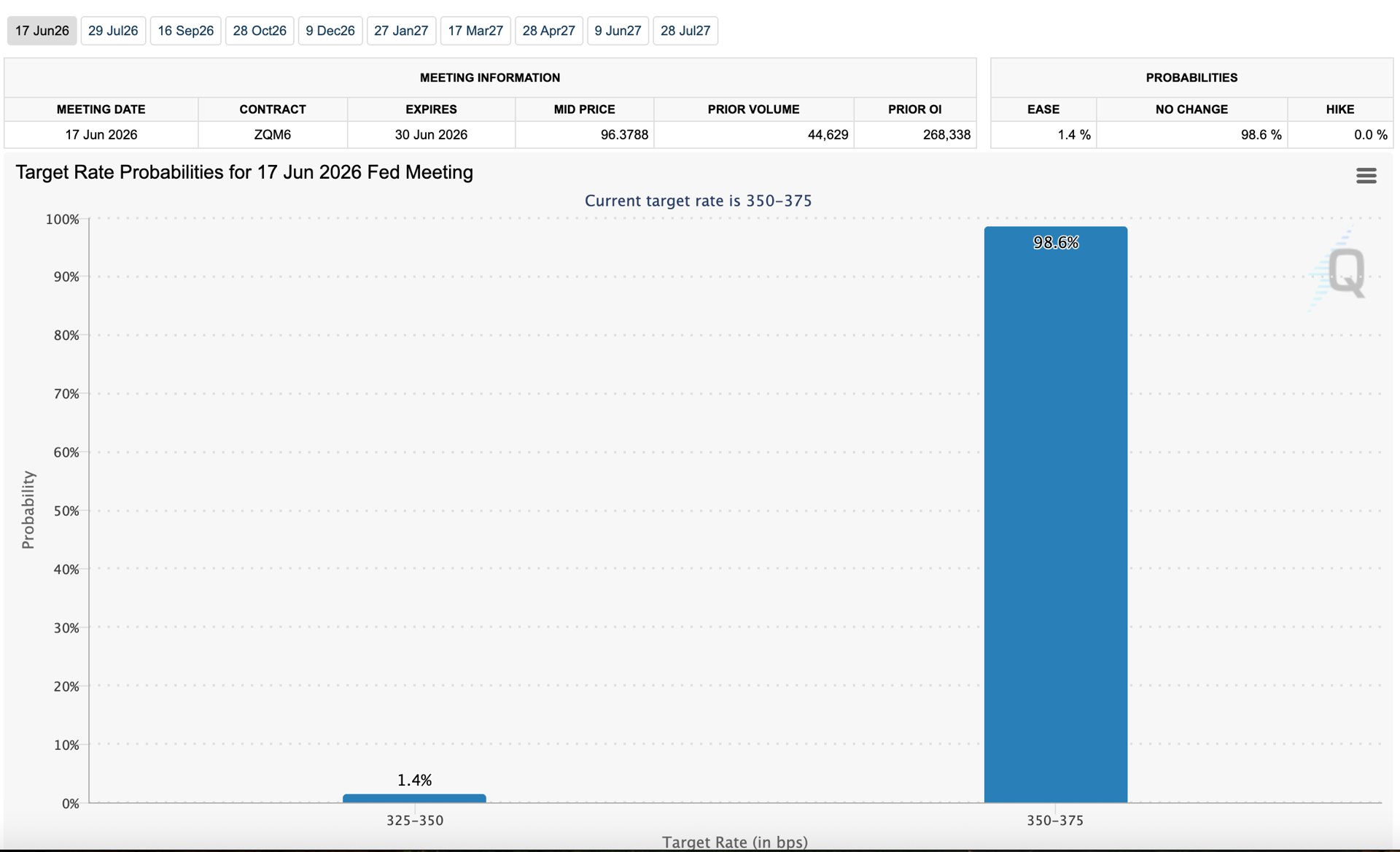
Target rate probabilities for June 17, 2026 Fed meeting
FedWatch Tool
Zoom out to year-end, and it gets more grim. There's only a 1.2% chance that rates will be lower by December. Meanwhile, a 16% chance they are higher, and a 30.8% chance they stay exactly where they are.
This means crypto investors shouldn't expect interest rate cuts to fuel a market recovery in 2026. Instead, any sustained rally will likely need to come from stronger demand within the crypto market, increased institutional investment, or other positive economic developments rather than support from the Federal Reserve.
Related: Inflation-hit Americans watch savings disappear
2. Return of retail traders and large-scale buying
2021 bull run was largely driven by retail traders. However, retail hasn't come back with real money yet. At press time, the Crypto Fear & Greed Index sat at 20, deep in the fear category.
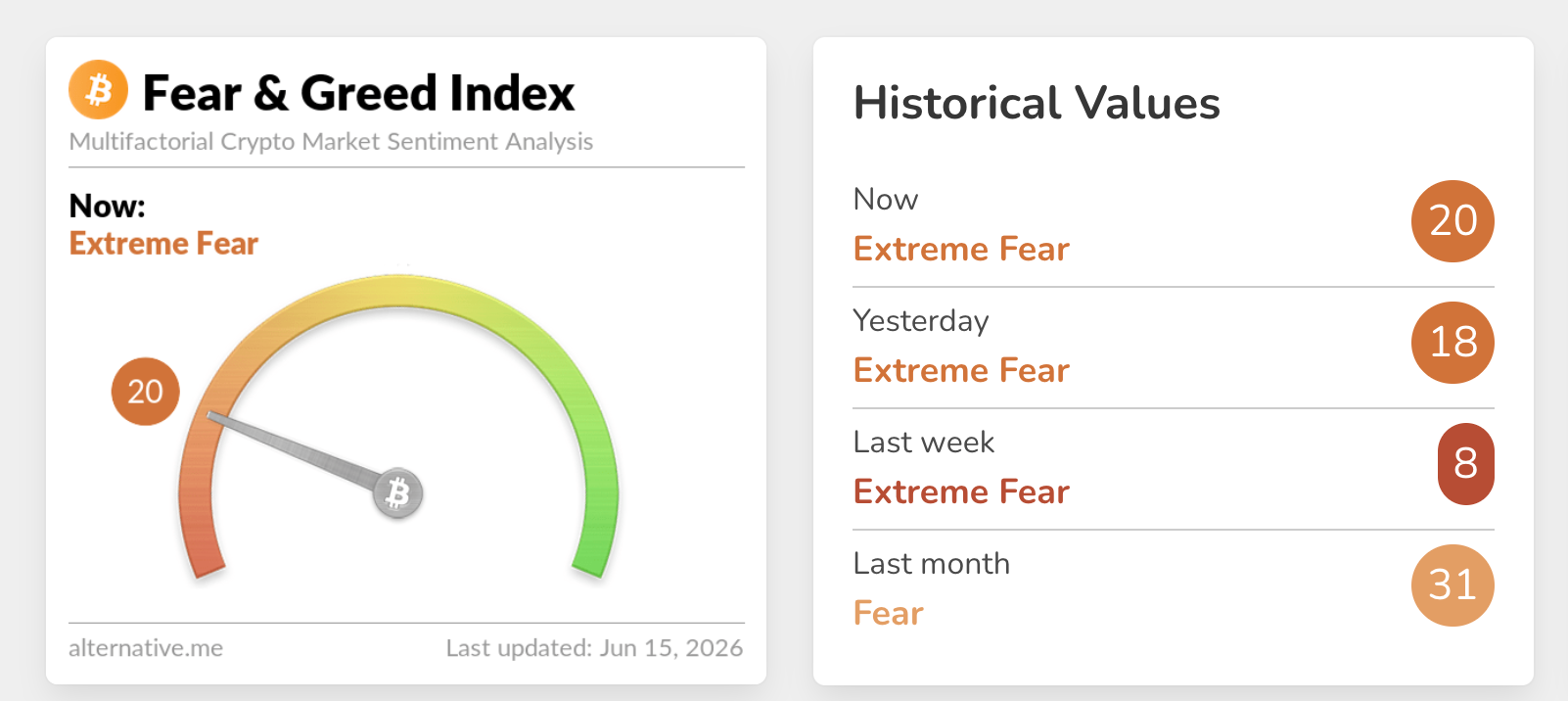
Crypto Fear & Greed Index
The action is happening at the top, though. Whales and major exchanges like Binance and Coinbase bought BTC aggressively enough to trigger $135 million in short liquidations in a single 24-hour window on June 15. But it's not sustained yet.
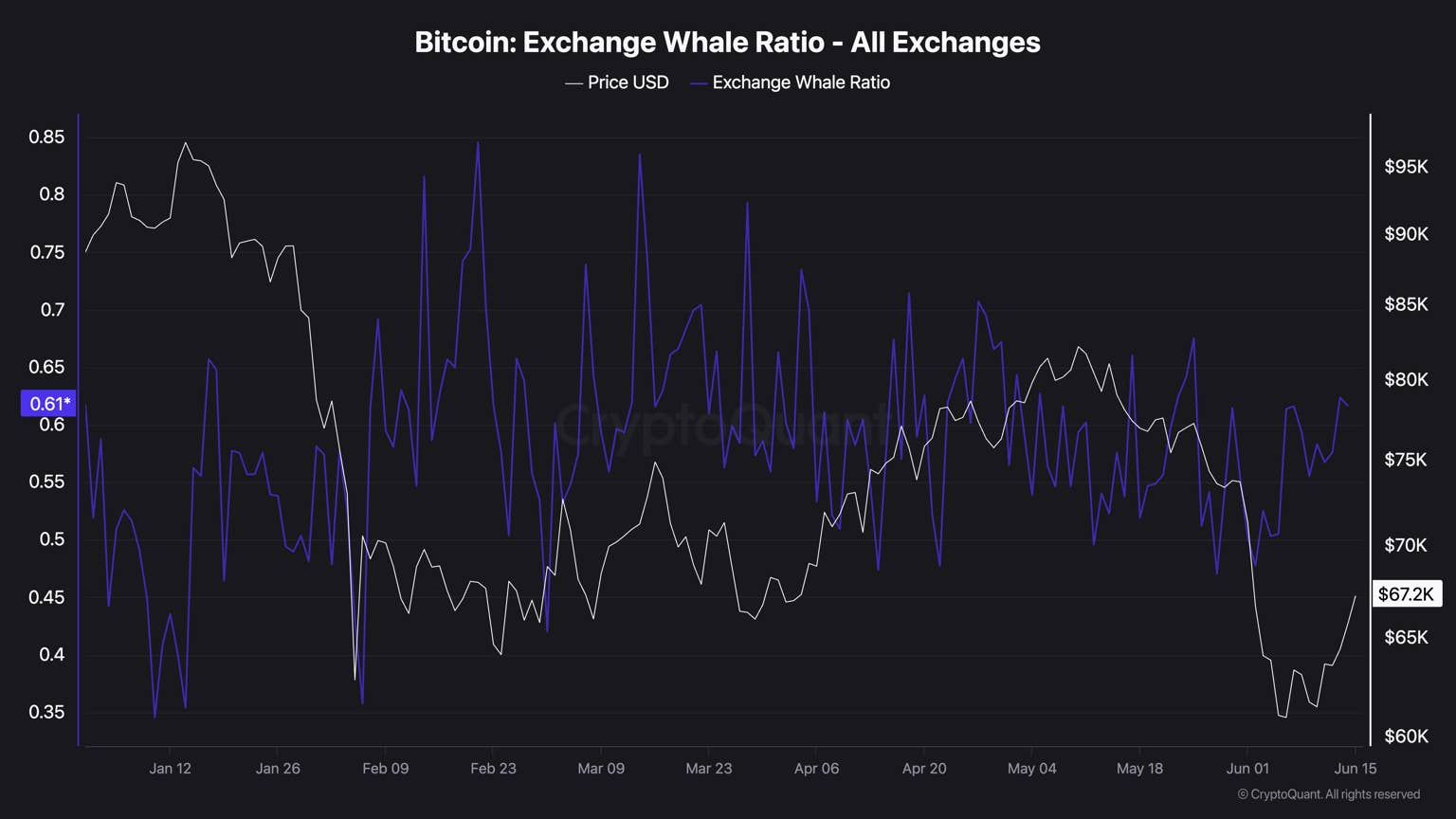
The Bitcoin Exchange Whale Ratio metric shows that exchanges haven't been selling Bitcoin; they are instead buying
CryptoQuant
When will the market exactly recover?
It's difficult to time the market, and no one can know the exact answer to this question. However, according to Bitunix analysts,
"Markets may be shifting focus from ‘how much will rates fall’ to whether the Fed's entire communication framework, dot plots, forward guidance, is about to change."
Unlike previous bull markets, this cycle looks different. A large share of investment money is now flowing into artificial intelligence instead of crypto.
According to Crunchbase, AI companies raised $242 billion in the first quarter of 2026 alone, accounting for nearly 80% of global venture capital funding.
In June 2026, Apollo Global Management (NYSE: APO), Blackstone (NYSE: BX), and Broadcom (NASDAQ: AVGO) launched a $35 billion AI infrastructure platform to expand computing capacity for companies such as Anthropic and OpenAI.
For crypto, this means a recovery may depend less on Federal Reserve policy and more on industry-specific drivers such as rising stablecoin adoption, increased institutional demand, successful ETF inflows, and stronger on-chain activity.
Until then, the market is likely to remain sensitive to broader economic and geopolitical developments.
Related: 'Rich Dad Poor Dad' author reveals bullish gold target