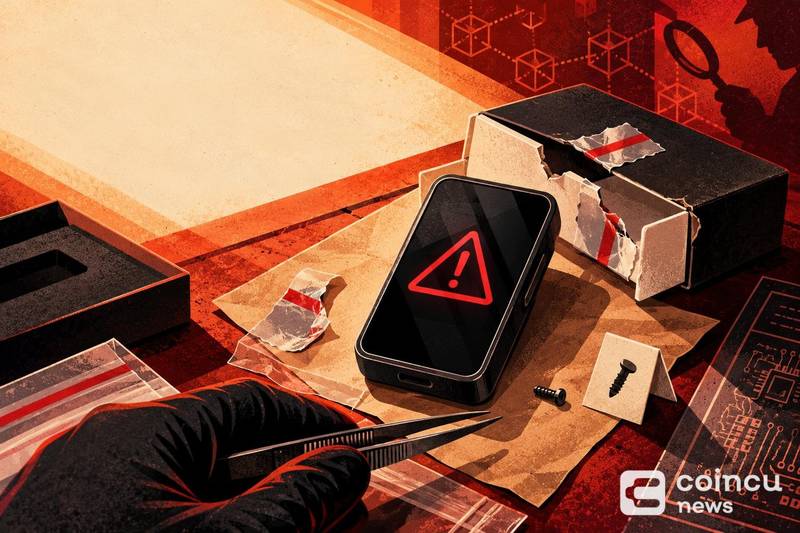
Trezor has issued a warning that Safe 5 hardware wallets sold through CryptoBilis may contain hardware implants, raising supply-chain security concerns for anyone who purchased the device thr
Trezor has issued a warning that Safe 5 hardware wallets sold through CryptoBilis may contain hardware implants, raising supply-chain security concerns for anyone who purchased the device through that seller. The scope of affected units has not been established from the available information, and Trezor has not confirmed that all devices sold via CryptoBilis are compromised, but the warning is serious enough to warrant immediate action by any owner who acquired a Safe 5 through that channel.
What Trezor's Safe 5 Warning About CryptoBilis Says
The warning names two specific elements: the Trezor Safe 5 as the device in question and CryptoBilis as the sales channel linked to the potential tampering. Hardware implants, if present, would represent a form of supply-chain compromise in which a device is physically altered before it reaches the end user, meaning the risk is introduced before the wallet is ever powered on or configured. For related coverage, see Top 5 Web3 Prediction Markets to Watch in 2026 (Beyond Polymarket).
Critically, the language in the warning uses "may contain," not "confirmed to contain." That distinction matters for Safe 5 owners who did not purchase through CryptoBilis, as the warning does not extend to devices purchased through Trezor's own storefront or other authorized resellers. Owners who are uncertain of their purchase path should review their order history before treating the device as compromised or intact. Context on this theme: Cyber Revolution Summit – Singapore 2026.
The number of potentially affected units and whether any confirmed theft of funds has occurred as a result of the alleged implants are not established by the information available at time of publication. Trezor, as the manufacturer behind the Safe 5 and its newer Safe 7 line, has a direct interest in identifying and communicating supply-chain risks as part of its security posture.
Why a Possible Hardware Implant Is a Serious Wallet Security Risk
Hardware wallets derive their security guarantee from physical isolation: the private keys that authorize cryptocurrency transactions never leave the device, and the device itself is assumed to be manufactured and shipped without modification. A hardware implant breaks that assumption at the most fundamental level, before the user configures a PIN, before a seed phrase is generated, and before any transaction is ever signed.
What physical wallet tampering can mean
A malicious hardware component embedded in a wallet could, depending on its design, intercept seed phrases at the moment they are displayed on-screen during device setup, log PIN entries, or introduce a backdoor that allows an attacker to exfiltrate key material over a communication channel. The attack surface of a hardware implant is not limited to software, which means that a clean firmware update or factory reset would not necessarily remove the risk if the underlying physical component is compromised.
Supply-chain attacks targeting hardware wallets are not a theoretical concern. The physical integrity of a cold storage device is the entire value proposition it offers over software wallets and custodial exchanges. Self-custody's core premise is that the owner, not a third party, controls the keys, but that premise collapses if the physical device itself has been modified to leak those keys.
What remains unconfirmed from the provided information
At this stage, the following details are not confirmed by the available evidence: the specific implant mechanism or what it is alleged to do; whether any Safe 5 owner who purchased through CryptoBilis has experienced a confirmed theft attributable to the implant; the total number of units that may have been affected; and when the alleged tampering occurred in the supply chain. Readers should not assume that every Safe 5 device sold through CryptoBilis is confirmed to contain an implant, nor should they assume the warning is unfounded without checking with Trezor directly.
What Safe 5 Owners Who Bought From CryptoBilis Should Do
The immediate priority for any Safe 5 owner is to confirm whether the device was purchased from CryptoBilis. Order confirmation emails, bank or card statements, and account history on any marketplace platform are the primary tools for establishing purchase origin. If there is any ambiguity, treat the device as potentially affected until Trezor provides updated guidance.
Do not use a potentially affected Safe 5 to generate a new seed phrase or to confirm any transaction involving significant funds until the device's integrity has been verified or Trezor has provided a clearance path. Preserve all purchase records, including order confirmations, shipping labels, and packaging, as Trezor may request this documentation when assessing affected units or processing replacements.
Contact Trezor through its official support portal, which can be found at trezor.io, and report the purchase details. Do not respond to unsolicited messages from parties claiming to represent Trezor or offering to replace the device, as supply-chain attack disclosures are frequently exploited by phishing actors who use the confusion to solicit seed phrases or redirect users to fake replacement programs. Verify any support contact independently by navigating directly to trezor.io in a browser rather than following a link in an email or message.
Under no circumstances should a recovery seed be entered into any device, website, or application in response to this warning unless Trezor's official guidance specifically instructs that step and the destination device is verified as untampered. Seed phrase exposure is irreversible: once a 12 or 24-word seed has been entered into a compromised environment, any funds secured by it should be considered at risk.
When to move assets or seek replacement guidance
If a seed phrase was generated on a Safe 5 purchased from CryptoBilis and that device has already been in active use, the prudent step is to generate a fresh seed on a verified, authorized device and transfer assets to the new wallet, then revoke or abandon the seed associated with the potentially compromised device. This is a precautionary measure, not confirmation that funds have been stolen, but in the event of a hardware implant the window between implant activation and fund extraction may be short. Follow Trezor's official guidance on how to securely transition assets and dispose of or return the affected hardware.
How to Buy a Hardware Wallet More Safely
The CryptoBilis situation, regardless of how it is ultimately resolved, illustrates the specific risk that comes from purchasing hardware wallets through resellers whose supply chains are not fully transparent. Trezor sells the Safe 5 and its other devices directly through its own website; purchases made through that channel have the shortest path from manufacturer to consumer and carry the manufacturer's own chain-of-custody guarantees.
When buying from an authorized third-party reseller, verify the reseller's authorization status against the list published on trezor.io before completing a purchase. Authorized resellers are vetted by Trezor, while unauthorized or gray-market sellers operating through general marketplaces may receive stock that has passed through additional hands, creating opportunities for tampering. A lower price from an unverified seller is not worth the security tradeoff on a device whose purpose is to protect high-value assets.
Upon receiving any hardware wallet, inspect the packaging for signs of tampering before opening: broken seals, resealed shrink wrap, or inconsistencies in holographic labels are potential warning signs. Follow the device's official setup documentation step by step and verify that the setup process prompts seed phrase generation on the device itself, not on a connected computer or phone. A legitimate hardware wallet will never display or transmit the seed phrase to an external application during setup.
Never use a recovery seed that arrives pre-printed in the box or is communicated to you by any party other than the device's own screen during the initial setup ceremony. Pre-loaded seeds are a well-documented attack vector in which an attacker pre-generates the wallet, ships it with the seed phrase included in the packaging, and then waits for the user to fund the wallet before sweeping it. This attack does not require any hardware modification and works equally against legitimate and tampered devices.
Verify all support contacts independently rather than following links embedded in emails, social media posts, or advertisements. Official Trezor communications can be verified through trezor.io; any communication requesting seed phrase entry should be treated as a scam regardless of how official it appears.
Trezor Safe 5 CryptoBilis Warning: FAQ
Which Trezor devices are named in the warning?
The warning specifically names the Trezor Safe 5. No other Trezor device models, including the Model One, Model T, or Safe 3, are named in the available information as being affected by this warning. Owners of other Trezor devices who did not purchase through CryptoBilis have no basis to be concerned based on what has been disclosed so far.
No. The warning uses conditional language indicating that affected devices "may contain" hardware implants, and the scope is tied to CryptoBilis as a specific sales channel. Safe 5 devices purchased directly from Trezor or through other authorized resellers are not named in this warning. The full scale of affected units is not established by the available information, and owners should seek updated guidance from Trezor directly for the most current assessment.
What should a CryptoBilis customer do next?
Confirm the purchase source, preserve all purchase and packaging records, do not use the device for new transactions involving significant funds until integrity is verified, and contact Trezor through its official support portal at trezor.io. Do not enter seed phrases anywhere in response to unsolicited outreach. If the device has already been used to store assets, consider transferring those assets to a verified device as a precaution, following Trezor's specific instructions for the transition.
Where should users look for verified updates?
Trezor's official blog at blog.trezor.io and the support portal at trezor.io are the authoritative sources for updates on this warning. Social media accounts should only be trusted if they are linked directly from the official trezor.io domain, as impersonation accounts frequently appear after high-profile security disclosures. Any third-party coverage, including this article, should be verified against Trezor's own communications before acting on it.
Is this the first time Trezor has flagged a supply-chain concern?
Supply-chain security has been a recurring focus for hardware wallet manufacturers broadly. Trezor has historically advised customers to purchase only through its official store or verified authorized resellers for precisely this reason. The company's recent product roadmap, including the launch of the Safe 7 with a transparent secure element, reflects the manufacturer's emphasis on physical verifiability as a trust mechanism, a design principle directly relevant to the risk that hardware implants represent. Whether the CryptoBilis warning will prompt additional verification tooling or changes to Trezor's authorized reseller program is not addressed by the information available at publication time and would require official confirmation from the company.
Additional source references: source document 1, source document 2.
Disclaimer: This article is for informational purposes only and does not constitute financial or investment advice. Cryptocurrency and digital asset markets carry significant risk. Always do your own research before making decisions.
The post Trezor Warns of Tampered Safe 5 Devices From CryptoBilis was initially published on Coincu.