The blockchain network logged 1.10 billion transactions as its role in global stablecoin transfers continues to expand. TRON's blockchain processed approximately 1.10 billion transactions dur
The blockchain network logged 1.10 billion transactions as its role in global stablecoin transfers continues to expand.
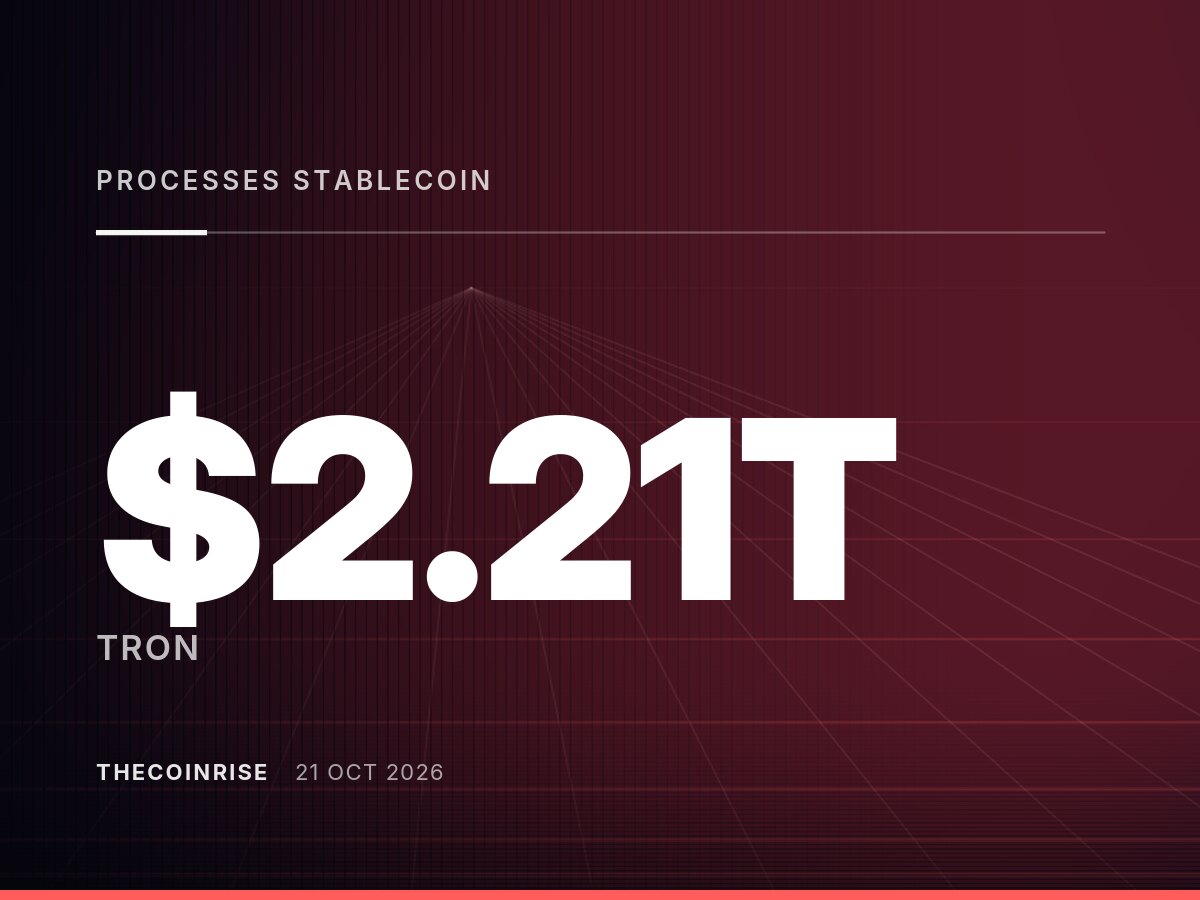
TRON's blockchain processed approximately 1.10 billion transactions during the third quarter of 2026, according to data reported this week. Stablecoin settlement volume across the network reached $2.2126 trillion over the same period. The scale of that figure places TRON among the largest venues globally for moving dollar-pegged digital assets.
Stablecoins have become a core piece of crypto market infrastructure. They are used for trading, remittances, and increasingly for payments outside traditional banking rails. TRON has positioned itself as a low-cost, high-throughput network for moving these tokens, particularly Tether's USDT, which represents a substantial share of stablecoin activity on the chain.
The transaction count and settlement figures reported for the third quarter reflect sustained demand for TRON as a transfer layer. Unlike trading volume on exchanges, settlement volume captures the raw value moving between wallets and platforms. A multi-trillion-dollar quarterly figure suggests TRON is handling transfers that rival or exceed activity seen on some traditional payment networks, though the comparison is complicated by differences in how each system counts and categorizes transactions.
The question of how much TRON itself earns from this activity is separate from the volume figures. Blockchain networks typically generate revenue through transaction fees, paid in the network's native token or in energy and bandwidth resources that users must acquire to transact. TRON's fee model has long been structured to keep per-transaction costs low, which has helped attract stablecoin issuers and users seeking cheaper alternatives to other blockchains.
Low fees have been central to TRON's growth strategy. They make the network attractive for high-frequency, lower-value transfers, including remittances in regions where transaction costs on other chains would be prohibitive. That strategy appears to have paid off in volume terms, even if the revenue captured per transaction remains comparatively modest.
The reported Q3 2026 figures arrive as regulators and market participants continue scrutinizing the infrastructure behind stablecoin transfers. Networks that handle large volumes of dollar-pegged assets face increasing attention over custody practices, compliance obligations, and the broader implications of stablecoins operating at this scale outside traditional banking oversight.
Market Impact
Sustained growth in stablecoin settlement volume on TRON reinforces its standing as critical infrastructure for dollar-pegged token transfers. This matters for exchanges, payment processors, and remittance services that rely on the network's low fees and high throughput for day-to-day operations.
For TRON's native token, TRX, network usage is often cited as a fundamental indicator of demand, since transaction fees and resource staking are tied to token economics. However, volume figures alone do not directly translate into token price movement, and readers should treat settlement data as a measure of network utility rather than a market signal.
The latest figures confirm TRON's continued role as a heavily used settlement layer for stablecoins, even as the precise revenue the network captures from that activity remains a separate and less transparent metric.
Frequently Asked Questions
What does 'stablecoin settlement volume' mean?
It refers to the total value of stablecoin transfers processed on a network over a given period, capturing wallet-to-wallet and platform transfers rather than exchange trading volume.
Why is TRON popular for stablecoin transfers?
TRON is known for low transaction fees and high throughput, which makes it attractive for frequent, lower-value transfers such as remittances and everyday payments using tokens like USDT.
Does high transaction volume mean TRON earns large revenue?
Not necessarily. Volume reflects network usage, but revenue depends on fee structures, which on TRON have been kept comparatively low to attract users and stablecoin issuers.
How does TRON's Q3 2026 data compare to prior periods?
The reported 1.10 billion transactions and $2.2126 trillion in settlements represent the latest quarterly figures available, though the sources did not provide direct comparisons to earlier quarters.
Originally reported by AltcoinGordon, written by Olivia Hayes. Republished with permission.
View the original on AltcoinGordon →
The post TRON Processes $2.21 Trillion in Stablecoin Settlements During Q3 2026 appeared first on TheCoinrise.com.