World Liberty Financial (WLFI) executives used a panel at Token2049 in Singapore to lay out new plans for its USD1 stablecoin, saying the token is set to move beyond the WLFI app and into pay
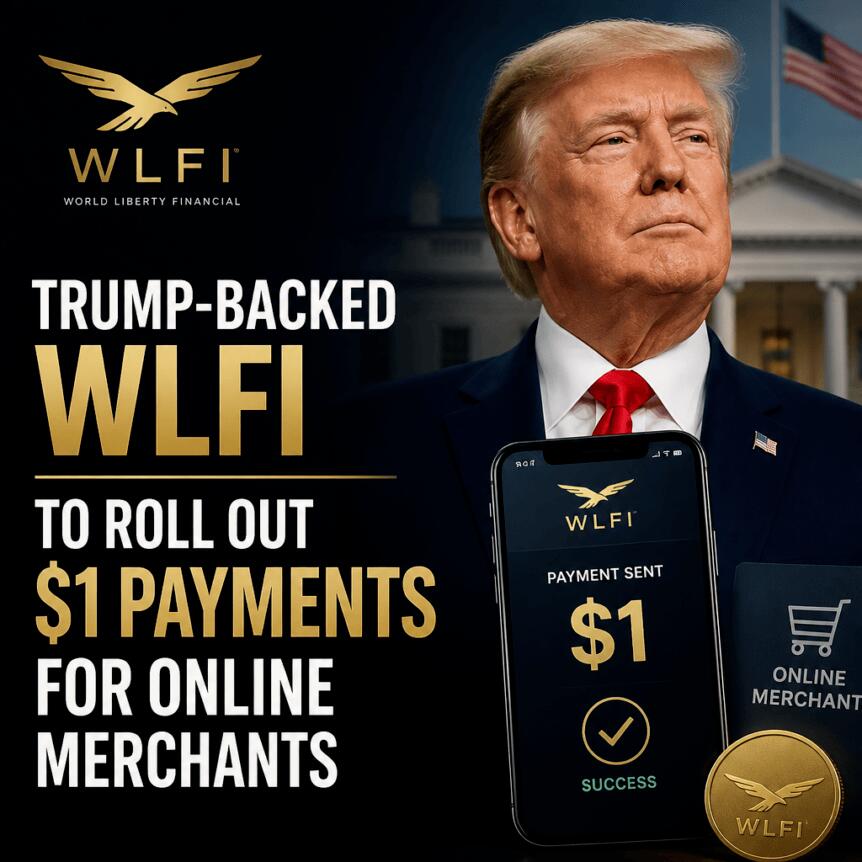
World Liberty Financial (WLFI) executives used a panel at Token2049 in Singapore to lay out new plans for its USD1 stablecoin, saying the token is set to move beyond the WLFI app and into payments used by larger online businesses.
During the Wednesday discussion, WLFI CEO Zach Witkoff and co-founder Zak Folkman highlighted a partnership with Mesh—introduced by Mesh CEO and co-founder Bam Azizi—that is designed to let USD1 holders spend the stablecoin across Mesh’s merchant payment infrastructure. WLFI said the rollout is planned for this quarter.
Key takeaways
- WLFI says USD1 payments are expanding beyond the World Liberty app to Mesh’s merchant network, with a launch targeted for this quarter.
- The initiative is positioned as a direct way for USD1 holders to spend a dollar-pegged stablecoin across existing online checkout flows.
- USD1 is currently issued via BitGo, backed by cash and cash equivalents including US government money market funds, according to WLFI’s published terms.
- WLFI is pursuing a longer-term path to control issuance by moving toward a national trust bank model after receiving an OCC conditional approval in August.
USD1 heads toward broader online spending
At Token2049, Folkman framed the move as an effort to extend USD1 utility beyond a single consumer app. He said WLFI is not limiting adoption to its own World Liberty software, and is instead working to apply the same underlying technology to “some of the largest Web2 businesses” operating in the market.
The mechanism, as described on the panel, centers on a partnership between WLFI and Mesh. Azizi said the agreement would allow holders of USD1 to use the stablecoin across the merchant network connected to Mesh’s payment infrastructure, effectively bringing dollar-pegged token payments into established online commerce rails.
For investors and traders, the key question is whether this kind of integration translates into meaningful additional on-chain and off-chain usage. Merchant networks can materially change stablecoin demand when payments become part of regular checkout behavior rather than a niche use case.
How USD1 is structured and where reserves come from
USD1 is designed to maintain a $1 value. WLFI’s published terms describe BitGo as the current issuer of the stablecoin and outline reserve composition that includes cash, US government money market funds, and other cash equivalents. The stablecoin’s issuance and backing details matter because they influence how market participants evaluate redemption risk and the resilience of the peg.
According to CoinGecko data cited by the article, USD1’s market capitalization was $4.45 billion at the time of writing. For context, market cap can serve as a rough proxy for outstanding token supply, which typically grows when demand for settlement and payment use increases.
WLFI’s issuance ambitions and the OCC conditional approval
While USD1 spending integrations address near-term utility, WLFI’s longer-term plan appears focused on issuance control. In August, the US Office of the Comptroller of the Currency (OCC) granted WLFI conditional approval to establish a national trust bank intended to issue dollar-backed stablecoins and custody digital assets.
Witkoff said the charter would allow WLFI to take on issuance responsibility itself—moving from the current arrangement to a structure where WLFI would issue through its own trust bank framework. He stated at the panel that “today we’re issuing through BitGo,” and indicated that the trust charter would enable WLFI to assume that responsibility going forward.
This matters because issuance control can affect operational timelines, redemption pathways, and how the market anticipates regulatory alignment. It also shapes how stablecoin holders interpret legal custody and oversight—especially in a sector where regulatory clarity is closely watched.
Political scrutiny remains part of the story
WLFI’s progress has not been without controversy. The OCC conditional approval drew criticism from Senator Elizabeth Warren, who alleged conflicts of interest tied to the Trump family’s connections to WLFI. The article also notes that Warren and other senators introduced legislation—described as the “Ending Presidential Corruption in Banking Act”—in response to these concerns.
In its defense, the OCC said its leadership and staff acted consistently with statutory duties and ethical obligations while reviewing the application. At the Token2049 panel, Witkoff described the conditional approval as something WLFI achieved despite “attacks” from mainstream media and politicians.
For readers tracking stablecoin adoption, the practical takeaway is that technology partnerships and payments rollouts are only one side of the equation. The regulatory pathway—particularly around issuance, custody, and trust bank structures—can influence market confidence and the pace at which stablecoins expand into more mainstream financial workflows.
Next, the focus should shift to execution: whether WLFI and Mesh can complete the quarter-targeted rollout and what adoption looks like once USD1 is available across merchant checkout flows. At the same time, investors should watch the status of WLFI’s trust bank efforts, since that could determine how issuance evolves and how regulators continue to shape the stablecoin landscape.
This article was originally published as Trump-Backed WLFI to Roll Out $1 Payments for Online Merchants on Crypto Breaking News – your trusted source for crypto news, Bitcoin news, and blockchain updates.