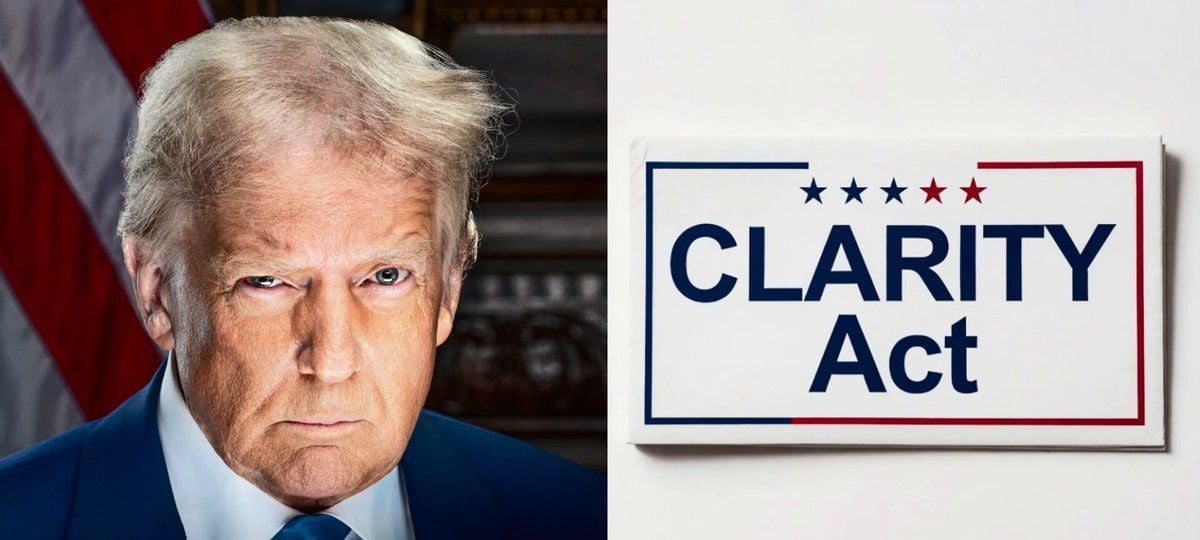
Ethics Provisions Clear a Key Hurdle President Donald Trump has agreed to a set of bipartisan ethics provisions attached to the Digital Asset Market Clarity Act, clearing one of the bill's mo
A
AnonymousCryptoCompass newsroom
September 14, 2026
2 min read
NEWS
CryptoCompass editorial visual for policy coverage.
Ethics Provisions Clear a Key Hurdle
President Donald Trump has agreed to a set of bipartisan ethics provisions attached to the Digital Asset Market Clarity Act, clearing one of the bill's most stubborn sticking points ahead of a Senate procedural vote scheduled for Tuesday, September 15.
The updated language, long a Democratic priority, would ban presidents and other federal officials from issuing or sponsoring cryptocurrency and other digital assets. Under the new text, state attorneys general would be permitted to enforce those prohibitions and take action against exchanges listing assets banned under the regulation. The Department of Justice would also hold enforcement authority.
According to a Senate Republican aide cited by The Hill, Trump accepted roughly 80 percent of the provisions Democrats had requested. A new ethics clause would also require covered individuals to divest crypto-linked financial interests or place them in a blind trust.
Months of Negotiation, One Bill
Senator Cynthia Lummis, the lead Senate sponsor of the CLARITY Act, released an updated substitute of the bill running roughly 630 pages on September 10, 2026.Lummis said the draft incorporated more than 114 provisions requested by Democratic colleagues. Speaking to The Hill, Lummis said she had "bent over backwards to make this a truly bipartisan bill that both sides can be proud of."
The Senate missed an earlier window to vote before the August recess. Senate Majority Leader John Thune confirmed there would not be a vote in August, but committed to one in September.The Senate returned to Washington on September 14, 2026, with three weeks to resolve outstanding issues.
Despite the progress, some Democrats remain skeptical. A group of seven Democratic negotiators previously said earlier draft text "falls short," objecting in particular to the ethics provision's DOJ-only enforcement and a 2029 sunset clause. Whether Tuesday's procedural vote can clear the 60-vote cloture threshold remains the central question. Senate cloture on the CLARITY Act requires 60 votes, and Republicans hold 53 seats, meaning at least seven Democrats must cross over.
What to Know Morgan Stanley’s Bitcoin Trust surpassed $609 million as sustained investor demand drove purchases across multiple consecutive trading sessions without sales. MSBT attracted $62.
Revolut attackers began publishing customer passports and verification selfies over the weekend, demanding payment and promising fresh leaks each day until the fintech complies. Key Points: T
Crispin Odey has lost his bid to overturn a UK financial services ban, after the Upper Tribunal dismissed his challenge to the Financial Conduct Authority in a decision published on 14 Septem