President Donald Trump wants someone to go count the gold at Fort Knox. On May 31, Trump posted an image to Truth Social reading "Time to Physically Audit Fort Knox." It was attached to a New
President Donald Trump wants someone to go count the gold at Fort Knox.
On May 31, Trump posted an image to Truth Social reading "Time to Physically Audit Fort Knox."
It was attached to a New York Post story headlined "Former CIA official arrested after feds find $40M worth of gold bars stashed at his home." The post drew more than 10,000 likes.
Related: Treasury officials push for a $250 bill featuring Trump's face
What reportedly happened
The story Trump shared centers on David Rush, a former senior CIA officer who, according to court documents reported by NBC News, was charged last week with criminal theft of public money in the Eastern District of Virginia.
Federal agents reportedly searched Rush's home on May 18 and seized roughly 300 gold bars worth more than $40 million, along with about $2 million in cash and 35 luxury watches, mostly Rolexes, according to an FBI affidavit cited by NBC.
Rush, who reportedly held a management position with top secret clearance, is accused of requesting tens of millions of dollars in gold bars and foreign currency for "work-related expenses" between November and March, then allegedly taking part of it home for personal gain.
Related: Billionaire Peter Thiel moves out of U.S. citing harsh concerns
He was also reportedly accused of lying about his background for nearly two decades, listing degrees and a Navy test-pilot record that investigators say were not real.
TheStreet Roundtable has not independently verified these allegations. The CIA and FBI confirmed an arrest in a joint statement reported by NBC.
"After a CIA internal investigation identified potential violations of the law, CIA Director John Ratcliffe referred the information to the FBI for a law enforcement investigation." CIA and FBI joint statement, as reported by NBC News
Why Trump jumped to Fort Knox
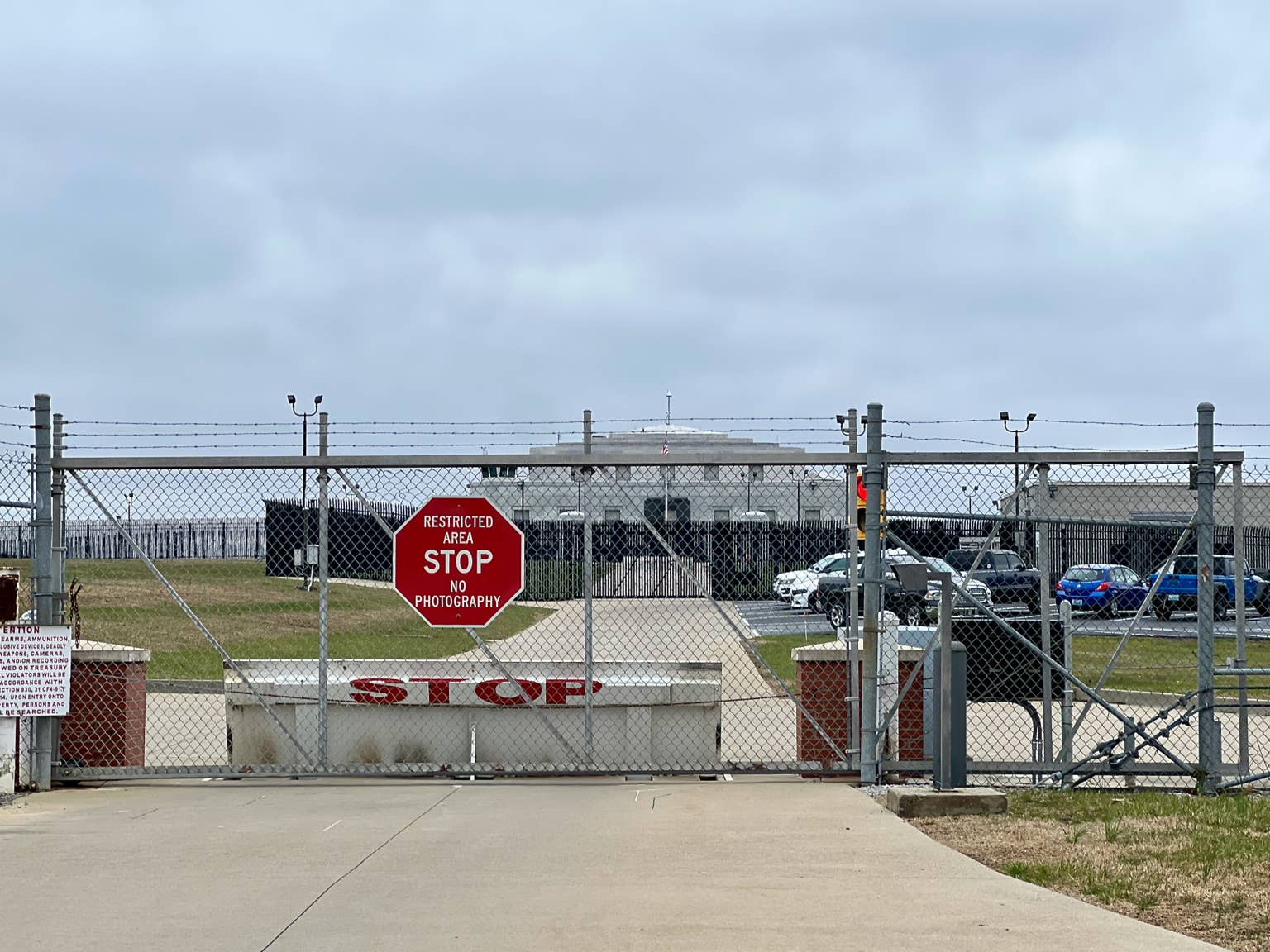
The United States Bullion Depository at Fort Knox, Kentucky, is supposed to hold more than 147 million ounces of gold, the single largest store of the country's reserves.
But the last time outsiders publicly verified it was 1974, when a group of members of Congress toured the vault and assured Americans the gold was there. The Treasury says an internal audit is conducted every year.
Critics argue an internal review is not the same as an independent one.
What exactly is Fort Knox?
Officially the United States Bullion Depository, Fort Knox is the fortified vault in Kentucky where the U.S. government stores a large share of its gold. Here is the breakdown:
No single person knows the full vault combination, the door weighs 20+ tons, and it stored the Declaration of Independence and Constitution during WWII. (Source: Getty)
- What it is: A Treasury-owned vault operated by the U.S. Mint, sitting next to the U.S. Army post of the same name in Kentucky. It is considered one of the most secure buildings in the world.
- Who built it, and when: The Treasury built it in 1936. The first gold shipment arrived on January 13, 1937, moved in from the Philadelphia Mint and the New York Assay Office.
- Why it exists: It was built to move the nation's gold inland, away from coastal cities like New York and Philadelphia that were seen as more exposed to a foreign attack. This followed the Gold Reserve Act of 1934, when the federal government consolidated the country's gold under President Franklin D. Roosevelt.
- How much gold: Roughly 147.3 million ounces, about half of all the gold the Treasury holds. At its 1941 peak, the vault stored 649.6 million ounces.
- What it is worth: On the government's books, the gold is valued at a frozen statutory price of $42.22 an ounce, set back in 1973, which puts the official value near $6 billion. At the 2026 market price of more than $4,000 an ounce, the real value is closer to $590 billion.
- How locked down it is: No single person is supposed to know the full combination to the main vault door, which weighs more than 20 tons. During World War II, the depository also safeguarded original copies of the Declaration of Independence and the Constitution.
Trending on TheStreet Roundtable
Trump has raised this before
This is not the first time Trump has pushed the idea. In early 2025, he and Elon Musk publicly questioned whether the gold was still there.
"We're going to go into Fort Knox to make sure the gold is there. If it's not, we're going to be very upset." President Donald Trump, to reporters, February 2025
That visit never happened. By May 2025, Trump had quietly dropped the plan. Around the same time, Rep. Thomas Massie introduced the Gold Reserve Transparency Act, which would require a full independent audit of U.S. gold, including a physical assay, every five years. It has not become law.
Tokenized gold could be a potential solution
The whole Fort Knox debate is, at its core, a transparency problem. People want proof the gold exists, and the current system asks them to trust a vault that has not been independently audited in roughly 50 years.
Tokenized gold is being pitched as the answer to exactly that problem.
Gold-backed tokens like Tether Gold (XAUT) and Pax Gold (PAXG) are digital tokens that each represent a fixed amount of physical bullion held in a vault. The tokenized gold market is now worth roughly $6 billion, with those two tokens making up about 96% of it.
The selling point is verification. PAXG publishes monthly attestations of its reserves, now handled by KPMG. Tether Gold publishes quarterly proof-of-reserves reports. And in 2026, issuers have started rolling out real-time proof-of-reserves systems, backed by blockchain oracles like Chainlink, that let anyone confirm at any moment that the tokens in circulation match the gold in the vault.
In other words, the exact thing Trump is demanding at Fort Knox, a verifiable count of the gold, is something tokenized gold already does continuously, on-chain, for anyone to check.
That does not make a $6 billion token market a replacement for a national bullion reserve. But it does sharpen the contrast. A blockchain token can prove its gold backing in real time. The largest gold vault in the United States has not been independently audited since the Nixon administration.
Related: Gold bull Peter Schiff asks for Bitcoin on his 62nd birthday