The Trump Memecoin Investigation has become one of the biggest crypto news stories this week, after The New York Times reported on November 20, 2026, that staff at the Commodity Futures Tradi
The Trump Memecoin Investigation has become one of the biggest crypto news stories this week, after The New York Times reported on November 20, 2026, that staff at the Commodity Futures Trading Commission (CFTC) briefly looked into possible fraud linked to the $TRUMP token and then dropped the effort.
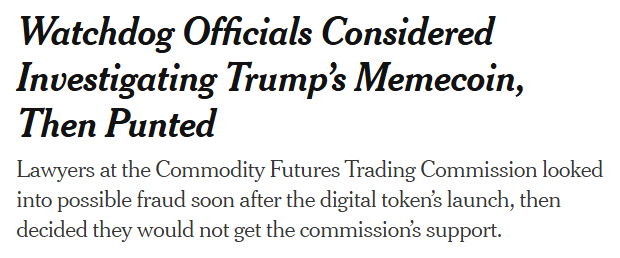
Because the report relies on former officials and the agency has not confirmed the details, this article separates what is reported from what official sources document.
Key Takeaways
The Trump Memecoin Investigation centers on a report that CFTC staff opened a preliminary inquiry into the $TRUMP token in early 2025 and ended it soon after.
The reported reason is that the commission was unlikely to approve subpoenas.
Ending a probe is not a ruling on whether any trade was lawful.
The CFTC declined to comment to the report's authors.
What Did the Trump Memecoin Investigation Reveal About the CFTC Probe?
According to the report, which cited former CFTC officials, the inquiry began soon after the token launched in early 2025, prompted by large early profits for some buyers and at least one outside complaint.
A career attorney was reportedly assigned to the case, but only agency leaders could approve subpoenas, and staff concluded those approvals would not come, so the work stopped.
The CFTC declined to comment to the Times, and the White House had not responded when the story was published.
Why Do Subpoena Powers Matter in a Crypto Fraud Probe?
The CFTC says its mission is to promote the integrity, resilience, and vibrancy of US derivatives markets, as described on itsofficial About page.
In general, investigators who cannot issue subpoenas struggle to obtain trading records, wallet details, and messages from exchanges and other firms, which makes it hard to test whether early buyers had unfair advantages.
That is why the reported subpoena concern matters more than the inquiry's short life.
How Does SEC Meme Coin Guidance Fit In?
In February 2025, staff of the SEC's Division of Corporation Finance said that certain meme coins do not involve the offer and sale of securities, according to the SEC staff statement on meme coins.
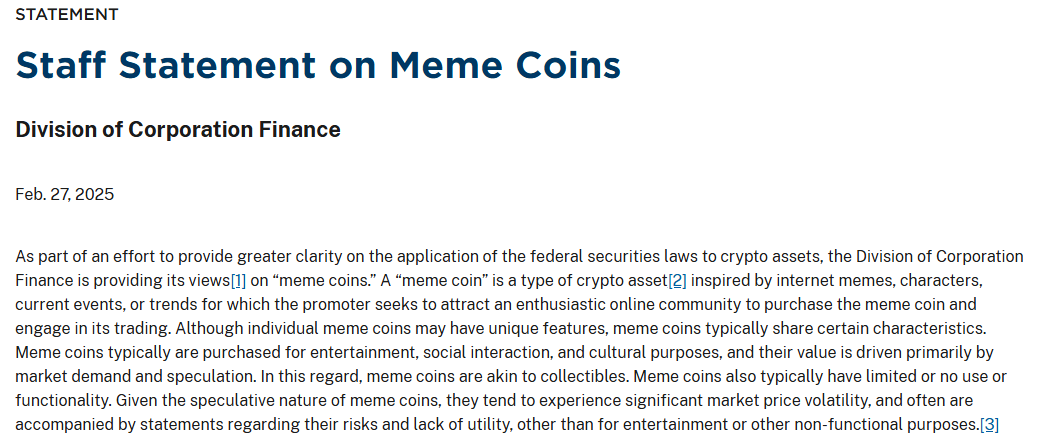
The same statement says it does not cover products labeled as meme coins to avoid securities laws and that other agencies may have authority under other federal and state laws.
It is a staff view rather than a rule, and Commissioner Crenshaw publiclydisagreed with it, which shows how unsettled meme coin regulation still is.
Does Ending the Probe Mean the $TRUMP Token Was Lawful?
No, because a preliminary inquiry that ends early does not decide whether any trade broke the law; it only means that, as reported, no further investigative steps were taken at that time.
No charges or findings have been reported, and nothing in the public record so far shows wrongdoing by any person, so readers should treat the Trump Memecoin Investigation as an open question rather than a verdict.
What Should Crypto Traders Watch Next?
Traders following crypto news can watch for three things: any statement from the CFTC or the White House, any new questions from Congress about Trump-linked tokens, and any fresh SEC or CFTC guidance on meme coin regulation.
Before acting on a headline, it helps to check the regulators' own websites, because early reports can change as more details become public.
The Bottom Line
The Trump Memecoin Investigation, as reported so far, is a story about process more than outcome, since the key detail is that staff reportedly saw no path to the subpoenas a deeper probe would need.
Until the agencies speak on the record, the safest reading is that an inquiry was opened and closed and that its meaning is still unclear.
Disclaimer: This article is for information only and is not financial or investment advice. Crypto assets carry risk, including the loss of funds, so verify current details with official sources.