President Donald Trump said Republicans should eliminate the Senate filibuster, arguing the rule could lead to another US government shutdown in September 2026 if it remains in place. Speakin
President Donald Trump said Republicans should eliminate the Senate filibuster, arguing the rule could lead to another US government shutdown in September 2026 if it remains in place.
Speaking on Fox News on July 13 while remembering late Sen. Lindsey Graham, Trump abruptly shifted from discussing Graham's legacy to criticizing the Senate rule.
"The Republicans have to do it. It's so insane. Otherwise, we're gonna have a shutdown in September," Trump said.
Trump added that ending the filibuster would allow Republicans to "pass everything we want."
His remarks came as Congress continues debating several major crypto bills, including CLARITY Act that would establish the first comprehensive framework for digital assets in the United States.
The legislation passed the House in July 2025 with bipartisan support. A revised version advanced through the Senate Banking Committee on May 14, but it still needs further Senate action.
Lawmakers missed a self-imposed July 4 target, and the bill still requires further Senate approval before it can reach Trump's desk.
Much of the delay has come from negotiations over the bill's final language. Democrats have pushed for stronger ethics provisions tied to Trump's crypto businesses, while lawmakers have also continued negotiating stablecoin rules, illicit finance safeguards and other amendments needed to secure broader support.
Related: Donald Trump's unsigned housing bill just banned the U.S. digital dollar
What is the Senate filibuster rule?
The Senate filibuster is a procedural rule that allows senators to extend debate on most legislation. To move a bill to a final vote, the Senate usually needs 60 votes to invoke "cloture," a process that ends debate.
Republicans currently control the Senate but do not hold a filibuster-proof 60-seat majority. As a result, bills with simple majority support can still stall if they cannot attract enough bipartisan backing.
One way around the rule is the so-called "nuclear option," where a simple Senate majority changes chamber rules to eliminate the legislative filibuster for future bills.
Trump argued the rule has become more than a procedural obstacle.
"If you terminate the filibuster, everything goes away, and we do anything we want. We pass everything we want," he said.
He argued that keeping the rule in place could make it harder to pass government funding legislation before the Sept. 30 deadline, increasing the risk of another shutdown if negotiations fail.
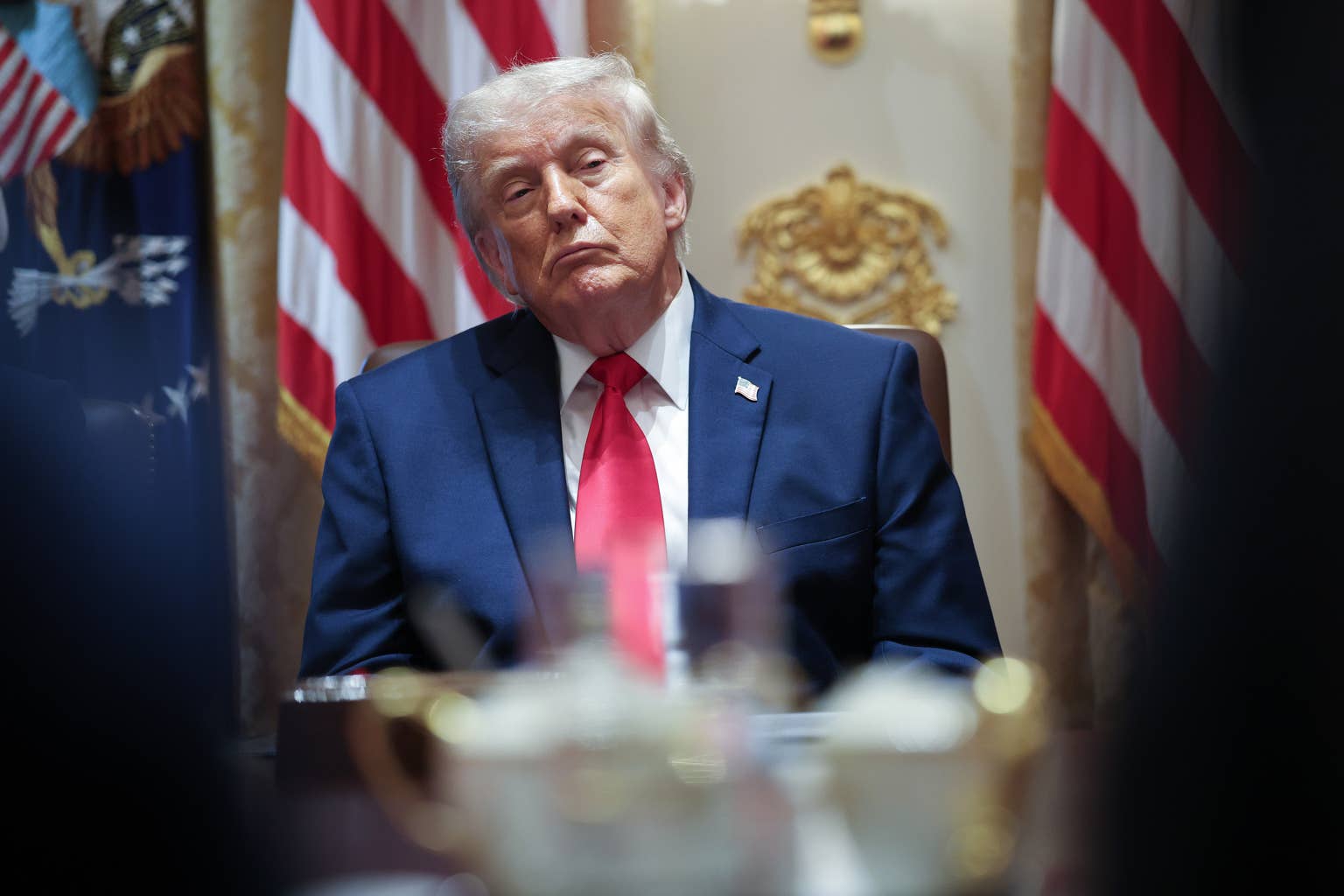
U.S. President Donald Trump listens to members of his Cabinet speak during a meeting in the Cabinet Room of the White House on May 27, 2026 in Washington, DC.
GettyImages
A government shutdown occurs when Congress does not pass funding legislation before existing appropriations expire. During a shutdown, many federal agencies suspend non-essential operations, while essential services continue.
Trending on TheStreet Roundtable
Crypto bills face the same hurdle
The same Senate rule affects much more than annual spending bills.
The CLARITY Act, which seeks to establish a comprehensive regulatory framework for crypto markets, must eventually clear the Senate after passing the House.
Stablecoin legislation and future digital asset reforms would face the same process.
Under current rules, legislation typically moves through the House of Representatives, then the Senate, where most bills need enough support to overcome a filibuster before reaching the president's desk.
If the legislative filibuster were abolished, most bills could instead advance with a simple Senate majority before heading to the president.
Removing the filibuster would not guarantee passage of crypto legislation. The bills would still need majority support in both chambers and presidential approval. It would, however, remove one of the Senate's biggest procedural hurdles for digital asset legislation.
Trump urges Senate to pass CLARITY Act
Trump also used the death of Sen. Lindsey Graham to renew his push for crypto legislation.
In a July 13 post on Truth Social, Trump urged the Senate to pass the CLARITY Act "in honor of Senator Lindsey Graham," calling the bill important to maintaining the United States' lead in digital assets and artificial intelligence.
He added: "China, and many other countries, would like to take complete and total control of this major financial 'happening,' as well as A.I... Don't let China win on either subject!!!"
Popular on TheStreet Roundtable
Crypto has felt shutdown uncertainty before
Government shutdowns have previously influenced crypto, though the impact has depended on broader macroeconomic conditions.
When the federal government shut down on Oct. 1, 2025, crypto traded cautiously alongside broader risk markets as investors assessed how long the funding standoff might last.
Sentiment improved after lawmakers reached a temporary funding agreement on Nov. 11, 2025. Back then, crypto analysts said that reopening the government could boost market liquidity as funds held in the Treasury General Account flowed back into the financial system.
Related: If you invested $10,000 in Bitcoin, Trump meme coin, and gold when Trump took office, here's what you'd have today