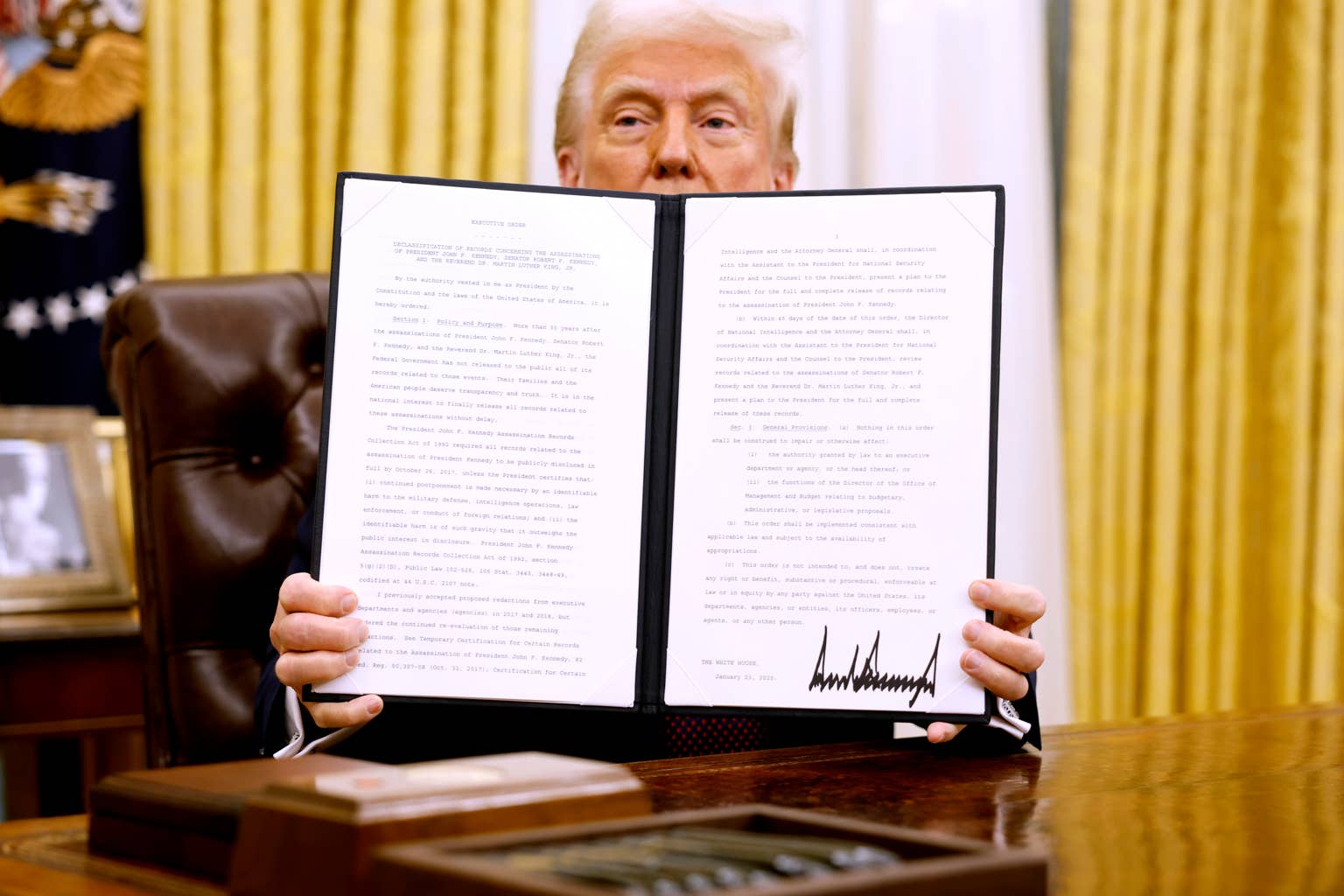
U.S. President Donald Trump made Bitcoin a formal reserve asset of the federal government on March 6, 2025, signing an executive order that created the Strategic Bitcoin Reserve. Under Execut
U.S. President Donald Trump made Bitcoin a formal reserve asset of the federal government on March 6, 2025, signing an executive order that created the Strategic Bitcoin Reserve.
Under Executive Order 14233, Bitcoin transferred into the reserve from criminal or civil forfeitures “shall not be sold” and must instead be maintained as a U.S. reserve asset.
The Treasury and Commerce departments were also authorized to explore budget-neutral ways of acquiring more Bitcoin.
White house crypto report backs Strategic Bitcoin Reserve and seeks regulatory clarity (4:07)
The reserve became one of the most visible pieces of Trump’s pledge to make the United States the “crypto capital of the world.” BitcoinTreasuries currently estimates that the U.S. government controls about 328,372 BTC, although estimates vary because government wallets are not comprehensively disclosed.
But the White House team tasked with helping coordinate that broader crypto agenda is now down to zero known staffers.
Patrick Witt becomes the latest crypto official to leave
Patrick Witt, executive director of the President’s Council of Advisors for Digital Assets, has left the White House after his temporary government assignment expired.
A White House official told The Block on Oct. 14 that Witt’s “detail has expired.”
“The White House appreciates his time and service to the Trump Administration, and wish him the best of luck in the future endeavors,” the official said.
Witt was a Department of Defense employee temporarily detailed to the crypto council. He initially served as deputy director before taking over after former executive director Bo Hines stepped down in August 2025 and later joined Tether’s U.S. business.
Most Popular on TheStreet Roundtable:
Witt made passing the CLARITY Act, the administration’s broader crypto market-structure bill, a central focus of his tenure.
In a farewell post on Oct. 15, Witt called his time in government “the privilege of a lifetime” and said he would continue supporting U.S. technological advancement from the private sector. He did not identify his next employer.
No replacement for Witt has been announced so far.
His departure follows White House crypto and AI czar David Sacks leaving that role in March after reaching his 130-day limit as a special government employee, and deputy director Harry Jung exiting in July. Witt was the council’s last remaining known official.
Crypto policy shifts away from the White House
The administration has secured one major legislative victory: the GENIUS Act, signed into law in July 2025, which created the first federal regulatory framework for payment stablecoins.
The larger CLARITY Act has gone differently.
The Senate failed to advance the bill on Sept. 15 after the procedural vote fell short of the 60 votes needed. Disputes included ethics restrictions around government officials’ crypto interests and how stablecoin rewards should be treated.
With Congress largely sidelined until after the midterm elections, more of the administration’s crypto agenda is now moving through regulators.
The SEC has been developing rules for token issuance, custody and tokenized securities, while the CFTC is pursuing frameworks for leveraged retail crypto trading. Both agencies are using existing statutory authority rather than waiting for Congress.
That means the officials holding the pen on the next phase of U.S. crypto policy are increasingly at the SEC and CFTC, not inside the White House crypto council.
With the council now empty and its biggest unfinished bill stalled, the question is whether Trump’s “crypto capital of the world” promise still has the same institutional force behind it.
Related: Elon Musk has shopping advice after Amazon blocks his AI