Two of President Donald Trump’s nominees for the US Securities and Exchange Commission (SEC) faced pointed questions during a Senate confirmation hearing on Thursday, with lawmakers zeroing i
Two of President Donald Trump’s nominees for the US Securities and Exchange Commission (SEC) faced pointed questions during a Senate confirmation hearing on Thursday, with lawmakers zeroing in on how the agency is handling investor protections while making room for financial innovation tied to tokenized assets.
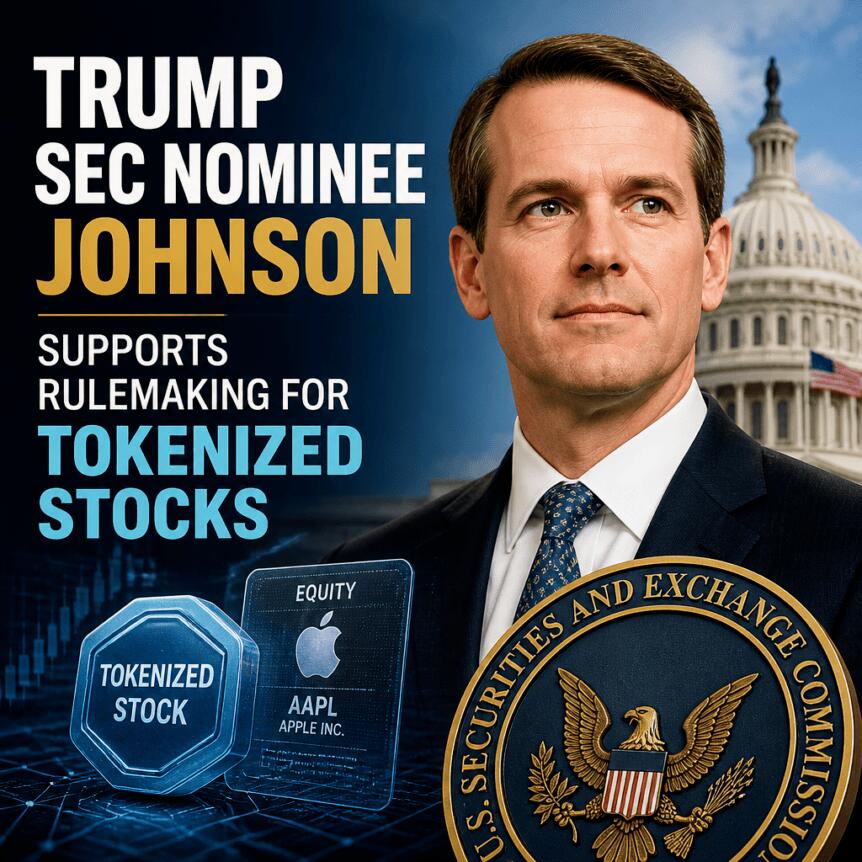
The hearing focused in particular on the SEC’s Sept. 17 “innovation exemption,” a mechanism designed to allow qualified trading platforms to handle blockchain-based versions of US-listed shares without registering as securities exchanges under defined conditions. Kristin Johnson, the president’s Democratic nominee, said she supports taking disputes—especially those tied to the tokenized-stock exemption—through formal notice-and-comment rulemaking.
Key takeaways
- Senators pressed SEC nominees on whether the SEC’s tokenized securities “innovation exemption” sufficiently protects investors.
- Kristin Johnson said she favors notice-and-comment rulemaking and would use that process to address concerns raised about the exemption.
- The SEC’s Sept. 17 order took effect immediately and invites public comments on possible changes to the exemption framework.
- Several publicly traded companies have opposed tokenizing their shares on the OKXICE platform, according to a Nov. 5 notice.
- Written follow-up questions are due before noon Friday, with nominee responses due by 5:00 pm ET on Nov. 24, ahead of committee action.
At the core of the questioning was the SEC’s Sept. 17 innovation exemption, which permits certain platforms to trade tokenized versions of US-listed shares without registering as securities exchanges, provided they meet conditions laid out in the SEC order. The SEC said the order became effective immediately and is accompanied by a request for public comments on whether and how the agency should adjust the approach.
Johnson, who has previously served as a commissioner at the Commodity Futures Trading Commission (CFTC), told the Senate Banking Committee that she believes the regulatory process works best when rules are shaped through public notice and comment. In response to questions from Democratic Senator Angela Alsobrooks, Johnson said she “feels strongly” that regulation is improved through the notice-and-comment period and that she would welcome the opportunity to address issues raised under the exemption through that mechanism.
Her position matters because tokenized securities sit at the intersection of traditional markets and emerging distributed-ledger infrastructure. For market participants, the difference between an exemption that can evolve through comments and a rulemaking that settles compliance expectations can affect planning timelines, legal risk, and the willingness of platforms and issuers to move forward.
Exemption objections from issuers and compliance concerns
The Senate discussion also drew on criticism from within the market. According to a Nov. 5 public notice, 67 publicly traded companies opposed having their shares tokenized on the OKXICE platform.
Johnson pointed to concerns that go beyond investor protection in the narrow sense. She emphasized that objections to the exemption extended into compliance requirements, including Anti-Money Laundering (AML) and Know Your Customer (KYC) obligations—areas that tend to be central to whether tokenized trading can meet established regulatory expectations.
The SEC’s exemption framework is intended to create pathways for tokenized trading while staying within securities-law boundaries. But the existence of organized objections from issuers underscores that market readiness is uneven: even when regulators allow certain structures, companies may still be weighing operational, compliance, and reputational risks.
Time-limited flexibility and the “public interest” standard
Joining Johnson at the hearing was Republican Steven Levine, described as a former aide to SEC Commissioner Mark Uyeda. Levine said he had not closely studied the innovation exemption in advance but understood it to be time-limited and to include investor protections.
Levine also highlighted the legal basis for the SEC’s use of exemptions from federal securities laws. He stressed that Congress authorized the SEC to grant exemptions when they serve the public interest and align with investor-protection requirements. As a comparison point, Levine cited exchange-traded funds (ETFs), arguing that some financial products initially developed under regulatory exemptions before becoming subject to broader, more comprehensive regulatory oversight.
For traders and platforms, that framing suggests an ongoing tension: exemptions can accelerate experimentation, but they may also leave open questions that market infrastructure must solve before adoption scales. The Senate hearing reflected that tension, with Johnson advocating a more formalized rulemaking approach to settle unresolved issues.
What the bipartisan SEC lineup could change
If confirmed, Johnson would become the SEC’s only Democratic commissioner. At present, the commission’s planned composition would bring the agency from five members to four members, with three Republicans and one Democrat—an arrangement that could influence how aggressively the SEC pursues certain regulatory changes and how it balances innovation with investor safeguards.
In comments reported by Cointelegraph, Jessica Martinez, US policy director at Fireblocks, said that crypto “isn’t a partisan issue” and that rules coming from a bipartisan commission may carry more durable support. She also noted that even a minority commissioner can still shape policy by challenging proposals and pressing for issues to be addressed before rules are finalized.
Senators will be able to submit additional written questions to the nominees until noon Friday. Responses are due by 5:00 pm ET on Nov. 24, according to the committee’s closing remarks. After that, the nominations may advance to a committee vote, and both nominees would still require full Senate confirmation before they can take their seats at the SEC.
With public comments still invited on the Sept. 17 innovation exemption, the next test for the SEC’s tokenized-securities approach will be whether the agency narrows, modifies, or formalizes the framework in response to issuer objections and compliance concerns—especially around AML/KYC and the practical boundaries of trading tokenized stocks.
This article was originally published as Trump SEC Nominee Johnson Supports Rulemaking for Tokenized Stocks on Crypto Breaking News – your trusted source for crypto news, Bitcoin news, and blockchain updates.