Mortgage rates finally dipped last week for the first time in two months. But real estate investor and Bitcoin advocate Grant Cardone says the housing crunch is far from over. The average rat
Mortgage rates finally dipped last week for the first time in two months. But real estate investor and Bitcoin advocate Grant Cardone says the housing crunch is far from over.
The average rate on a 30-year fixed mortgage fell to 7.41% from 7.50%, according to the Mortgage Bankers Association.The total mortgage applications fell 5.3% for the week ending Oct. 16.
The pullback is happening on both sides of the housing market. Buyers are applying for fewer mortgages, while builders are starting fewer homes.
Economist Peter Schiff and real estate investor Grant Cardone both expect housing supply to tighten further, but disagree on why. Bitcoin has also become part of their broader argument over housing and finance.
Grant Cardone reveals why rich investors are warming up to Bitcoin through real estate (6:34)
Trending on TheStreet Roundtable:
Pull back by buyers and sellers
Buyers are still pulling back despite the ease in mortgage rates. Purchase applications fell 7% last week, suggesting the drop in borrowing costs has not been enough to bring many buyers back.
Builders are cautious too.
- Housing starts fell 5.2% in September, though the Census Bureau cautioned the decline was within the survey's margin of error.
So the problem is not just weak demand. New supply is slowing at the same time, which could keep the market tight even with demand this weak.
Schiff said on Oct. 20 that housing starts “will soon collapse”, arguing that rising construction costs and mortgage rates are making new homes unaffordable.
Cardone replied that lower construction would mean higher rents.
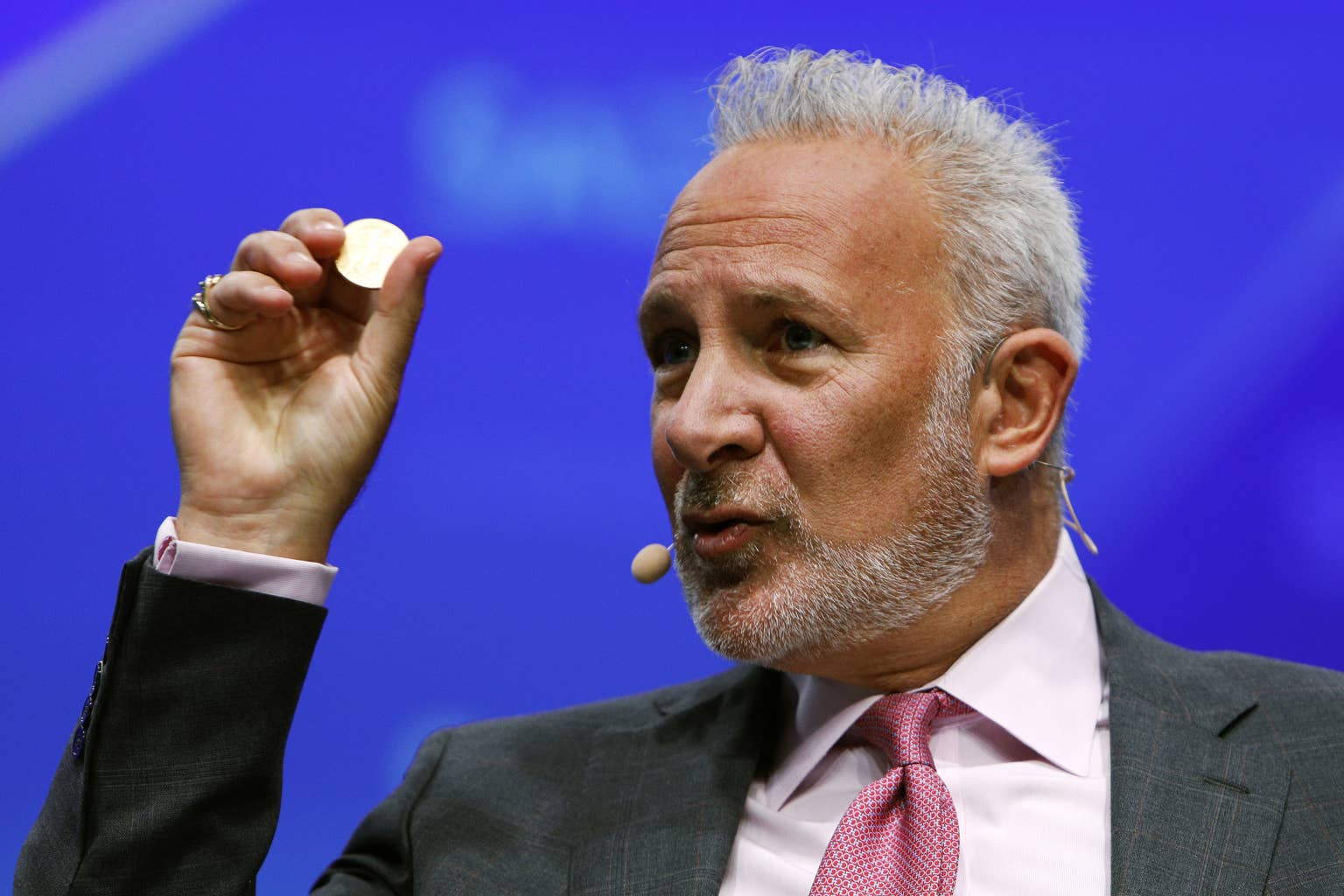
Peter Schiff, chief economist and chief executive officer of Euro Pacific Capital Inc., speaks during the Skybridge Alternatives (SALT) conference in Las Vegas, Nevada, U.S., on Thursday, May 9, 2019.
He also predicted building costs would “explode” as materials and workers are pulled toward data centers for the next five years or longer.
There is some evidence behind the labor-pressure argument.
The Associated General Contractors of America said in September that data center construction was intensifying competition for skilled workers. 49% of firms involved in such projects reporting increased wage pressure.
HousingWire's reporting found the data-center effect on housing is mostly localized so far, with the wider risk running through utilities and specialized trades rather than land prices.
Bitcoin enters the housing debate
Cardone has increasingly pitched Bitcoin as another way to structure real estate finance.
At the Bitcoin Treasuries Conference in New York, he said his firm was working on roughly $600 million of deals carrying about $350 million of debt.
“I never tell Fannie Mae I’m putting Bitcoin on it,” Cardone said, adding that mentioning Bitcoin is “just too much.”
He argued lenders could eventually regret financing only against real estate rather than Bitcoin. Those are Cardone’s projections, not lender commitments.
Popular on TheStreet Roundtable:
Schiff takes the opposite view.
In a recent debate with Cardone, he argued that real estate investment trusts already make enough cash without Bitcoin and said decades of rising home prices were helped by falling mortgage rates.
Bitcoin is already beginning to appear in actual mortgage products.
Better Home & Finance and Coinbase announced a crypto-backed mortgage program in March. It allows buyers to pledge Bitcoin as collateral for a separate loan that covers the down payment, while the main mortgage is a standard Fannie Mae-backed home loan.
Bitcoin collateral, however, must be worth at least 250% of that down-payment loan.
Related: Musk's Tesla jumps 32 spots on the Roundtable 100 after 'flying car' reveal