The U.S. Treasury Department has imposed sanctions on Nobitex, identified as Iran's largest cryptocurrency exchange, in a move that underscores Washington's continued focus on cutting off Ira
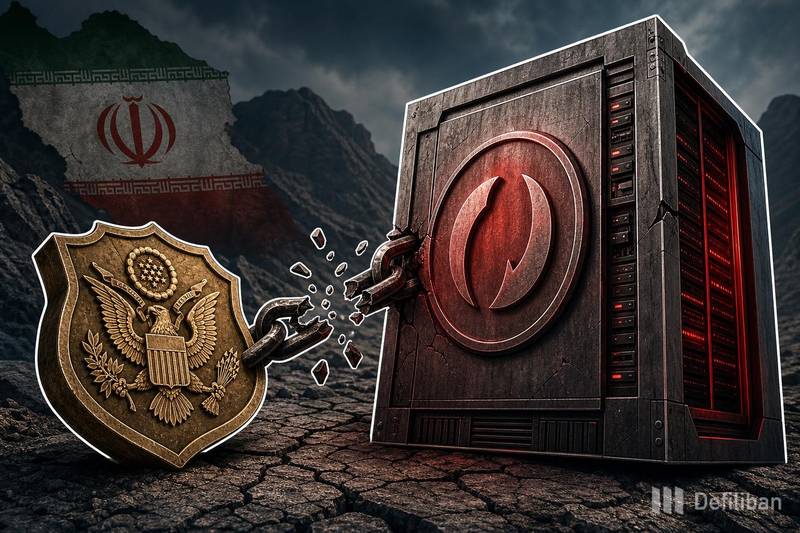
The U.S. Treasury Department has imposed sanctions on Nobitex, identified as Iran's largest cryptocurrency exchange, in a move that underscores Washington's continued focus on cutting off Iranian access to digital asset infrastructure.
What the sanctions on Nobitex mean
The designation, published on the Office of Foreign Assets Control (OFAC) recent actions page, effectively bars U.S. persons and entities from transacting with Nobitex. Any assets the exchange holds within U.S. jurisdiction are now frozen.
Nobitex's status as Iran's largest crypto exchange makes the designation particularly significant. The platform has served as a primary on-ramp for Iranian users seeking access to digital assets in a country where traditional financial channels are heavily restricted by existing international sanctions.
TLDR KEY POINTS
- OFAC has sanctioned Nobitex, Iran's largest cryptocurrency exchange, blocking it from the U.S. financial system.
- U.S. persons and entities are now prohibited from any transactions involving Nobitex.
- Global crypto exchanges will need to screen for Nobitex-linked wallets and counterparties to remain compliant.
The action was listed through OFAC's formal designation process, details of which appear on the Treasury Department's press release page. Full enforcement specifics, including named individuals or associated wallet addresses, may follow in subsequent OFAC updates.
Why Nobitex matters in Iran's crypto ecosystem
Nobitex has operated as the dominant crypto trading venue inside Iran, where international banking sanctions have limited citizens' access to global financial services. That isolation has made cryptocurrency platforms a critical bridge for both everyday transactions and capital movement.
The exchange's scale means its designation does not just affect a single company. It disrupts a significant portion of the infrastructure that Iranian users rely on for crypto access, potentially pushing activity toward smaller, less regulated platforms or peer-to-peer channels.
Iran's constrained financial environment has historically driven interest in cryptocurrency as an alternative rail. Sanctioning the country's largest exchange signals that U.S. authorities view these platforms as enforcement targets, not neutral infrastructure.
Compliance ripple effects for the broader crypto sector
For global exchanges and service providers, the Nobitex designation creates immediate compliance obligations. Any platform processing transactions must now screen for Nobitex-linked addresses and reject interactions that would violate OFAC rules.
This action follows a broader pattern of U.S. regulators tightening enforcement around crypto platforms with ties to sanctioned jurisdictions. Exchanges that have previously navigated evolving U.S. crypto legislation will need to update their compliance frameworks to account for the new designation.
Stablecoin issuers and DeFi protocols with centralized governance face similar exposure. OFAC compliance extends beyond centralized exchanges to any entity that can freeze or block sanctioned addresses.
The designation may also affect liquidity flows. If Nobitex-linked wallets held positions on international platforms, those assets could be frozen, creating counterparty risk for trading partners unaware of the connection. Firms engaged in large-scale Bitcoin acquisitions or institutional crypto operations will likely scrutinize counterparty screening more closely in response.
What remains uncertain is the scope of secondary enforcement. OFAC has not yet clarified whether entities that previously transacted with Nobitex face retroactive liability, or whether the designation is purely forward-looking. Until that guidance arrives, compliance teams are likely to err on the side of caution.
Disclaimer: This article is for informational purposes only and does not constitute financial or investment advice. Cryptocurrency and digital asset markets carry significant risk. Always do your own research before making decisions.
Read original article on defiliban.io