BitcoinWorld Uber’s Product Chief on Hotels, Robotaxis, and Why the Company Won’t Be ‘Everything for Everyone’ Uber has quietly expanded beyond ride-hailing and food delivery, adding hotel bo
BitcoinWorld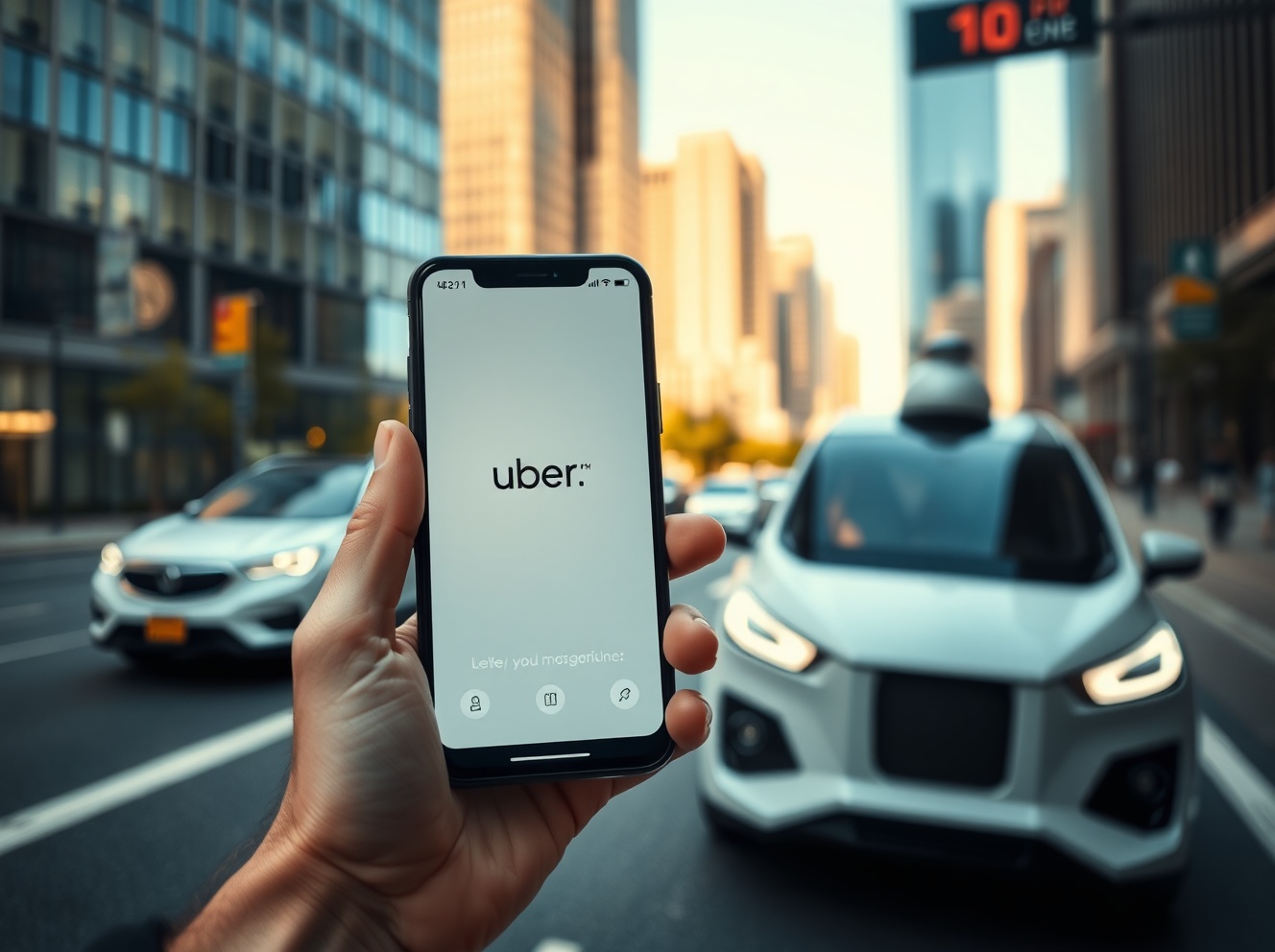 Uber’s Product Chief on Hotels, Robotaxis, and Why the Company Won’t Be ‘Everything for Everyone’
Uber has quietly expanded beyond ride-hailing and food delivery, adding hotel bookings, boat rentals, and concierge shopping features. In a recent interview, Chief Product Officer Sachin Kansal outlined the company’s strategy, its evolving relationship with autonomous vehicle partners like Waymo, and how artificial intelligence is beginning to reshape the user experience.
Expanding into Travel Without Becoming an Everything App
Kansal explained that the company’s recent product announcements, including hotel bookings powered by Expedia and a ‘shop for me’ feature, stem from a core insight: 1.5 billion trips on Uber each year originate outside a user’s home city. Travel, he said, is the natural third leg of Uber’s business after rides and eats. However, he emphasized that Uber is not trying to be an ‘everything app’ like some Asian super-apps. Instead, the company focuses on deep integration with partners where it adds the most value, such as building a custom UI for Expedia, while handing off other experiences to specialists when appropriate.
Financial Services and the Driver Economy
While Uber offers financial products like the Uber Pro debit card for drivers and couriers, Kansal indicated that consumer-facing financial services are not a priority. The company is experimenting with merchant financial tools in select markets but prefers to partner with established players for services like buy now, pay later. ‘We want to make sure that the experts do what the experts do,’ he said, signaling a disciplined approach to expansion.
Autonomous Vehicles: Partner, Competitor, and Data Hub
Uber’s relationship with autonomous vehicle companies is increasingly complex. The company recently ended a pilot with Waymo in Phoenix but scaled up in Austin and Atlanta. Kansal described Waymo as both an excellent partner and a competitor. Uber’s new AV Labs unit, which equips hundreds of fleet vehicles with sensors to collect driving data, is designed to serve multiple autonomy partners. ‘We are not in the race to be an L4 autonomy provider,’ Kansal said. ‘What we are focusing on is laying down the race tracks.’ The data collected will help partners solve the ‘long-tail problem’ of edge cases in autonomous driving, while Uber also offers operational expertise in pickups, drop-offs, and lost-item handling.
AI Features Riders and Drivers Can Actually Use
Kansal highlighted several AI-driven features already in the app, including an earner assistant that advises drivers on where to find demand, a grocery cart assistant that builds shopping lists from voice commands, and voice-activated ride requests. He acknowledged that a fully agentic ‘plan and book my whole trip’ feature is on the horizon but declined to give a timeline, stressing the importance of shipping reliable products over checking a box.
Conclusion
Uber’s strategy under Kansal is one of focused expansion, leveraging its massive user base and data network while avoiding the trap of becoming a generic everything app. The company is investing heavily in autonomous vehicle infrastructure, deepening travel partnerships, and deploying AI in practical, user-facing ways. As Uber navigates its increasingly complex relationships with partners who are also competitors, its ability to balance cooperation and competition will be critical to its long-term success.
FAQs
Q1: Is Uber becoming an everything app like Grab or WeChat?No. Chief Product Officer Sachin Kansal explicitly stated that Uber is not trying to be everything for everyone. The company focuses on travel, rides, and delivery, and relies on partners for services like hotel bookings and buy now, pay later.
Q2: How is Uber using AI in its app?AI features include an earner assistant for drivers, a grocery cart assistant for Eats users, and voice-activated ride requests. Uber is also exploring agentic trip planning but has not set a release date.
Q3: What is Uber’s strategy for autonomous vehicles?Uber is building a hybrid network of human drivers and autonomous vehicles. Through its AV Labs unit, it collects driving data to share with multiple autonomy partners, while also offering operational expertise. It is not developing its own self-driving technology.
This post Uber’s Product Chief on Hotels, Robotaxis, and Why the Company Won’t Be ‘Everything for Everyone’ first appeared on BitcoinWorld.