The cross-chain protocol Universal is being wound down. Anyone holding uSOL, uXRP, uDOGE, uADA, uBTC or uLTC on Base can redeem these six tokens through a smart contract into the respective b
The cross-chain protocol Universal is being wound down. Anyone holding uSOL, uXRP, uDOGE, uADA, uBTC or uLTC on Base can redeem these six tokens through a smart contract into the respective bridged counterpart after November 17, 2026. Anyone holding any of the other roughly 80 uAssets gets USDC. Until November 17 everything runs as normal: you can sell through the Universal app or redeem straight into the underlying asset held in reserve.
That makes the question you face clearly defined, and it has a date. Either you decide yourself by November 17 what happens to your position, or a contract decides it for you afterwards. For everything other than the six named tokens, that means a forced conversion into a dollar stablecoin, at a moment you did not choose. For holders in Germany there is also a tax question attached, which gets a section of its own further down.
What Universal announced on September 18
The team behind Universal announced the wind-down on September 18, 2026 on its own site. As its reason it states, in its own words, that adoption did not reach the scale that would have been needed to make the protocol viable in the long run. Over two years, Universal says it supported more than 80 underlying assets.
The timetable is short and unambiguously worded: "The Universal protocol will remain operational, business-as-usual, for the next 60 days, through November 17." During that period the uAssets remain backed by their underlying assets as usual, and the existing infrastructure stays in operation. After November 17 the protocol is wound down, and remaining uAssets become redeemable through a smart contract.
uAssets explained: what sits behind uSOL, uXRP and uDOGE
A uAsset is a token on one blockchain that represents an underlying asset from another blockchain and is backed one to one by that underlying asset. uSOL on Base therefore stands for Solana, uXRP for XRP and uDOGE for Dogecoin. The purpose of such constructions: an asset sitting on its home chain becomes tradable in a foreign ecosystem without having to switch chains.
From that follows the property that matters most for this deadline. A uAsset is a placeholder whose value hangs on the promise that somebody custodies the underlying asset and handles redemption. If the operator falls away, it is not the market that decides the placeholder's fate but the wind-down rule. That rule is exactly what Universal has now published.
The November 17 deadline: what stays unchanged until then
Up to and including November 17, 2026, nothing changes for you in the mechanics. Universal expressly undertakes to maintain the backing of the uAssets with their underlying assets and to provide relayer liquidity as usual. Two routes are open to you in that window.
- Selling through the Universal app. The protocol itself calls this the simplest route for most users wanting to close their position.
- Redeeming directly through the mint-and-redeem interface, if you want the underlying asset itself rather than sale proceeds.
One caveat is also in the announcement and belongs here rather than in the small print: because of the elevated number of redemptions during the wind-down, a direct redemption may take longer than usual for security reasons. So anyone waiting for the last day is planning with no buffer. For larger amounts, Universal points to contacting the team so the process can be coordinated.
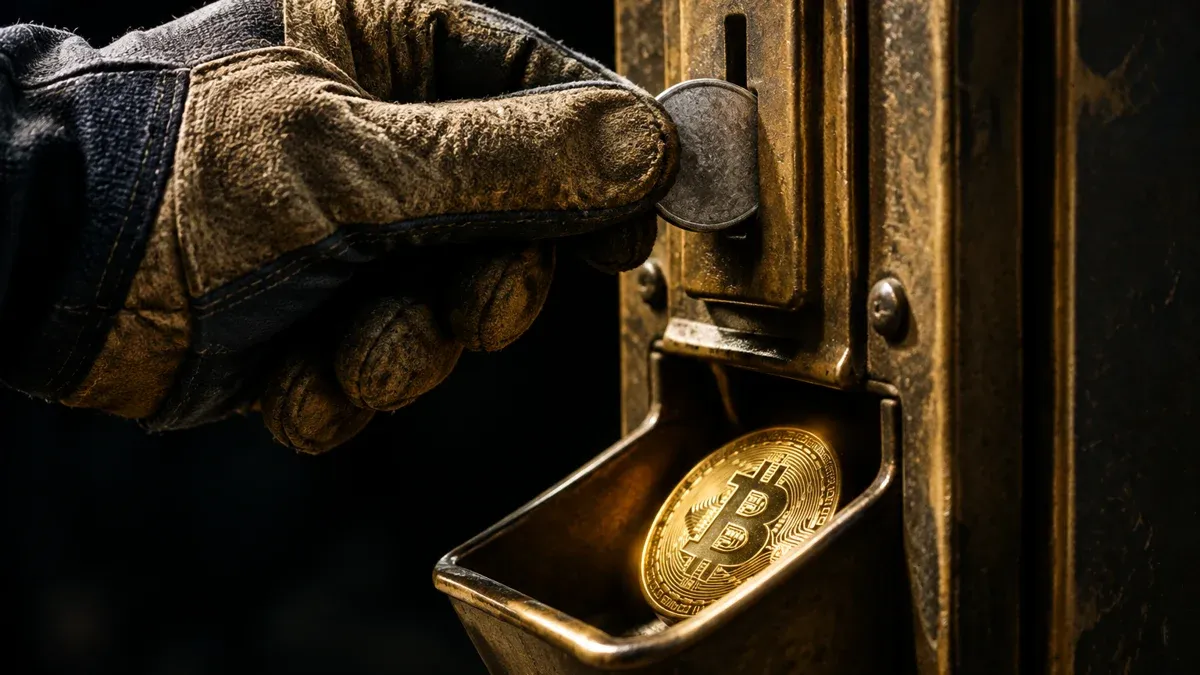
Redeeming means handing over a placeholder and getting something else back. Exactly what depends on which uAsset you hold.
After November 17: six uAssets get the original, the rest get USDC
For the period after the deadline, Universal has published a table. Six uAssets held on Base are then redeemable into their respective bridged counterpart:
uAsset on Base
redeemable into
uSOL
SOL on Base
uXRP
cbXRP
uDOGE
cbDOGE
uADA
cbADA
uBTC
cbBTC
uLTC
cbLTC
all other uAssets
USDC
The prefix cb stands for the bridged versions held on Base. Anyone holding one of the six tokens therefore swaps one placeholder for another and stays in the same underlying asset. Anyone holding one of the other roughly 80 uAssets leaves their underlying asset entirely and afterwards holds a dollar-pegged stablecoin.
Sell or redeem: which route is right for you
The decision comes down to a single question: do you want to stay invested in the underlying asset or not?
You want to stay invested. Then you redeem directly by November 17 and hold the underlying asset itself afterwards, or you take the bridged counterpart after the deadline if you hold one of the six named tokens. With all other uAssets that is not an option: there the link to the underlying asset ends on the deadline, and you would have to buy the asset back after the conversion with the USDC you receive, at whatever price applies then.
You want out. Then you sell through the app while the liquidity is being guaranteed. Anyone who waits meets a market everybody wants to leave at the same time, and at trading volumes that are small. How small is shown in the next section.
There is no third possibility. Doing nothing is a deferred swap for the six tokens and, for everything else, a conversion into USDC that you do not control.
Why waiting gets expensive: what market cap and daily turnover say
This is not a billion-dollar affair, and that is precisely the point. Our own query to CoinGecko on September 25, 2026 at around 12:49 UTC: uXRP shows a market capitalisation of roughly $2.95 million on daily turnover of about $279,000. uDOGE stands at around $341,000 market capitalisation and about $72,000 daily turnover.
Put those figures in proportion. With uXRP, daily turnover does not even amount to a tenth of the outstanding supply. If a meaningful share of holders wants to sell simultaneously in the last days before November 17, that supply meets a very thin market. The discount you would then accept is not market risk in the usual sense, but a consequence of the deadline.
The flip side: deciding early costs you little in this case. As long as Universal guarantees relayer liquidity and the backing is intact, you sell close to the price of the underlying asset. That is the real message in these numbers.
Is the peg still holding? Our own measurement on uXRP and uDOGE
A holder's first question is whether the placeholder still trades where its underlying asset stands. Measured at the same time, September 25, 2026 at around 12:49 UTC: uXRP trades at $1.60, XRP itself at $1.61. That is a discount of roughly 0.6 percent. uDOGE trades at $0.098152, dogecoin itself at $0.098275, so around 0.1 percent below. Solana stood at $120.40 at the same moment.
The peg is therefore holding, with a small discount that reflects the uncertainty about the wind-down. That is a snapshot and no guarantee for November 16. Anyone wanting to follow the situation themselves compares the price of the uAsset with the price of the underlying asset, ideally daily and from the same data source. If the discount widens noticeably, that is a sign the market is judging redemption less favourably than before.
What the caveat in the announcement means for you
On the published redemption table, Universal writes explicitly: "The redemption assets above reflect our current plans and are subject to change as the wind-down progresses." The mapping of which uAsset is redeemed into which asset is therefore provisional. The team says it will publish final details on redemption values, the smart contract and the exact procedure before November 17.
For you that sentence has a practical consequence. Planning around the table means planning around a statement of intent. Selling or redeeming directly before the deadline, by contrast, makes you independent of the final version. This is no reproach to the protocol, which communicates the caveat openly, but a trade-off you make for yourself.

For the tax office, a swap is a sale. That holds even when a smart contract triggers it.
Tax: why the forced conversion into USDC is a disposal
A private disposal transaction under section 23 of the German income tax act exists where an asset is disposed of again within one year of acquisition. A swap counts as a disposal, because you give up one asset and receive another. Anyone whose uAsset gets converted into USDC therefore has a transaction the tax office treats like a sale, even though a contract triggers it rather than you.
Three points follow that you should settle before November 17. First: if your acquisition is more than a year back, a gain is tax free under the law as it stands, and the timing of the conversion is immaterial to you. Second: if it is more recent, the gain counts among private disposal transactions, for which an exemption threshold of 1,000 euros per calendar year has applied since 2024. Third: by choosing when you sell you also decide which tax year the transaction falls into. Anyone converted only after November 17 no longer has that choice.
Unsettled is the treatment of redeeming a uAsset into its bridged counterpart, say from uXRP into cbXRP. Whether that constitutes a swap of two different assets or merely a change of technical wrapper has not been conclusively determined. Tools that carry acquisition dates and holding periods across such events are in our overview of crypto tax software and portfolio trackers. This section is not tax advice; with larger positions the individual case belongs with a tax adviser.
Where investors hold uAssets in the first place
uAssets are not tokens you find on a European-authorised trading platform. These tokens live on Base, an Ethereum layer 2, and are traded there through decentralised venues and the Universal app. Anyone holding them generally has them in a self-custodied wallet, not in an account with a provider holding European authorisation.
That has two consequences for this deadline. First, nobody will remind you. There is no provider dropping a deadline into your inbox, and no German-language outlet has picked the matter up so far. Second, the entire process is in your hands: you need access to the wallet holding the tokens, and some network fee on Base to be able to trade or redeem at all. Both are better checked now than on November 16.
Anyone wanting to carry on afterwards with the USDC received or the redeemed underlying asset will sooner or later come back to the question of where they trade and where they custody. Both are decisions in their own right, and neither should be made under time pressure.
Redeeming uAssets: what to take away
- Check by the end of October whether you hold any uAssets at all, and which. What matters is the distinction between the six tokens with a bridged counterpart and all the others, which end in USDC. If you then want to sell, you need a venue for the proceeds: our comparison of crypto exchanges shows which providers come into question.
- Decide early rather than on the deadline. Daily turnover is small, direct redemptions may take longer, and the redemption table carries a caveat. Anyone wanting to keep the underlying asset and custody it themselves will find suitable devices in our hardware wallet comparison.
- Settle the holding period before the contract decides for you. A conversion into USDC is a disposal for tax purposes. Which tools keep acquisition data and deadlines cleanly in view is set out in our overview of tax software and portfolio trackers.
The announcement in full is in Universal's wind-down notice of September 18, 2026; an independent report on it was published by PANews on September 20, 2026.
(As of September 25, 2026. This article is not investment advice. Prices and fee structures change; check the terms with the provider before you buy.)
