Demand for BTC is diverging, with signs of weakening US activity. While Binance remains a venue for whales, the Coinbase premium points to weakening US interest. US demand for BTC, as measure
Demand for BTC is diverging, with signs of weakening US activity. While Binance remains a venue for whales, the Coinbase premium points to weakening US interest.
US demand for BTC, as measured by the Coinbase premium, is at the lowest level since July. The negative price differential is at 0.19%, a small disparity but a signal that US traders are showing lowered demand.
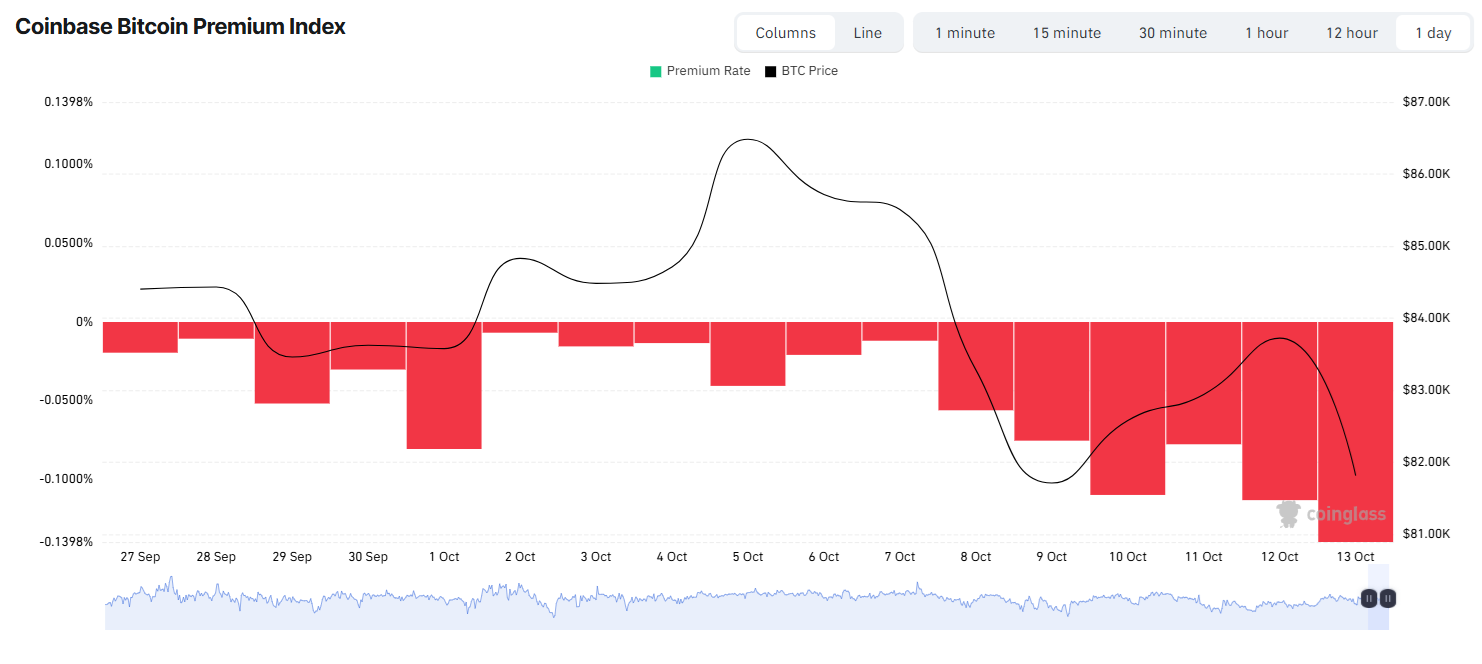
The Coinbase premium shifted to the red in October, showing caution from US traders, low spot demand, and institutional selling. | Source:
Coinglass
The Coinbase premium index turned more negative in October, as BTC moved in a range between $80,000 and $85,000. The recovery from the summer’s lower range did not arrive with buying enthusiasm, but rather with selling pressure from US whales.
US trading hours are also linked to institutional activity, as ETFs take up or shed more BTC holdings.
Coinbase reflects institutional demand for BTC
Based on analysis by @darkfrost, the Coinbase premium index is heavily skewed toward institutional activities. Coinbase remains a professional account platform, while Binance reflects the behaviors of all types of investors, including retail and risky crypto whales.
The two types of investors have different behaviors and objectives, with US professional traders trying to remain conservative and lock in returns from the latest BTC recovery.
US institutions are also more responsive to the shifting geopolitical tensions in the war with Iran, as well as local economic and market factors. The latest downturn in US demand for BTC for now cannot be offset by Binance retail buyers.
The recent behavior of US institutions also signals low confidence in BTC and crypto as a whole, though a readiness to use any rallies to lock in gains. BTC now trades in a high-yield environment, with global uncertainty and rising energy prices, leaving institutions less willing to take risks and allocate liquidity.
In this situation, BTC has not been kept as a tool against inflation, due to its relatively high volatility. Any excess liquidity moves to equities and the tech sector, or the broader S&P 500 index.
At the same time, BTC sees ongoing silent accumulation into addresses holding 100-1000 coins. Those addresses broke new records with 20,384 wallets in total, adding around 1,000 new whales over the course of 2026. Older cohorts are also holding for the long term, although miners decreased their activity and sold more of their reserves.
BTC sentiment remains neutral
BTC sentiment returned to 55 points, signifying neutral positioning, after spending several days in the greed zone above 70 points.
The main driver of trader sentiment is the recent liquidations, targeting long positions as BTC dipped from its recent levels down to the $81,000 range.
In the past months, BTC demand has also shifted quickly. BTC buyers appear as the coin slides closer to $80,000, and treasury companies still hold or acquire more coins.
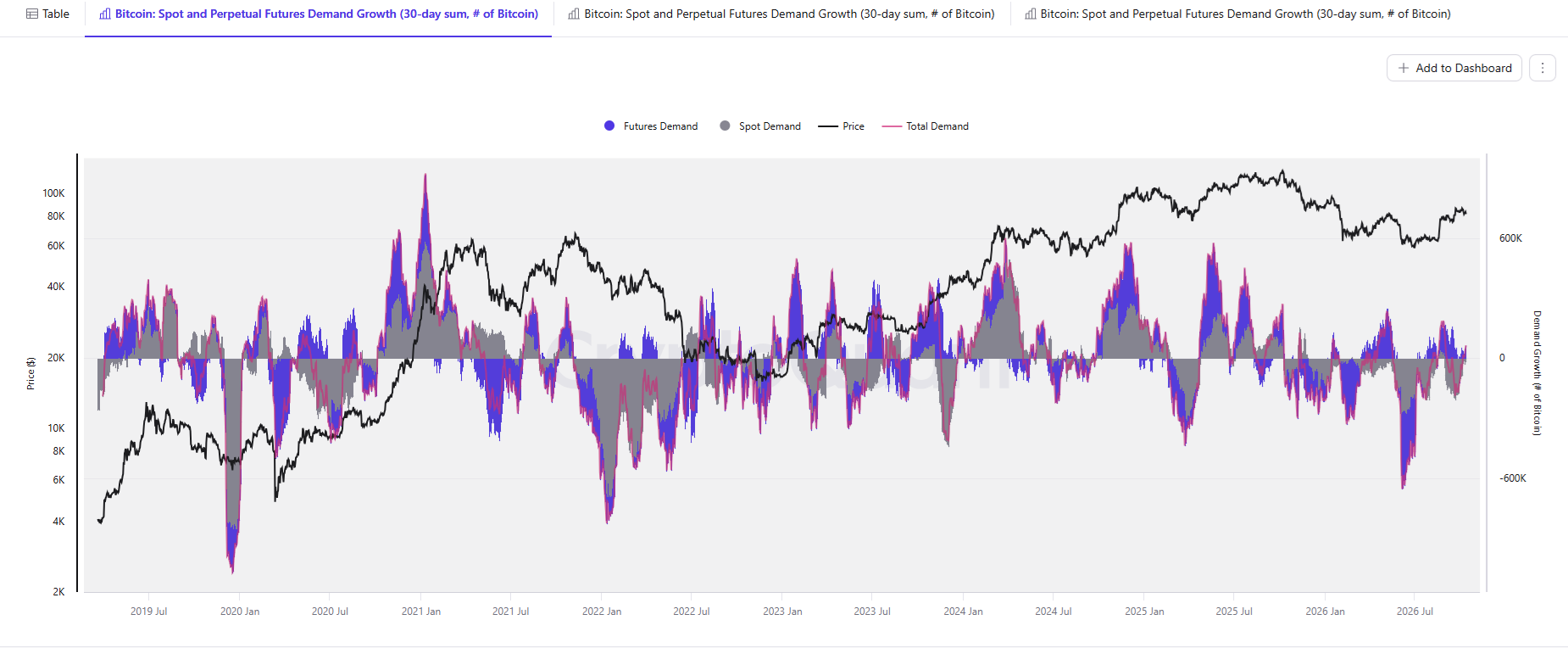
BTC spot demand remains weak, while derivative market demand shifts quickly during more volatile trading periods. | Source:
Cryptoquant
The current BTC conditions are seen as a potential signal for a larger recovery, though traders and investors prefer to remain cautious and not over-allocate until receiving more bullish signs.
BTC volatility is also increasing, from 0.90% in August to 1.52% for the last 30 days. Volatility is historically lower as a percentage, but still signals more cautious trading and an immediate reaction to changing conditions, rather than confident holding.
In October, futures demand renewed for BTC, though spot demand remains weak.
If you're reading this, you’re already ahead. Stay there with our newsletter.