BitcoinWorld US Central Command Completes Precision Strikes on Iranian Military Targets, 50,000 Troops Deployed The United States Central Command (CENTCOM) announced early Wednesday that it h
BitcoinWorld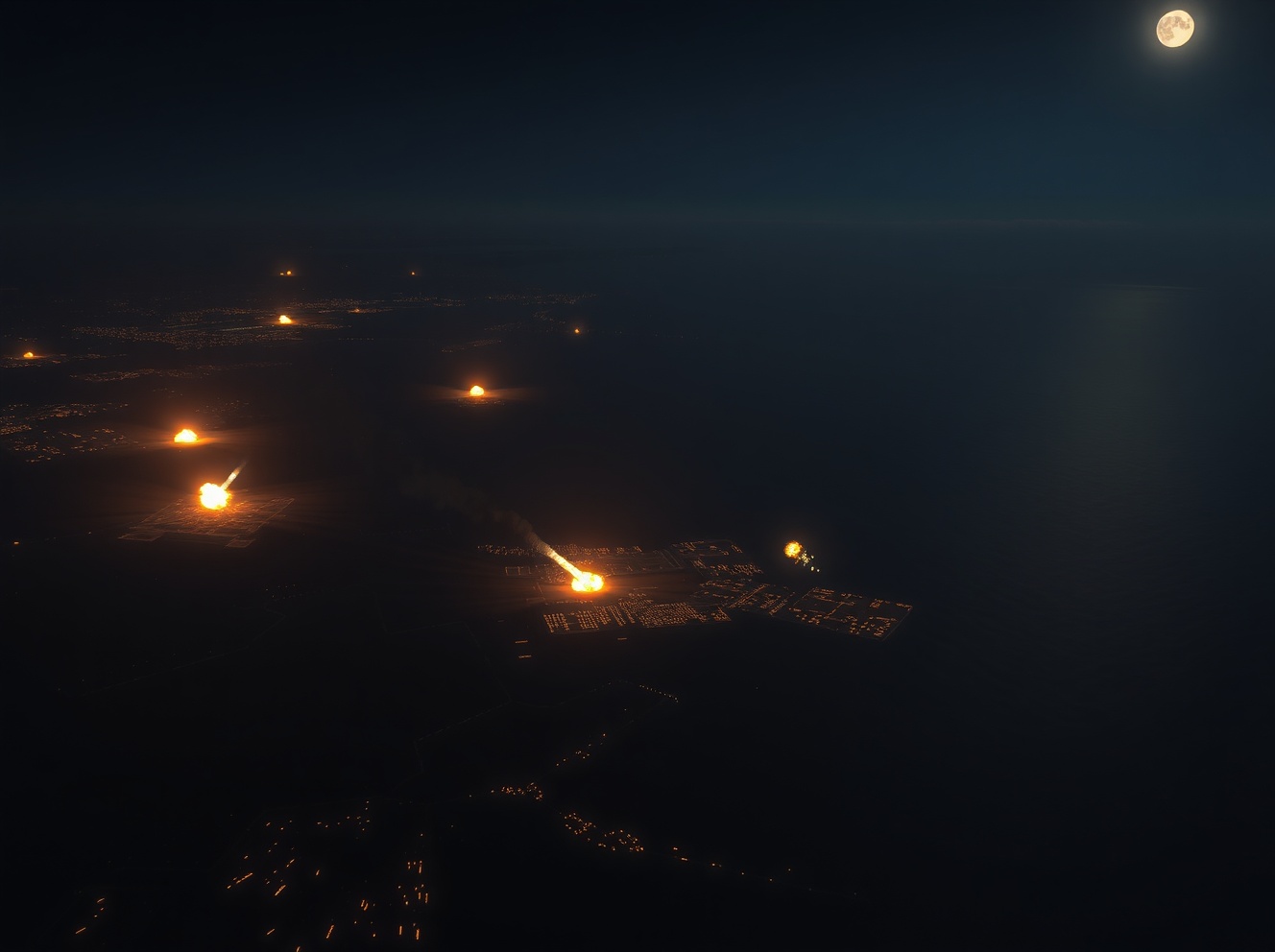 US Central Command Completes Precision Strikes on Iranian Military Targets, 50,000 Troops Deployed
The United States Central Command (CENTCOM) announced early Wednesday that it had completed a five-hour precision strike operation against multiple military targets in Iran, escalating a campaign to degrade the country’s ability to threaten commercial shipping in the region. The operation, which concluded at 2:15 a.m. UTC on July 13, involved the use of precision-guided munitions against coastal defense systems, missile and drone launch sites, and maritime operational capabilities.
Targets and Scope of the Operation
According to a statement released by CENTCOM, the strikes hit facilities in several strategic locations, including Bushehr, Chabahar, Jask, Konarak, Abu Musa island, and Bandar Abbas. These sites are known to house components of Iran’s coastal defense network, including anti-ship missile batteries, drone storage and launch infrastructure, and naval command-and-control centers. The operation was designed to further degrade Iran’s ability to attack merchant vessels transiting the Persian Gulf and the Strait of Hormuz, a critical chokepoint for global oil shipments.
The military action follows a series of escalating incidents in the region, including recent attacks on commercial tankers that the U.S. has attributed to Iranian forces. The Biden administration has repeatedly warned that it would take decisive action to protect freedom of navigation, a principle that underpins global energy markets and international trade.
Massive Troop Deployment Signals Readiness for Broader Conflict
In a separate but related development, CENTCOM confirmed that more than 50,000 U.S. military personnel are currently deployed across the Middle East, maintaining a high state of alert and robust combat readiness. This deployment includes naval assets, air force squadrons, and ground forces positioned at bases in Qatar, Bahrain, the United Arab Emirates, Kuwait, and Saudi Arabia. The Pentagon has described the posture as defensive in nature but capable of rapid escalation if necessary.
Analysts say the scale of the deployment is among the largest in the region since the height of the Iraq War, signaling that the U.S. is preparing for a potentially prolonged confrontation with Iran. The presence of aircraft carrier strike groups, B-52 bombers, and Patriot missile defense systems underscores the seriousness with which Washington views the threat.
Implications for Regional Stability and Global Markets
The strikes and troop buildup are likely to have significant repercussions. Iran has previously threatened to close the Strait of Hormuz in response to military pressure, a move that could disrupt oil supplies and send energy prices soaring. The International Energy Agency has warned that any sustained disruption could push global oil prices above $120 per barrel, compounding inflationary pressures already affecting many economies.
Diplomatic efforts, including talks in Vienna and Doha, have so far failed to produce a breakthrough on Iran’s nuclear program or its regional military activities. The latest U.S. military action may further complicate those negotiations, though Washington insists it remains open to a diplomatic resolution.
Regional governments, including Saudi Arabia and the United Arab Emirates, have expressed cautious support for the U.S. operations but are also wary of being drawn into a wider conflict. Iran’s allies, including Hezbollah in Lebanon and Shia militias in Iraq, have condemned the strikes and warned of retaliation.
Conclusion
The completion of precision strikes against Iranian military infrastructure, combined with the deployment of over 50,000 U.S. troops, marks a significant escalation in the long-running confrontation between Washington and Tehran. The immediate focus remains on the security of commercial shipping in the Persian Gulf, but the broader implications for regional stability, energy markets, and diplomatic efforts are profound. As the situation continues to develop, the world watches for Iran’s next move and the potential for further military engagement.
FAQs
Q1: What specific targets were hit in the U.S. strikes on Iran?The strikes targeted coastal defense systems, missile and drone launch sites, and maritime operational capabilities in Bushehr, Chabahar, Jask, Konarak, Abu Musa island, and Bandar Abbas.
Q2: Why did the U.S. conduct these strikes?The stated goal is to degrade Iran’s ability to attack merchant ships in the Persian Gulf and the Strait of Hormuz, following a series of attacks on commercial vessels attributed to Iran.
Q3: How many U.S. troops are currently deployed in the Middle East?More than 50,000 U.S. military personnel are deployed across the region, maintaining high readiness for any potential escalation.
This post US Central Command Completes Precision Strikes on Iranian Military Targets, 50,000 Troops Deployed first appeared on BitcoinWorld.