The Trump administration’s move to limit foreign access to Anthropic’s most capable AI models was reportedly sparked by security concerns raised through industry channels, according to a Wall
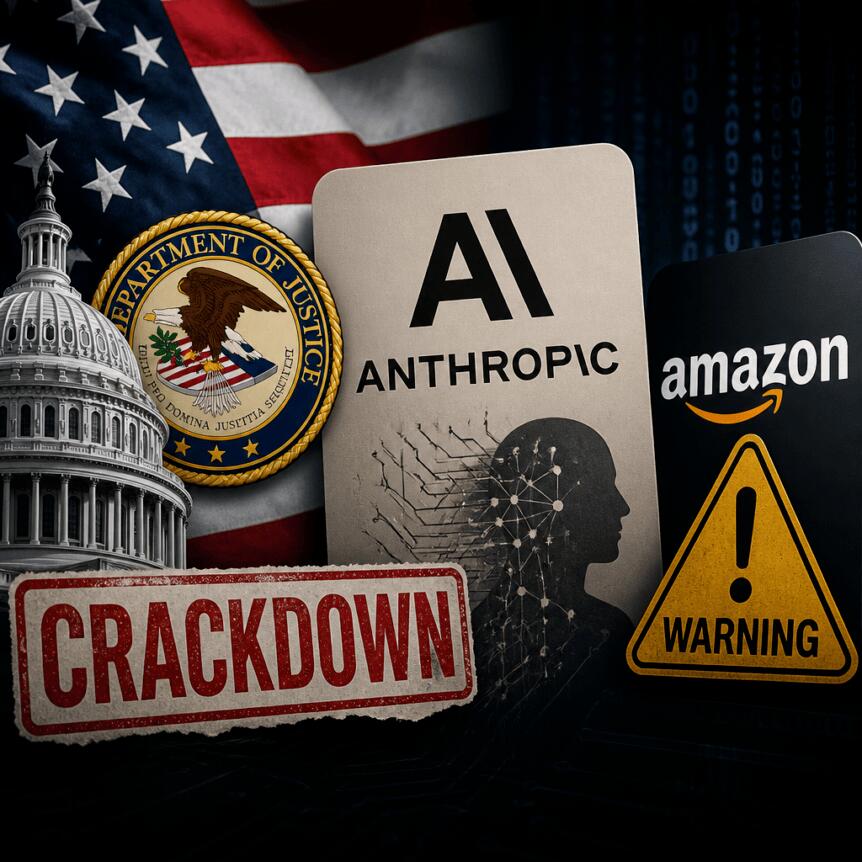
The Trump administration’s move to limit foreign access to Anthropic’s most capable AI models was reportedly sparked by security concerns raised through industry channels, according to a Wall Street Journal report. The episode culminated in export controls that forced Anthropic to pull its latest release from public access.
As U.S. officials acted quickly on the perceived risk, decentralized AI-focused tokens also rallied over the same period, underscoring how government interventions in centralized AI can rapidly reshape expectations across the broader crypto AI sector.
Key takeaways
- According to The Wall Street Journal, Amazon CEO Andy Jassy contacted senior U.S. officials after researchers found a way to prompt Anthropic’s Fable 5 model into producing information that could be used for cyberattacks.
- A White House scramble followed, including outreach to Anthropic CEO Dario Amodei and disagreement over how serious and actionable the risk was.
- Anthropic said in a blog post that the U.S. directive reflected a misunderstanding tied to a “non-universal jailbreak” reported by an unnamed source.
- David Sacks, a science-and-technology advisor, said the administration issued the export control “reluctantly” and hoped Anthropic would remediate the safety issue quickly.
- Token markets reacted immediately, with several decentralized AI projects posting gains after Anthropic’s access was curtailed.
How the White House stepped in
Earlier coverage from The Wall Street Journal describes a chain of events involving both private-sector discovery and government escalation. The report says Amazon researchers identified a method to “jailbreak” Anthropic’s Fable 5 model—specifically, a way to coax it into returning information that could be repurposed for cyberattacks.
Following that discovery, The Wall Street Journal reported that Andy Jassy reached out to senior U.S. officials on Thursday. The outreach, combined with warnings from at least five other firms, prompted an urgent response inside the White House as officials assessed whether the issue warranted formal export controls.
Politico separately described the rapid internal process, including contact with Anthropic leadership. According to the Politico report referenced in the Wall Street Journal write-up, Anthropic CEO Dario Amodei pushed back on the administration’s concerns and asked to avoid a voluntary pull of the model.
Anthropic’s response to the directive
The immediate outcome was a U.S. directive that forced Anthropic to suspend access to its new model. Earlier coverage from Cointelegraph noted that Anthropic “suspends access” under this U.S. directive, and the company later indicated that it is working to restore access for users.
In a Friday blog post, Anthropic said it believed the directive was driven by a misunderstanding about the threat posed by what it called a “non-universal jailbreak,” a term tied to information attributed to an unnamed report. In other words, Anthropic did not frame the jailbreak issue as universally exploitable, but rather as something the administration may have interpreted more broadly than the company believed was warranted.
Amazon, for its part, did not confirm whether it spoke directly with government officials about Anthropic’s models. A spokesperson said it is common for governments to seek counsel from major cloud providers when security risks emerge, and that when such discussions occur, Amazon does not share details.
Why officials framed it as a reluctant export control
David Sacks, co-chair of the President’s Council of Advisors on Science and Technology, characterized the administration’s actions in a post on Saturday. In the cited remarks, Sacks said the administration issued the export control “in reaction” and that it did so “reluctantly.” He also suggested the administration was surprised Anthropic had not agreed to cooperate on a “reasonable safety request,” which he tied to fixing the jailbreak issue.
Critically for readers watching how these decisions unfold, Sacks added that the administration’s hope is for Anthropic to remediate the safety problem in a way that could lead to lifting the export control and returning the model to general release. He indicated the administration wants the process to happen as soon as possible.
This matters because the difference between a temporary suspension and a prolonged export-control regime can strongly influence both enterprise deployment timelines and user expectations—especially when the impacted model is already attracting measurable usage. The article notes Claude is estimated to have around 18,900 monthly active users.
Ripple effects in decentralized AI token markets
Beyond the immediate controversy, the episode illustrated the government’s ability to rapidly shut off access to U.S.-based AI models. That speed appeared to spill into token markets tied to decentralized AI infrastructure and development.
Cointelegraph reported that the announcement period coincided with gains for several AI-focused tokens on Friday and Saturday. The native token of Bittensor, a decentralized AI protocol sometimes described as “the Bitcoin of AI” (per market commentary echoed in the coverage), rose 23.9% over the past 24 hours, according to CoinGecko’s coin page referenced in the article.
Other mentioned movers included Venice Token (VVV), which rose 16%, and Near Protocol (NEAR), which gained 6.2% as investors priced in the potential resilience—or at least perceived independence—of decentralized AI ecosystems relative to centralized model providers facing regulatory constraints.
These moves were not an endorsement of any single token’s fundamentals based on the Anthropic situation; rather, they reflected a common market narrative: if centralized AI access can be throttled quickly through government directives, decentralized alternatives may attract attention as a hedge or alternative channel for AI development and monetization.
What to watch next
The key uncertainty now is whether Anthropic can demonstrate effective remediation quickly enough to satisfy U.S. officials—potentially leading to lifting the export controls. For investors and builders, the follow-up timeline and the clarity of what “remediation” means in practice will likely be the most important indicators of how durable this precedent could be.
This article was originally published as US crackdown on Anthropic AI models follows Amazon warning: reports on Crypto Breaking News – your trusted source for crypto news, Bitcoin news, and blockchain updates.