
Markets1 min read
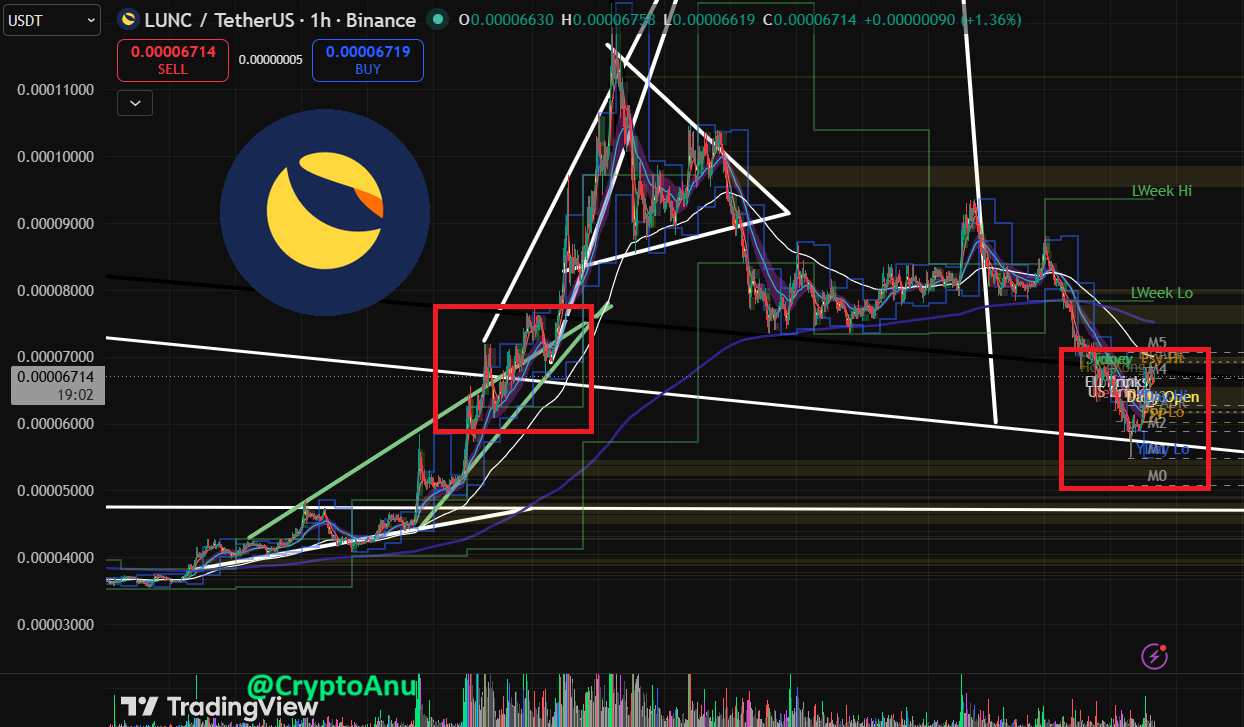
LUNC retest done.
Wow. $LUNC came all the way down for the retest. LWeekHi → LWeekLo. Now watching if support holds. This is where conviction gets tested. $LUNA $USTC #TERRACLASSIC #LUNACLASSI
The American job market continues to defy predictions. While investors search for the slightest clue on the next trajectory of Federal Reserve rates, the May employment report reinforced the

The American job market continues to defy predictions. While investors search for the slightest clue on the next trajectory of Federal Reserve rates, the May employment report reinforced the idea of an economy still solid. A reading shared by Beth Hammack, president of the Cleveland Fed, who judges the labor market overall balanced and estimates that the economy remains near full employment. Such statements could weigh on monetary expectations for the coming months.
Beth Hammack quickly reacted after the publication of the U.S. employment report for May. According to her, the data revealed on June 5 confirm that the labor market remains “overall balanced”.
The head of the Cleveland Fed also stated that “the U.S. economy still operates around a level it considers close to full employment”. These comments come while non-farm payrolls reached 172,000 jobs in May, a result exceeding economists’ expectations. Meanwhile, the unemployment rate remained stable at 4.3%, reflecting a situation that shows no obvious sign of deterioration.
The published data paint a relatively stable picture of the U.S. labor market :
While employment figures captured investors’ attention, Beth Hammack also hinted that the real issue lies elsewhere. Thus, her intervention underlines that the central question for the Federal Reserve remains the evolution of inflation.
By judging that the labor market is still balanced and that the economy is near full employment, the Fed leader dismisses the idea of a rapid deterioration in activity that would require an immediate response from the central bank. Her analysis fits into a line already expressed during previous interventions, during which she indicated that inflation-related risks continue to deserve particular attention.
This reading changes the way markets interpret upcoming monetary policy decisions. When employment slows significantly, investors often anticipate a quicker easing of financial conditions to support growth. The observation made by Beth Hammack points in a different direction.
In the absence of signs of marked weakness in the labor market, the central bank can continue focusing its efforts on price stability. Financial operators, thanks to on-chain data, therefore now monitor less the strength of employment than the ability of inflation to converge toward the target set by the Fed.
For markets, this nuance is far from trivial. An economy capable of maintaining a solid employment level offers more flexibility to monetary authorities when they evaluate their next decisions. Investors in stocks, bonds, and cryptos will thus continue to analyze each economic release through the prism of a labor market considered balanced, but a fight against inflation that remains open.