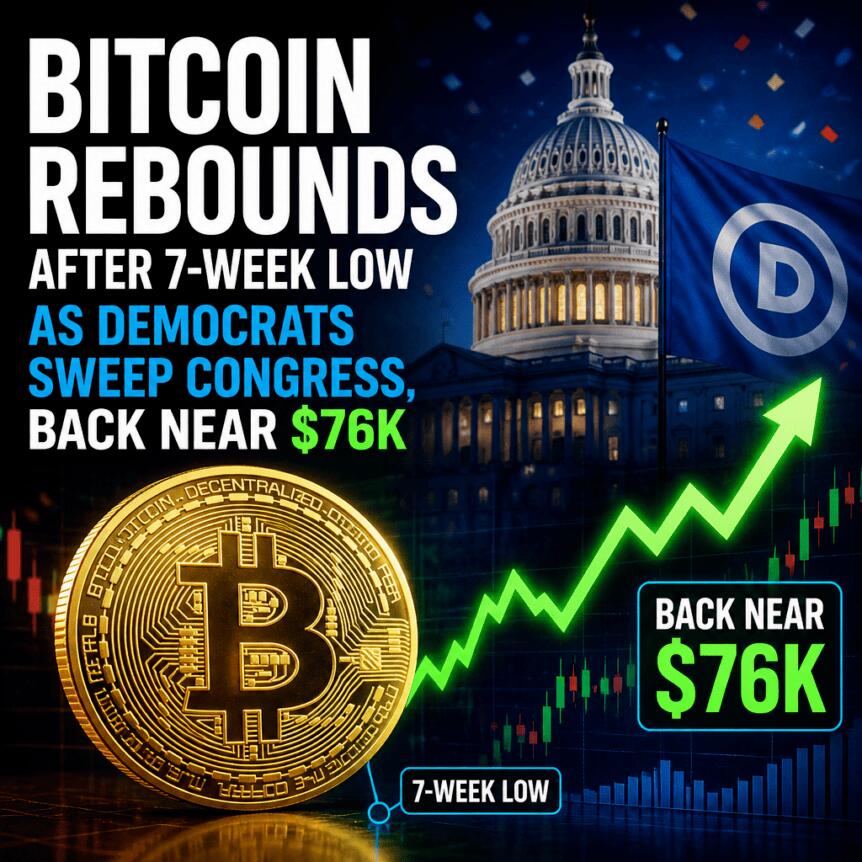
US midterm 2026 pro-crypto politicians — Source: CoinGape Andy Barr, Harriet Hageman, Barry Moore and Pete Ricketts remain key Republican allies. James Talarico, Troy Jackson and Chris Pappas
US midterm 2026 pro-crypto politicians — Source: CoinGape
- Andy Barr, Harriet Hageman, Barry Moore and Pete Ricketts remain key Republican allies.
- James Talarico, Troy Jackson and Chris Pappas could offer bipartisan support for crypto legislation.
- Sherrod Brown's return could complicate the future of the CLARITY Act.
In a big upset, the crypto industry which poured more than $170 million into the 2026 US midterm elections has failed to see the desired outcome. It was hoping to strengthen its influence in Congress and secure support for its long-awaited regulatory agenda.
But the results have delivered a political shock. Democrats have won control of both chambers with Republicans failing to control reins of Senate. It is also raising fresh questions about the future of the Digital Asset Market Clarity Act, or CLARITY Act.
The outcome is a setback for an industry that had spent around $176 million to build a friendlier Congress. Fairshake and its affiliated political action committees led much of that effort, with a16z, Coinbase, Ripple Chairman Chris Larsen Donates among the top donors of US midterm elections.
However, the industry’s biggest bets did not all pay off. More than $60 million was spent opposing Brown in Ohio, yet he has defeated Republican Jon Husted. Crypto-backed efforts also failed to prevent Democrat Juliana Stratton from winning Illinois’ Senate race. This is despite Fairshake spending more than $10 million opposing her during the primary campaign.
However, the results do not mean that crypto has lost every ally in Washington. Several lawmakers with records of supporting digital-asset legislation won their races. This includes Republicans Andy Barr, Harriet Hageman and Barry Moore, as well as Democrats James Talarico and Troy Jackson.
The difference now is that these lawmakers will have to work with a Congress whose leadership and committee priorities are expected to be considerably less favourable to the industry’s preferred version of crypto regulation.
Republican Midterm Winners who are pro-crypto
The first on that list is Republican Andy Barr who has won Kentucky’s Senate race. He taking the seat being vacated by longtime Senator Mitch McConnell.
He brings his experience with the House Financial Services Committee and support for the GENIUS and CLARITY Acts to the Senate.
Harriet Hageman, who won Wyoming’s Senate race, will succeed retiring Senator Cynthia Lummis. She’ll be innheriting a seat previously held by one of crypto’s strongest congressional allies. Hageman has supported the CLARITY Act, GENIUS Act and FIT21 legislation. Meanwhile, Barry Moore won Alabama’s Senate race. This adds another incoming Republican lawmaker backed by crypto-aligned political groups. Pete Ricketts has also retained his Nebraska Senate seat. Ricketts has supported both the GENIUS and CLARITY Acts and serves on the Senate Banking Committee.
Democrat Midterm Winners who Can support crypto legislation
Democrats also had several victories that could give the crypto industry potential allies within the new congressional majority. James Talarico has defeated Republican Ken Paxton in Texas. He has backed clearer cryptocurrency regulations alongside consumer protections. He also supported a 2025 proposal to establish a strategic Bitcoin reserve in Texas.
Troy Jackson, who defeated Republican Senator Susan Collins in Maine, has expressed support for lawful crypto businesses accessing banking services and protecting individuals’ right to self-custody their digital assets.
Meanwhile, Chris Pappas has won New Hampshire’s Senate race and has supported key crypto legislation, including the GENIUS and CLARITY Acts. Their victories suggest that Democratic control does not automatically mean opposition to crypto. However, their support may come with stronger demands for consumer protection and regulatory oversight.
Not every crypto-friendly label tells the full story
But there is a twist. Some election winners have more complicated records than a simple pro-crypto or anti-crypto label suggests.
Senator Mark Warner, who won reelection in Virginia, has supported efforts to establish clearer rules for digital assets. However, he voted against the September procedural motion to advance the CLARITY Act. His position illustrates the divisions within the Democratic Party over how crypto should be regulated.
Senator Cory Booker also won reelection in New Jersey, but he voted against that same September motion. His support for stablecoin legislation and participation in market-structure discussions should not be confused with unconditional support for the industry’s preferred version of the CLARITY Act.
Meanwhile, Senator Kirsten Gillibrand remains one of the most prominent Democratic voices advocating for bipartisan crypto legislation. She was not up for reelection in 2026, so she should not be counted among this year’s election winners. Her influence could nevertheless become more important as Democrats take control of Congress.
Illinois Democrat Juliana Stratton also deserves attention, but for a different reason. She won her Senate race after Fairshake spent heavily against her during the Democratic primary. That result is evidence that crypto-backed spending did not determine every contest, not evidence that Stratton is a crypto supporter.
Crypto Critics Sherrod Brown, Senator Elizabeth Warren Return to the Senate
Perhaps no result better captures the industry’s difficult election night than Sherrod Brown’s victory in Ohio.
The former Democratic senator defeated Republican Jon Husted despite a major spending campaign against him by crypto-linked political groups. Brown is a longtime critic of the crypto industry and previously chaired the Senate Banking Committee. His return could give Democrats a prominent voice on financial regulation and digital assets, although his seniority and eventual committee role will depend on decisions within the new Senate.
The US Midterm election results also puts Senator Elizabeth Warren in a stronger position to seek the Senate Banking Committee chairmanship as she wins her third term. Warren has repeatedly called for tighter oversight of the crypto sector. If she takes the role, the committee’s approach to digital-asset legislation could change significantly.
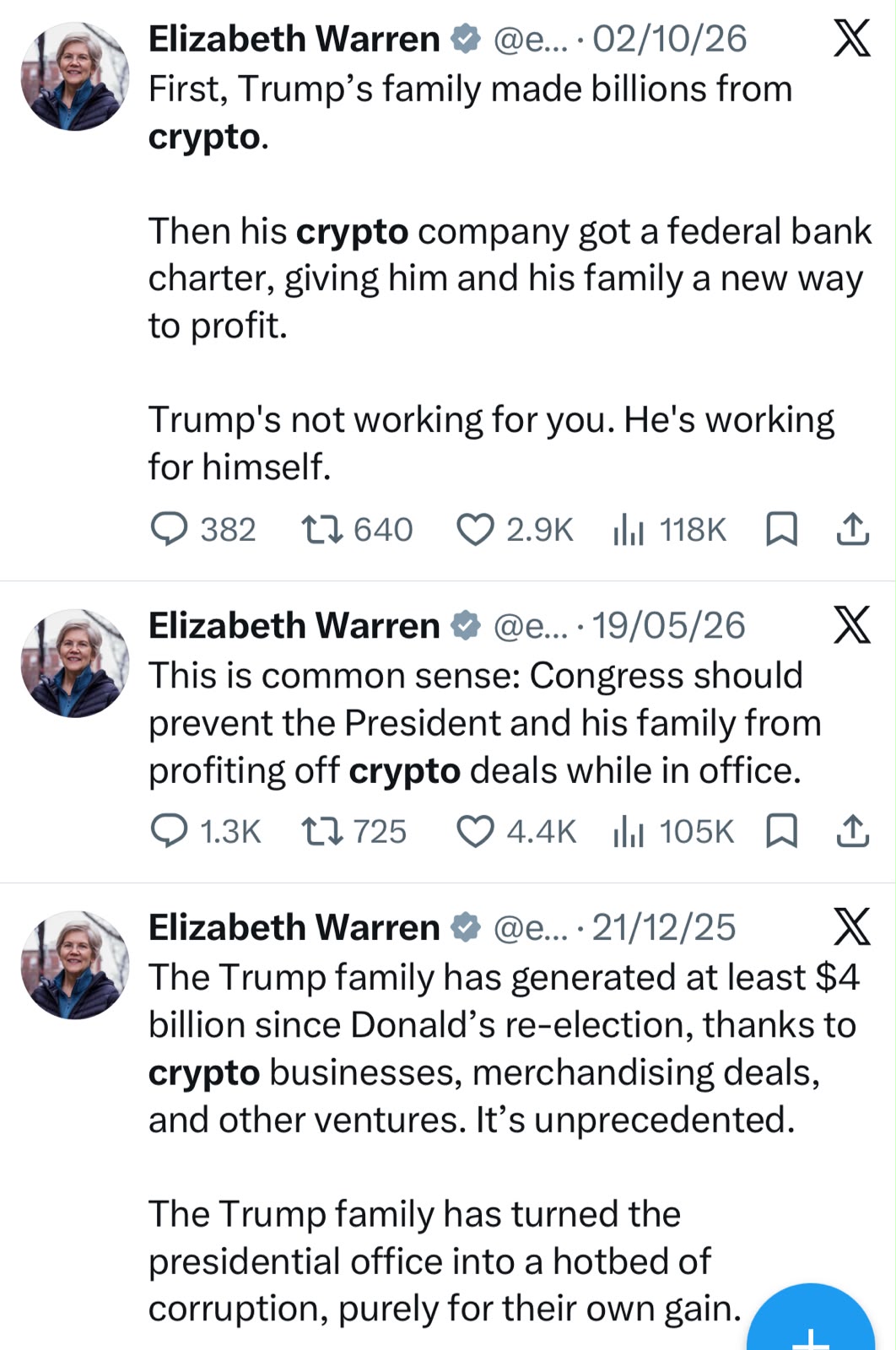
Crypto critic Elizabeth Warren wins US Mid term elections 2026
In the House, Representative Maxine Waters is expected to have a path back to the chairmanship of the Financial Services Committee. However, this will be subject to the new Democratic majority’s internal decisions. The committee has played a central role in advancing crypto legislation over the past two years.
As per Eleanor’s article, Several Republican crypto supporters also lost their House seats, including Bryan Steil, Zach Nunn and Ann Wagner, according to election coverage. Their defeats matter because they had been involved in the House’s work on digital-asset policy.
What does the new Congress mean for the CLARITY Act?
The biggest immediate question is what happens to the CLARITY Act.
The legislation is intended to establish a clearer division of regulatory responsibilities between the SEC and CFTC and provide a framework for digital-asset market participants. The industry has argued that the lack of regulatory certainty has made it harder for crypto businesses to operate and grow in the US.
However, the bill already faced resistance before the election. A September Senate procedural vote to advance debate failed 49–50, falling short of the 60 votes needed. Democratic lawmakers involved in negotiations had pushed for stronger consumer protections, illicit-finance safeguards and restrictions addressing potential conflicts of interest involving government officials.
With Democrats now controlling both chambers, the bill is unlikely to advance in the same form that crypto companies had hoped for. Any renewed effort will probably require negotiations over the provisions Democrats want strengthened.
The change in congressional control could also bring greater scrutiny of the Trump administration’s relationship with the crypto industry and the president’s own crypto-related business interests. Democratic lawmakers will have more authority to set oversight priorities, hold hearings and investigate potential conflicts of interest.
That does not mean all crypto legislation is finished. Stablecoin policy, crypto taxation and targeted regulatory reforms could still attract bipartisan support. But the broader market-structure bill faces a more difficult political environment.
Thus, the crypto industry still has a seat at the table, but the terms have changed now.
About the author
US Midterms 2026: Who Are the Pro-Crypto Politicians in the New Congress? originally appeared on CoinGape