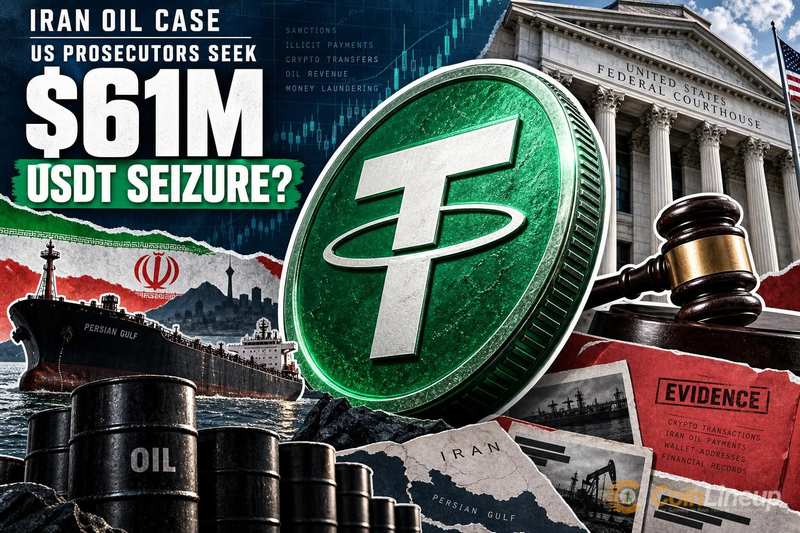
US prosecutors are seeking $61 million in Tether (USDT), a stablecoin pegged to the US dollar, that they link to an alleged Iranian oil-financing network. The request has not been described a
US prosecutors are seeking $61 million in Tether (USDT), a stablecoin pegged to the US dollar, that they link to an alleged Iranian oil-financing network. The request has not been described as a completed seizure, and key details about the case remain unconfirmed.
KEY TAKEAWAYS
- US prosecutors are seeking $61 million in USDT, a dollar-pegged stablecoin.
- The funds are tied to an alleged Iranian oil-financing network.
- The available information does not establish the outcome of the request.
US prosecutors seek $61 million in USDT
US prosecutors are the party seeking the funds. The amount involved is $61 million, and the asset is USDT, a stablecoin designed to hold a steady value of one US dollar. For related coverage, see Federal jury convicts Profit Connect owner Brent Kovar in $24M AI crypto fraud case.
The word "seek" matters here. Prosecutors are asking for the funds, which is different from a finished seizure, recovery, or forfeiture. As of now, the available information does not confirm that the money is under government control. For related coverage, see Velocity Adds $10 Million, Bringing Series A to $48 Million.
No court, filing date, agency, or procedural detail has been confirmed. That places this action in the same broad category as other US enforcement efforts, such as the Justice Department's charges against a crypto founder, though the specifics here remain thin.
The alleged Iranian oil-financing connection
The funds are tied to an alleged Iranian oil-financing network. The word "alleged" is important, because an allegation is a claim that has not been proven in court.
No named individuals, companies, wallet addresses, or transaction records have been confirmed. There is no confirmed detail showing how the network allegedly moved money or financed oil.
This is not the first US case to reference an Iran connection in crypto. A separate matter saw a Bitcoin ransom case widen to 17 Iran-linked defendants, but that case is distinct and should not be read as connected to this one.
What remains unconfirmed in the USDT case
The core limit is simple: this is a reported request, not a reported result. The available information does not establish whether the funds have been frozen, seized, transferred, or forfeited.
Missing information is not the same as proof. The absence of confirmed detail does not mean a ruling, a freeze, or a response does not exist; it means those facts are not confirmed here.
There is no confirmed role for the issuer of USDT in this matter. In some prior cases, prosecutors have moved to liquidate crypto, as when Dutch prosecutors sold seized crypto, but no such step has been confirmed here.
For a regular crypto holder, the practical takeaway is narrow. This case does not point to any confirmed effect on the price, reserves, or everyday use of USDT. Until official filings surface, treat every detail beyond the request itself as unconfirmed.
Additional source references: source document 1.
Disclaimer: This article is for informational purposes only and does not constitute financial or investment advice. Cryptocurrency and digital asset markets carry significant risk. Always do your own research before making decisions.
Read original article on coinlineup.com