Senator Richard Blumenthal has asked Tether CEO Paolo Ardoino to provide documents and information to the Senate Permanent Subcommittee on Investigations after a Wall Street Journal report al
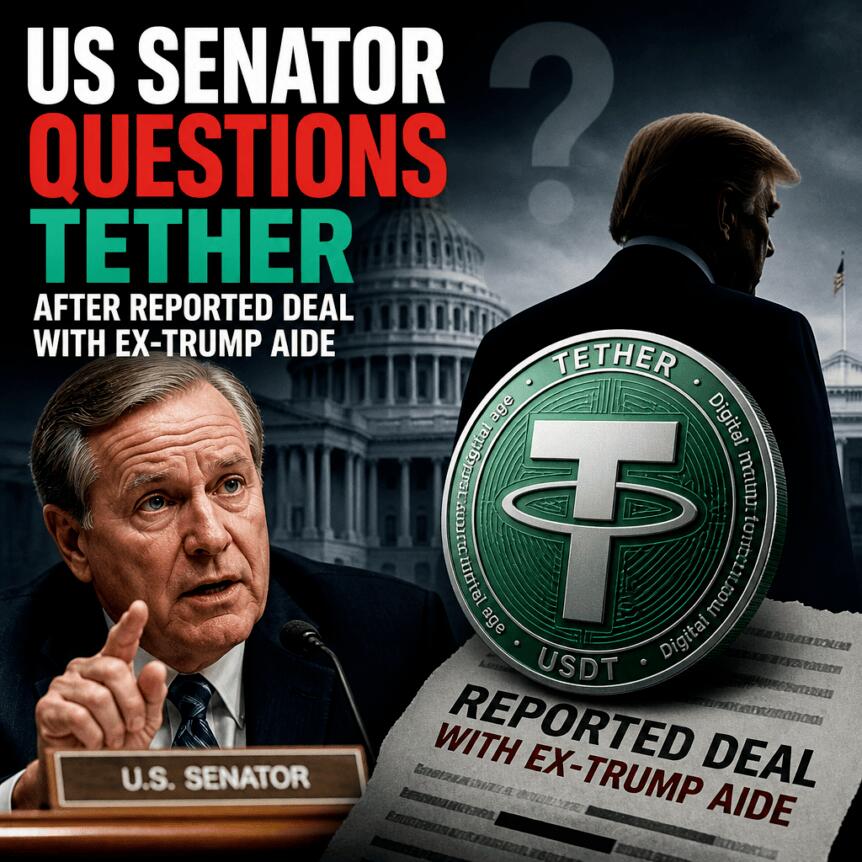
Senator Richard Blumenthal has asked Tether CEO Paolo Ardoino to provide documents and information to the Senate Permanent Subcommittee on Investigations after a Wall Street Journal report alleged that the stablecoin issuer signed a $6.3 million marketing deal tied to Bo Hines, a former White House crypto adviser.
In a Thursday letter to Ardoino, Blumenthal said the subcommittee is seeking records covering contracts, payments, communications, and lobbying activities involving Tether and Nxum, Hines’ company. The senator framed the inquiry as part of broader concerns about conflicts of interest and “self-enrichment and self-dealings with cryptocurrency firms” connected to the Trump administration’s crypto policy influence.
Key takeaways
- Blumenthal’s letter requests records and information on Tether’s arrangements with Nxum, including contracts, payments, communications, and lobbying efforts.
- The inquiry is linked to allegations from a Wall Street Journal report about a $6.3 million marketing agreement connected to Bo Hines.
- Blumenthal cited claims that encrypted messages show coordination on lobbying around stablecoin legislation known as the GENIUS Act.
- The senator argues Tether’s relationship with Nxum and Hines raises ethical and legal concerns, particularly given Hines’ prior role in the White House.
- Political control after the 2026 midterms could affect investigative leverage for Democrats in future congressional oversight.
Blumenthal escalates oversight of Tether and Nxum
Blumenthal’s letter states that the Senate Permanent Subcommittee on Investigations is demanding “records and information related to contracts, payments, communications, and lobbying” between Tether and Nxum, the marketing company associated with Bo Hines. Blumenthal described the overall matter as connected to allegations of improper financial ties between crypto firms and individuals with influence over crypto policy.
While the letter points to a central business relationship between Tether and Nxum, it also emphasizes the role that communications and lobbying activity may have played during the legislative process. The senator’s concerns appear aimed not only at payments under contracts, but at how those payments could intersect with efforts to shape stablecoin regulation.
Allegations center on GENIUS Act lobbying and coordination
In the letter, Blumenthal said that Hines did not divest his one-third stake in Nxum, despite stepping away from the White House. The senator also claimed that Hines worked closely with Nxum through encrypted messaging applications to coordinate lobbying and advocacy directed at members of Congress who opposed— or sought changes to—pending stablecoin legislation.
Blumenthal further alleged that the reported communications show Tether coordinating Nxum’s lobbying efforts related to the GENIUS Act. He specifically referenced a claim that Tether CEO Paolo Ardoino demanded Nxum “obliterate” the legislation’s opponents.
“The highly unusual terms and nature of Tether’s business relationship with both Nxum and Bo Hines raise alarming ethical and legal concerns, indicating that Tether was likely well aware of the illegality and impropriety of issuing payments to a current White House official with such a direct role in shaping cryptocurrency legislation that was instrumental to its business.”
The subcommittee’s request for communications and lobbying-related records suggests that lawmakers are seeking evidence that goes beyond the existence of a contract—potentially focusing on intent, coordination, and how influence may have been exercised during the legislative cycle.
Bo Hines’ revolving-door roles come under scrutiny
According to the letter’s referenced timeline, Bo Hines served as executive director on the President’s Council of Advisers on Digital Assets from January to August 2025 before leaving the White House to join Tether as a “strategic adviser.” After that, he became CEO of Tether US. The same period of movement, along with overlapping relationships between Tether, Nxum, and Hines, is a key element of Blumenthal’s concerns.
The article also notes that Harry Jung—another crypto adviser connected to the Trump administration—left his position in July 2026 and joined Nxum as a managing director in August. Together, these changes are being used in the oversight narrative to highlight how personnel transitions between policy roles and industry-linked entities can raise conflict-of-interest questions during rulemaking and legislative battles.
Cointelegraph attempted to reach Tether for comment on the investigation and the underlying report but did not receive an immediate response.
What midterm politics could change for investigators
Blumenthal, described as the Democratic ranking member of the Senate Permanent Subcommittee on Investigations, has limited authority compared with the majority party. Still, the outcome of the 2026 midterm elections could influence how much oversight power Democrats gain—potentially expanding the subcommittee’s ability to pursue additional questions about alleged ties between crypto industry participants and the Trump administration.
As of Friday, election-related event contracts on prediction market platforms Kalshi and Polymarket reportedly favored Democrats retaking majority control of both chambers of Congress in 2027. Kalshi’s odds were cited as 92% for the House and 68% for the Senate. The article also notes that US Election Day is set for Nov. 3.
For market participants, this matters because heightened oversight can translate into more scrutiny of stablecoin issuers, lobbying practices, and how legislative frameworks are shaped—particularly if lawmakers believe disclosures, ethical barriers, or conflict rules may not have been followed.
Readers should watch for Tether’s response to Blumenthal’s document request and for what the subcommittee ultimately uncovers regarding the alleged GENIUS Act lobbying coordination; the legal and ethical implications will likely depend on the specifics contained in the communications and payment records being sought.
This article was originally published as US Senator Questions Tether After Reported Deal With Ex‑Trump Aide on Crypto Breaking News – your trusted source for crypto news, Bitcoin news, and blockchain updates.