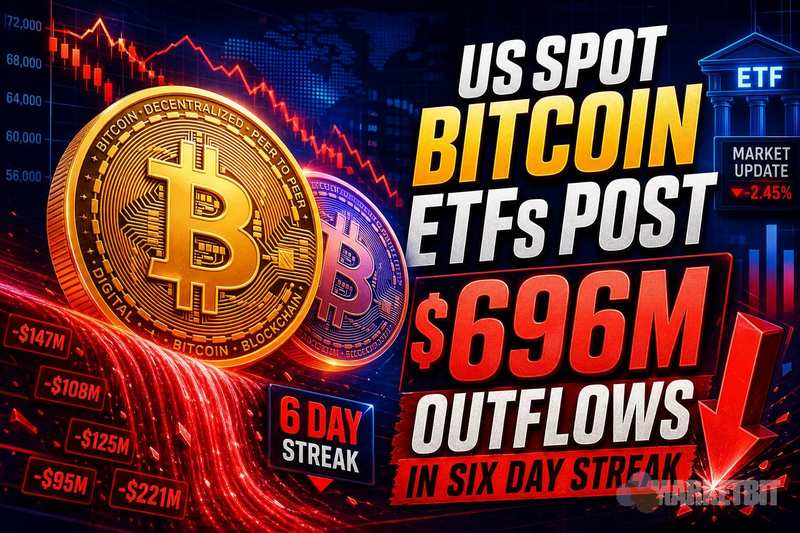
US spot Bitcoin ETFs recorded $696 million in net outflows on the latest trading day, extending a withdrawal streak to six consecutive sessions as institutional fund flows signal weakening ne
US spot Bitcoin ETFs recorded $696 million in net outflows on the latest trading day, extending a withdrawal streak to six consecutive sessions as institutional fund flows signal weakening near-term demand for Bitcoin-linked investment products.
What the $696 Million ETF Outflow Tells Investors
The $696 million single-day withdrawal ranks among the larger daily outflows recorded by US spot Bitcoin ETFs since their January 2024 launch. The figure, tracked by ETF flow aggregators such as Farside Investors, reflects net redemptions across the group of funds that hold Bitcoin directly on behalf of shareholders. For related coverage, see BlackRock Bitcoin ETF Outflows Add to $1B Weekly BTC Fund Losses.
What makes this withdrawal more significant is the streak behind it. Six consecutive days of outflows suggest a sustained shift in positioning rather than a single session of profit-taking or portfolio rebalancing. For related coverage, see Bitcoin Adopted by WikiLeaks 15 Years Ago: How It Happened.
What to Know:
- Outflow size: $696 million in a single trading day
- Streak length: Six consecutive days of net withdrawals
- Signal: Sustained ETF redemptions are widely watched as a measure of institutional appetite for Bitcoin exposure
The pattern echoes a similar stretch earlier this year when BlackRock's Bitcoin ETF contributed to $1 billion in weekly fund losses, underscoring how quickly sentiment can shift among large allocators.
Why the Six-Day Streak Matters for Bitcoin Market Sentiment
A single day of ETF outflows often reflects routine portfolio adjustments and carries limited predictive value. Multi-day streaks, however, attract closer scrutiny because they suggest a broader consensus among fund participants to reduce exposure.
ETF flow data, available through trackers like SoSoValue, has become one of the most closely watched indicators in crypto markets. Large sustained outflows tend to reflect institutional risk appetite more than retail sentiment, since ETF shares are frequently held by advisors, hedge funds, and asset managers.
It is important to distinguish between ETF flow direction and Bitcoin's spot price action. Outflows do not mechanically cause price declines; they reflect decisions already made by holders. Bitcoin can trade sideways or even rally during periods of ETF redemptions if spot market demand from other channels remains strong.
Previous outflow streaks have resolved in both directions. Earlier this year, a five-day outflow streak ended with an $85.8 million Friday inflow, demonstrating how quickly flows can reverse.
What Continued ETF Withdrawals Could Mean Next
If outflows persist into a seventh session and beyond, market participants will likely interpret the trend as a more durable pullback in institutional demand. Extended redemption periods in May saw BlackRock's Bitcoin ETF alone post a $1.41 billion net outflow for the month, illustrating how quickly cumulative figures can escalate.
A stabilization or reversal in flows would carry the opposite signal, suggesting that sellers have been absorbed and that remaining holders are comfortable with current price levels. Market watchers will be parsing daily flow reports from aggregators to gauge which scenario is unfolding.
Broader developments in the ETF ecosystem, including Morgan Stanley's potential move toward in-kind spot crypto ETF conversions, could also reshape the flow picture if major wirehouses expand access to these products.
Upcoming daily ETF flow releases will be the most immediate data point for gauging whether the current withdrawal trend is nearing exhaustion or accelerating.
Disclaimer: This article is for informational purposes only and does not constitute financial or investment advice. Cryptocurrency and digital asset markets carry significant risk. Always do your own research before making decisions.
Read original article on marketbit.net