The U.S. Treasury Secretary, Scott Bessent, states that the United States could seize one billion dollars of cryptos linked to Iran this week. However, no wallet or holder has been publicly i
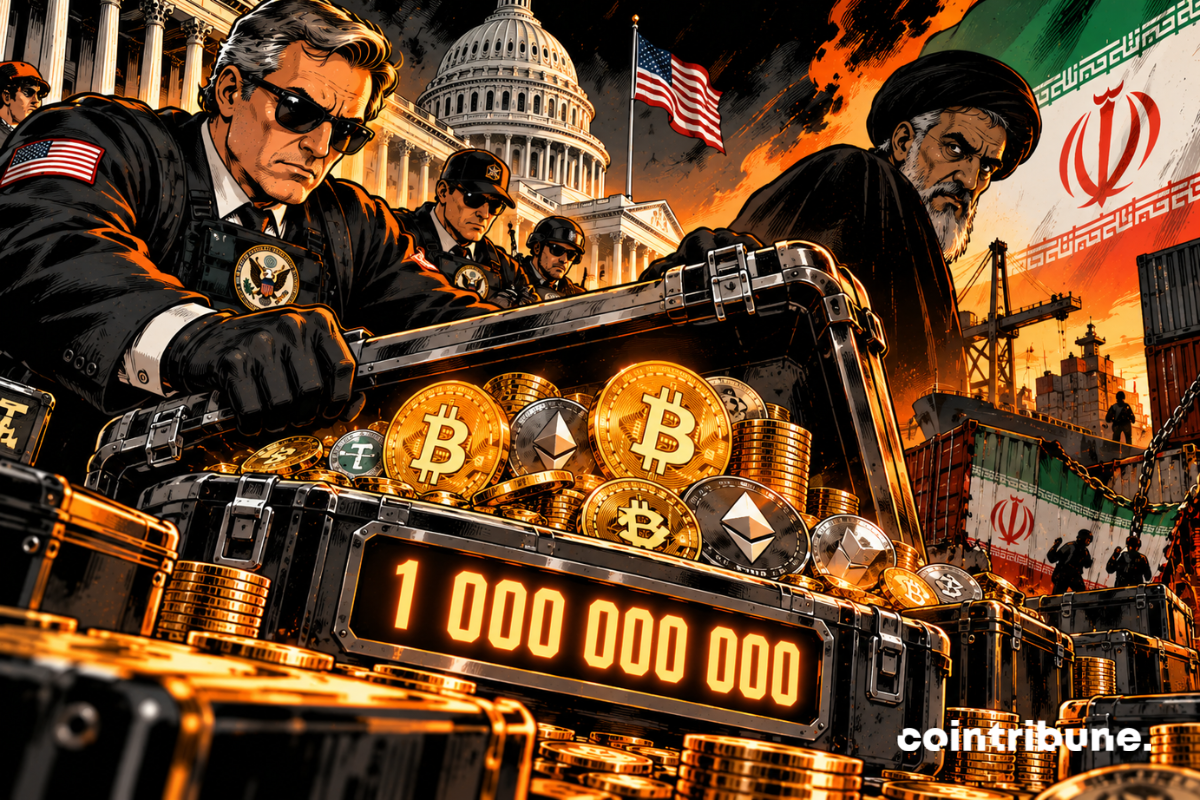
The U.S. Treasury Secretary, Scott Bessent, states that the United States could seize one billion dollars of cryptos linked to Iran this week. However, no wallet or holder has been publicly identified, and the government did not specify if this amount is in addition to the seizures announced since April.
In brief
- The United States could seize one billion dollars in cryptos linked to Iran, according to Scott Bessent.
- Washington claims to have located the funds, without revealing the wallets involved or confirming their seizure.
- The announced amount remains uncertain, particularly in relation to previous U.S. operations.
- Freezing cryptos does not mean their confiscation, which requires a separate legal procedure.
- Iranian crypto platforms face increasing pressure under U.S. sanctions against Tehran.
Washington says it has located Iranian cryptos
Scott Bessent presented the operation at the Newsmax Policy Summit, held Thursday in Washington. According to him, it is part of a campaign intended to cut off the funding sources of the Iranian regime.
Secure your cryptos with LedgerThis link uses an affiliate program.
The Treasury Secretary said:
We are likely going to seize one billion dollars of cryptos this week.
“We know where they are and we are isolating them”, he added, without providing blockchain addresses or specifying the nature of the assets.
Available information leaves several questions open :
- The announced amount is about one billion dollars ;
- The targeted wallets have not been disclosed ;
- The possible role of exchanges or stablecoin issuers remains unknown ;
- No seizure of this new amount has yet been officially confirmed ;
- Scott Bessent did not indicate if the sum is in addition to previous operations ;
- The assets might be frozen before a legal confiscation procedure.
The U.S. official describes an absolute isolation campaign that goes beyond cryptos. It also includes commercial, financial, air, and maritime restrictions imposed in the context of the conflict with Iran.
A seizure differs from a freeze under sanctions
A sanction from the Office of Foreign Assets Control does not automatically transfer ownership of an asset to the U.S. government. It generally imposes the blocking of funds under U.S. jurisdiction and prohibits U.S. persons or companies from making them available to the targeted entity.
A stablecoin issuer can also place certain tokens on a blacklist. The assets then remain visible on their address, but the holder can no longer transfer them. This technical freeze does not necessarily constitute a final confiscation in favor of the state.
A seizure implies that authorities take control of the assets under a warrant or other judicial authorization. Final confiscation normally occurs after a procedure during which the government must establish a connection between the funds and an offense.
This distinction matters for the billion mentioned by Scott Bessent. His statement announces a probable operation but does not yet allow knowing if the funds are already blocked, placed under U.S. control, or only located.
Previous figures remain difficult to reconcile
In April, Scott Bessent announced the seizure of nearly 500 million dollars in cryptos linked to Iran. One month later, he raised this estimate to about one billion dollars, stating that authorities had “directly taken control of the wallets”.
Public documents have not established a complete list allowing these statements to be matched with the assets effectively seized. The new billion could therefore represent an additional sum, a new phase targeting the same funds, or an updated estimate.
Tether stated it froze about 550 million dollars in USDT in 2026 under U.S. sanctions against Iran. This total includes nearly 344 million dollars frozen in April. The funds frozen by the issuer should not, however, automatically be counted as assets confiscated by Washington.
In July, U.S. sanctions led to the freeze of about 130 million dollars more. On-chain analysts linked this measure to four Tron addresses holding nearly 131 million dollars in USDT.
Iranian exchanges at the center of U.S. pressure
The U.S. Treasury has sanctioned seven Iranian crypto platforms since June. Nobitex, Wallex, Bitpin, and Ramzinex were targeted first, followed by Shelbit and Aban Tether in August, then BitBank in September.
Washington accuses these companies of facilitating sanction evasion or the financing of the Guardians of the Revolution. BitBank reportedly transferred several hundred million dollars in bitcoins to this organization between June and July. These claims come from U.S. authorities and are not all definitive judicial decisions.
A separate procedure shows the necessary legal process. In September, the Department of Justice requested the civil confiscation of 61 million dollars in cryptos originating, according to its complaint, from clandestine sales of Iranian oil. The network involved is said to have processed more than 1.5 billion dollars.
The department itself recalls that a confiscation complaint is only an allegation until a court decides. This caution also applies to the new announcement: Washington claims to have located the funds, but the seizure of the billion remains to be confirmed by identifiable official acts.