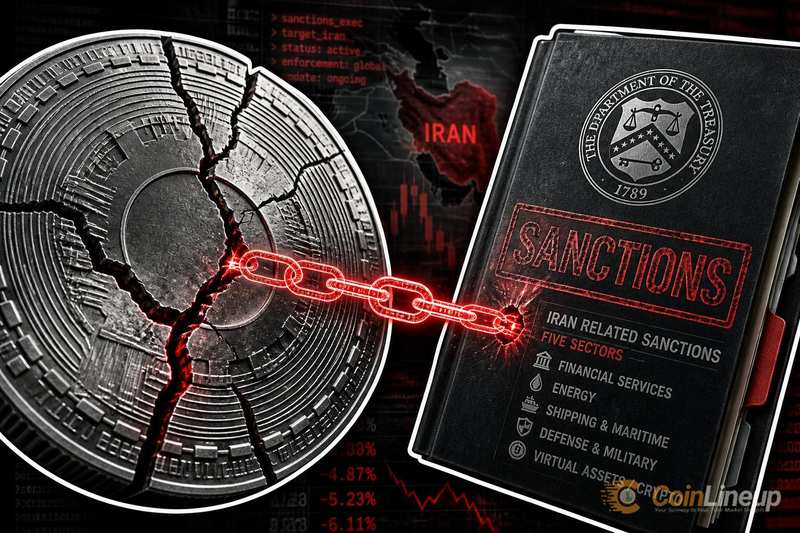
The US Treasury has expanded its Iran-related sanctions across five sectors, and crypto is now explicitly one of them. The move treats digital assets as a named channel for enforcement, putti
The US Treasury has expanded its Iran-related sanctions across five sectors, and crypto is now explicitly one of them. The move treats digital assets as a named channel for enforcement, putting exchanges and compliance teams on notice.
The action came directly from the US Treasury, which makes it a financial enforcement story first, according to the Treasury announcement. Sanctions are government rules that block people and companies from doing business with specific targets. For related coverage, see US sanctions two crypto exchanges over alleged Iran-linked funds.
Expanding sanctions "across five sectors" means the Treasury widened the list of activities that can trigger penalties. In plain terms, more types of transactions tied to Iran-related activity now carry legal risk for anyone under US jurisdiction. For related coverage, see Cosmos Health Says Its Crypto Treasury Fell 46% by End of June.
Crypto was called out as one of the covered areas. That signals digital assets are being treated as a sanctionable sector, as detailed in TRM Labs' analysis of the action. For related coverage, see Capital.com UAE Spot Crypto Launch Plan Explained.
KEY TAKEAWAYS
- The US Treasury expanded Iran-related sanctions across five sectors.
- Crypto is named as one of the covered areas, not a footnote.
- The impact falls on compliance and screening, not confirmed price moves.
Why crypto was included in the five-sector sanctions push
Naming crypto directly shows the Treasury is watching digital asset channels inside its sanctions work. This continues a pattern of scrutiny that earlier reached two crypto exchanges over alleged Iran-linked funds.
For crypto companies, this is an AML story. AML stands for anti-money-laundering, the rules firms follow to keep dirty money out of their systems. Sanctions screening is the step where a firm checks a customer or wallet against government blocklists.
It helps to separate two things. Sanctions exposure means dealing, even indirectly, with a blocked party. Ordinary crypto buying and selling by regular users is not the target here.
The crypto angle matters because it broadens the story beyond traditional banking or trade restrictions. It fits a wider push that recently reached Iran-linked procurement networks.
What this could mean for crypto compliance and monitoring
When the Treasury broadens a sanctions regime, wallet screening, transaction monitoring, and counterparty checks all become more important. Counterparty checks simply mean confirming who is on the other side of a transaction.
Companies with US exposure often tighten internal controls after moves like this. That points to more work for exchanges, custodians (firms that hold crypto for clients), and blockchain analytics providers that trace on-chain activity.
There is no evidence in this announcement of an immediate price impact, and none should be assumed. Compliance pressure and market price are different things, a point also visible in tax-enforcement stories like the UK's wave of crypto tax warnings.
For a regular person holding a little Bitcoin on a US exchange, the practical takeaway is small. Your platform may run more identity and screening checks, but everyday holding and trading is not what this action targets. Future Treasury guidance or enforcement will shape the longer-term effect.
Disclaimer: This article is for informational purposes only and does not constitute financial or investment advice. Cryptocurrency and digital asset markets carry significant risk. Always do your own research before making decisions.
Read original article on coinlineup.com