Letting users pay blockchain fees in USDC moves fee risk and inventory management away from retail and toward professional providers. The end user sees a stable USD price for gas. The paymast
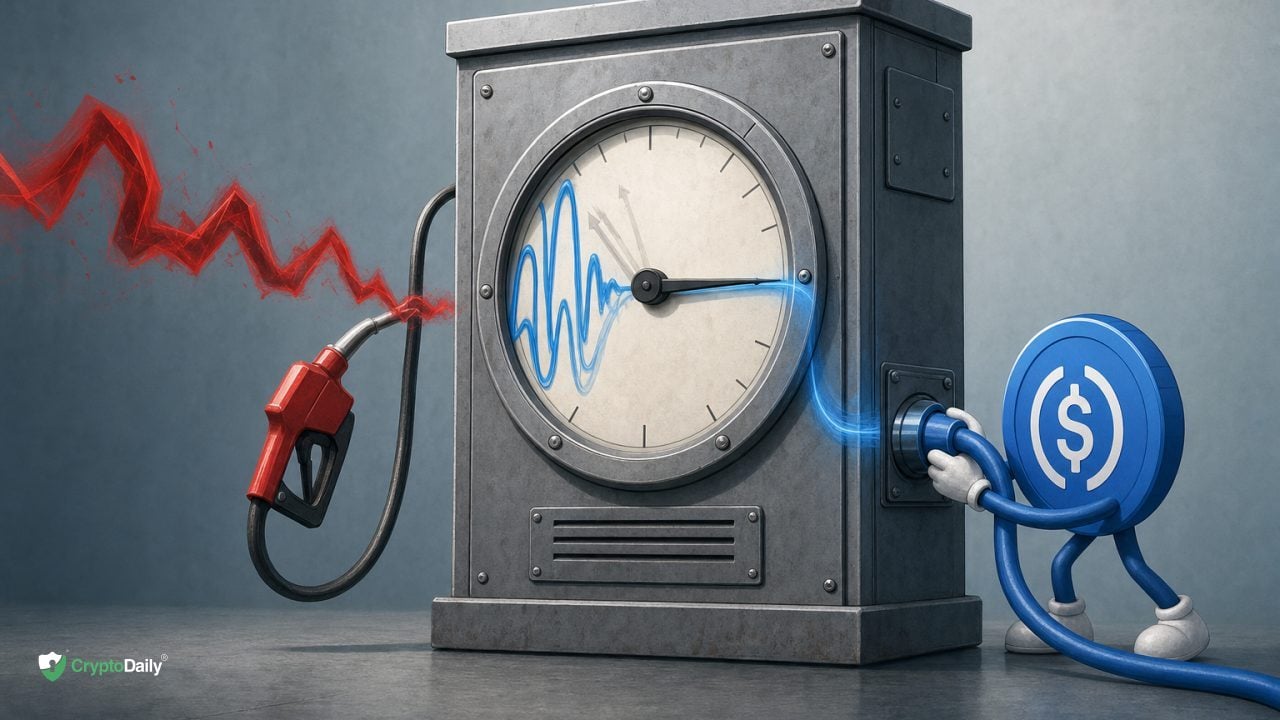
Letting users pay blockchain fees in USDC moves fee risk and inventory management away from retail and toward professional providers. The end user sees a stable USD price for gas. The paymaster or relay operator absorbs native-token exposure, conversion spreads, and operational risk. That shift, enabled by ERC‑4337 account abstraction and packaged by Circle as a permissionless Paymaster, changes who earns, who pays, and who bears volatility in fee markets.
The economics are already visible in how the product prices gas. Circle’s Paymaster lets users settle network fees in USDC and, per Circle’s own documentation, applies a 10% surcharge on Arbitrum and Base for those USDC-paid transactions. That is a simple but material markup on top of whatever the chain charges natively, and it flows to the provider managing balances and swaps rather than to the protocol itself. Paired with the scale of USDC liquidity, this creates a path to USD-denominated fee experiences at consumer scale.
This question is timely for two reasons. First, USDC represents a large share of on-chain liquidity, with DeFiLlama’s stablecoin dashboard showing the USDC market cap in the low $70‑billion range and a page snapshot of about $71.76B. Second, Circle argues that the upcoming Ethereum Pectra upgrade (specifically EIP‑7702) will let externally owned accounts temporarily delegate smart-contract behavior, so a wallet funded only with USDC could transact and pay fees immediately when combined with a paymaster. If that path holds, USDC-priced gas becomes a default UX pattern, not a niche feature.
How USDC‑Priced Gas Became Possible
Fact: ERC‑4337 defines paymasters as first-class entities in the UserOperation flow. During validation, the EntryPoint contract checks that a paymaster has enough native-token deposit to cover a sponsored operation. Even if a paymaster bills the user in an ERC‑20 like USDC, it must still post or hold the chain’s native token at the EntryPoint. The specification also notes operational and security tradeoffs: malicious paymasters can create denial-of-service vectors, so bundlers may rely on reputation systems and limit which paymasters they service. That introduces a layer where acceptance is not universal by default. See the EIP for details on deposits and bundler risk.
Fact: Circle packages this mechanism as a permissionless smart-contract paymaster that works across multiple chains and supports ERC‑4337. According to Circle’s Paymaster documentation, end users can pay gas in USDC, and Circle levies a 10% surcharge on Arbitrum and Base for USDC-settled gas. The same docs state that Circle “ensures there is always a sufficient amount of native gas token for each supported chain, managing swaps and balances behind-the-scenes,” meaning the provider, not the user, handles native-token inventory and conversion.
Fact: Circle’s developer blog outlines three paths to abstract gas: Arc-native USDC-denominated gas, a Gas Station that lets developers subsidize gas and settle in fiat or credit card, and the Paymaster where the user pays in USDC. That post specifies a developer-facing 5% processing fee for Gas Station billing and confirms the 10% Paymaster surcharge for user-paid gas in USDC. See the Circle blog for details.
Inference: Together, these pieces make USDC a first-class fee unit at the UX layer while preserving native-token settlement at the protocol layer. The friction of holding native tokens shifts from users to intermediaries that can manage inventory across chains and time.
What the Data Says About the Fee Stack
Two data points anchor the economics. First, USDC’s float is large enough to make USD-denominated gas workable across many flows. DeFiLlama’s stablecoin dashboard shows USDC around the low $70‑billion range, with a snapshot reading of ≈ $71.76B. Second, the fees for abstracted gas are explicit in Circle’s materials: 10% for user-paid USDC gas on specified chains via the Paymaster, and 5% for developer-subsidized Gas Station billing.
Mechanism Who Pays Gas Unit Billed Provider Fee Source Paymaster User USDC 10% surcharge (Arbitrum, Base) Circle docs Gas Station Developer Fiat / card (developer side) 5% processing fee Circle blog
Fact: Under ERC‑4337, paymasters must maintain a native-token deposit at the EntryPoint even if the end user pays in USDC. This ensures the protocol still collects fees in its native currency. Providers can source those tokens by pre-funding, by on-chain swapping USDC into the native asset, or by holding balances with a custodian. Circle’s docs state it manages swaps and balances so that native gas is available for each chain, implying the provider bears conversion spreads, slippage, and custody risk.
Opinion: The clarity of these fees and deposit rules is a feature. Developers can treat gas as a predictable line item denominated in USD, while users avoid native-token top-ups. The markup compensates providers for real inventory management and security work, not just convenience.
Implications for Native Tokens and Fee Markets
Inference: If users can mostly ignore native tokens for everyday activity, retail demand for small native balances may decline. That could reduce the visible retail footprint of native assets without changing their role in blockspace pricing. Because paymasters still settle in native tokens, aggregate demand for native gas persists, but it becomes concentrated among professional operators rather than distributed across end users.
Inference: A USD-denominated fee experience can make gas costs feel more stable to users even when native gas prices fluctuate. That could increase transaction elasticity during volatile periods, as the sticker price in USDC moves within a narrower band than the native token price in fiat terms. The trade-off is that users pay the provider’s spread and surcharge, which can exceed what a sophisticated user might pay if they sourced native tokens directly.
Inference: On L2s, sequencers and the base protocol still receive fees in native currency. The introduction of USDC at the UX layer may shift some value capture to paymasters that perform conversions and manage risk. Market structure may evolve so that sophisticated paymasters hedge native exposure and compete on tight, transparent markups, compressing the 10% surcharge over time on chains where volumes justify it.
Fact: The EIP‑4337 spec warns that bundlers use reputation systems and may limit or audit paymasters. In practice, that could gate which paymasters can participate at scale and could concentrate fee-flow through a handful of providers that meet bundler criteria and security reviews. This does not change protocol-level fee mechanics, but it does shape who intermediates them.
UX, Onboarding, and Who Captures the Margin
Fact: Circle argues EIP‑7702 in the Pectra upgrade will let EOAs temporarily delegate smart-contract behavior, enabling an “EOA-first” UX where a wallet funded with only USDC can transact immediately. The Circle blog describes how Paymaster + EIP‑7702 together could remove the need to deploy a smart-contract wallet before sending a first transaction.
Opinion: If wallets adopt this pattern, onboarding funnels simplify. Users can receive USDC, transact, and interact with apps without hunting for a native token faucet. That lowers abandonment and could expand the addressable market for consumer apps, agents, and corporate treasuries that budget in USD. The cost of that convenience is the provider markup and whatever policy controls bundlers enforce for paymaster participation.
Inference: Developers face a choice between subsidizing gas via Gas Station at a 5% processing fee or pushing fees to users via Paymaster at a 10% markup on certain chains. Apps that prize conversion and smooth UX may absorb costs, while others pass them through. Over time, competitive pressure could drive tiered pricing, loyalty discounts, or dynamic markups that narrow with volume.
Reasons This May Not Reshape Fees
Fact: ERC‑4337’s design requires paymasters to hold native-token deposits and allows bundlers to rely on reputation. That creates a potential centralization and acceptance bottleneck distinct from protocol-level permissionlessness. If a few large providers become the default, their policies and uptime become systemic dependencies.
Fact: Circle’s Paymaster levies a 10% surcharge for USDC-paid gas on Arbitrum and Base, and Circle states it manages native balances and swaps behind the scenes. If spreads, slippage, or custody costs rise, providers may not be able to compress fees quickly. In periods of high gas, percentage surcharges compound user costs.
Inference: Stablecoin-specific risk matters. If a provider relies on a single stablecoin for billing, any disruption to that stablecoin’s liquidity or peg can ripple into gas settlement, even if the protocol still prizes native fees. Multi-stable or multi-asset billing could mitigate this but adds complexity.
Opinion: Native tokens retain core utility. They secure consensus economics and price blockspace. Abstracting them from end users does not eliminate their demand; it professionalizes it. If user appetite for direct native exposure persists, or if wallet UX keeps native top-ups simple, USDC-priced gas may remain a convenience layer rather than a dominant paradigm.
What to Watch for Validation or Reversal
- EIP‑7702 and Pectra milestones: client implementations, testnet progress, and mainnet activation timelines that make EOA-first flows production-ready. See Circle’s perspective on EIP‑7702.
- Provider pricing changes: any published updates from Circle’s Paymaster on surcharge rates, supported chains, or conversion policies. Cheaper markups would signal competitive scale or tighter hedging.
- Bundler policy disclosures: reputation criteria, allowlists, and audit requirements for paymasters under ERC‑4337. More open access strengthens the case for broad USDC-gas adoption; restrictive policies limit it.
- Wallet defaults: major wallets enabling USDC-as-gas by default, or presenting USD-denominated fee quotes alongside native. Default UX choices will determine real adoption.
- Share of transactions using paymasters: on-chain or provider-reported metrics showing what portion of activity settles user gas in USDC on Arbitrum, Base, or other supported chains.
- USDC liquidity trend: changes in the USDC market cap on DeFiLlama. A sustained, deep USDC float supports the economics of stablecoin-priced gas at scale.
- Conversion and MEV dynamics: evidence of slippage, spreads, or MEV capture around paymaster swaps. Narrow and stable spreads would validate the sustainability of low-friction USDC-priced gas.
Editorial conclusion: Paying gas in USDC does not rewrite protocol economics, but it does reassign who manages native exposure and who captures a new fee layer. The winners are likely to be providers that can source native tokens cheaply, hedge well, maintain bundler relationships, and offer predictable USD pricing. If EIP‑7702 ships as expected and wallets adopt EOA-first flows, USDC-priced gas can become a standard UX, especially on L2s. If pricing remains high, access is gated, or stablecoin liquidity wanes, the model will stay a convenience feature rather than a new default.
Disclaimer: This article is provided for informational purposes only. It is not offered or intended to be used as legal, tax, investment, financial, or other advice.