Vietnam is moving toward issuing its first crypto-asset service provider (CASP) licenses in 2026, according to reports, while simultaneously expanding its regulatory cooperation with Austria'
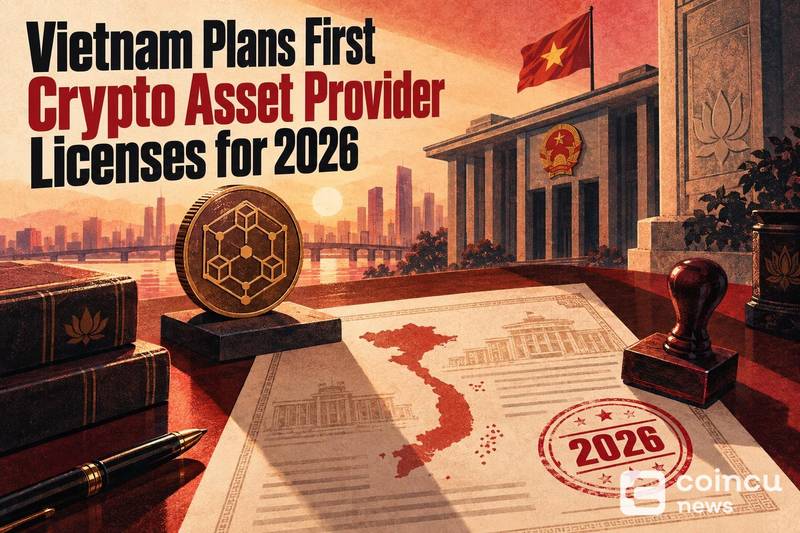
Vietnam is moving toward issuing its first crypto-asset service provider (CASP) licenses in 2026, according to reports, while simultaneously expanding its regulatory cooperation with Austria's Financial Market Authority (FMA), a signal that Hanoi is treating formal licensing as a cross-border compliance exercise rather than a purely domestic one.
What the 2026 licensing plan covers
The reported plan marks the first time Vietnam would grant official licenses to entities offering crypto-asset services, establishing a legal status for intermediaries that have operated in a regulatory grey zone. The term "crypto-asset service provider" covers a range of functions including exchange operations, custody, and brokerage, though the exact scope of the Vietnamese framework has not yet been published in official regulatory text. For related coverage, see Vietnam Targets First Crypto-Asset Provider Licences in 2026.
Vietnam has been building toward this point through a staged approach: the country launched a crypto asset pilot framework that preceded the licensing regime, and separately advanced plans to regulate domestic crypto trading through a controlled pilot structure. The 2026 licensing target represents the next step beyond the pilot phase, converting provisional oversight into a formal authorization regime.
As of the date of this reporting, no application procedures, eligibility criteria, capital requirements, or compliance thresholds have been confirmed in official documentation. The 2026 timeline is a stated target, not a confirmed issuance schedule for any named provider. For related coverage, see South Korea Finance Ministry Plans State Asset Law for Crypto.
Cooperation with Austria's FMA
The expansion of regulatory coordination with Austria's FMA adds an international dimension to the licensing push. Austria's FMA is a consolidated supervisory authority covering banking, insurance, securities, and pension funds, and has been an active participant in European discussions on crypto-asset regulation under the EU's Markets in Crypto-Assets (MiCA) framework, which took full effect in 2024. For related coverage, see Chainalysis Plans On-Chain Tracking Standards System With Address Clustering Ontology.
The specific scope of the Vietnam-FMA cooperation has not been detailed in publicly available documents. Whether the arrangement involves information sharing, supervisory equivalence discussions, or joint technical assistance remains unconfirmed. No formal memorandum of understanding or cooperation agreement text has been cited in the reporting underpinning this story.
What remains conditional before licenses are issued
Crypto-asset businesses and policy watchers should treat the 2026 licensing plan as a target rather than a finalized regime until the following details are confirmed by Vietnamese authorities: the legal basis for the licensing obligation, which categories of service providers are captured, minimum capital or reserve requirements, anti-money-laundering and know-your-customer standards, and the supervisory body responsible for ongoing oversight.
The cooperation with Austria's FMA may inform how those standards are calibrated, particularly given MiCA's influence as a reference framework for non-EU jurisdictions designing comparable regimes. Whether Vietnam's framework will incorporate MiCA-aligned definitions or diverge in material ways is an open question.
FAQ: Vietnam's 2026 crypto-asset licensing plan
When does Vietnam plan to issue its first crypto-asset service provider licenses? The reported target year is 2026. No specific month, application window, or confirmed issuance date has been published as of this report.
What is Austria's FMA's connection to the announcement? Vietnam is reported to be expanding regulatory cooperation with Austria's FMA alongside the licensing plan. The FMA is Austria's financial market supervisor and an active participant in EU crypto regulation. The precise terms and scope of the cooperation have not been detailed in available documentation.
Have provider eligibility and compliance rules been specified? No. As of the time of reporting, no official document has confirmed eligibility criteria, capital requirements, application procedures, or compliance standards for the planned license category. Market participants should monitor official announcements from Vietnamese regulatory authorities for those details.
How does this relate to Vietnam's existing crypto pilot? Vietnam has been advancing crypto oversight through a pilot framework targeting domestic trading activity. The 2026 licensing plan appears to represent a formalization step beyond the pilot, though the precise relationship between the two tracks, and whether pilot participants receive any preferential treatment in licensing, has not been confirmed.
Additional source references: source document 1, source document 2.
Disclaimer: This article is for informational purposes only and does not constitute financial or investment advice. Cryptocurrency and digital asset markets carry significant risk. Always do your own research before making decisions.
The post Vietnam Plans First Crypto-Asset Provider Licenses for 2026 was initially published on Coincu.