Visa, M-Pesa and Onafriq have launched a stablecoin-powered cross-border transfer pilot in the Democratic Republic of Congo, combining traditional payment rails with blockchain-based settleme
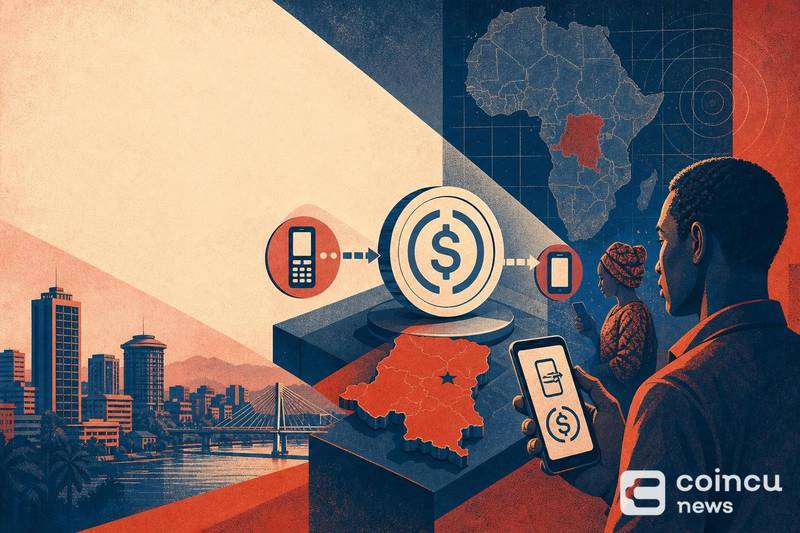
Visa, M-Pesa and Onafriq have launched a stablecoin-powered cross-border transfer pilot in the Democratic Republic of Congo, combining traditional payment rails with blockchain-based settlement in one of Africa's largest mobile money markets.
What the Pilot Involves
The initiative brings together three distinct players in the payments space. Visa provides global network infrastructure, M-Pesa delivers mobile money reach across African markets, and Onafriq acts as the fintech bridge connecting these systems to stablecoin settlement rails. For related coverage, see Trump’s 2025 Solana Meme Coin Revenue Tops $600M as Ethics Calls Return.
The rollout is a pilot, not a full commercial launch. Visa announced the initiative as part of its broader push into digital currency-enabled payments across the continent. For related coverage, see New Hampshire HB639 Completes Registration With Crypto Protections.
The focus is specifically on cross-border money transfers, using stablecoins as the settlement layer between mobile money wallets. This targets the friction points that make traditional remittance corridors slow and expensive for senders and recipients. For related coverage, see KR1 Transfers 3.7 Million LDO to Kraken: What It Could Mean.
Why the DRC Is the Testing Ground
The Democratic Republic of Congo presents a compelling test case for stablecoin-based transfers. The country has a large unbanked population alongside growing mobile money adoption, creating demand for low-cost cross-border payment options.
M-Pesa's involvement signals that mobile money infrastructure is central to the pilot's distribution strategy. Rather than requiring users to interact with crypto wallets or exchanges, the stablecoin layer operates behind the scenes while users transact through familiar mobile money interfaces.
The GSMA's 2026 State of the Industry Report on Mobile Money tracks continued expansion of mobile money services across sub-Saharan Africa, providing the broader context for why the DRC was selected as a launch market.
Cross-border remittance flows into and out of the DRC involve multiple currency conversions and intermediary banks, each adding cost and delay. A stablecoin settlement layer could reduce these friction points by providing a single digital dollar-denominated bridge between corridors.
How Stablecoins Fit Into Visa and Onafriq's Strategy
For Visa, the pilot represents infrastructure experimentation rather than a pivot to crypto. The company has been exploring how stablecoins can improve settlement speed and reduce counterparty risk in cross-border transactions, particularly in markets where traditional correspondent banking is limited.
Onafriq's role is particularly notable. The company has positioned itself as a connector between African payment networks and global financial infrastructure, and stablecoin rails give it a way to bypass some of the complexities that have plagued stablecoin consortium efforts elsewhere.
The pilot tests whether stablecoin settlement can deliver faster finality and lower fees compared to traditional SWIFT-based or correspondent banking channels. If successful, this model could extend to other African corridors where Onafriq already operates.
This approach differs from consumer-facing crypto products. Users on either end of a transfer interact only with M-Pesa's mobile money interface, while the stablecoin conversion and settlement happen at the infrastructure layer, invisible to the end user.
Challenges Before Any Wider Rollout
The pilot status itself signals unresolved questions. Regulatory frameworks for stablecoin-based remittances vary significantly across African jurisdictions, and the DRC's own regulatory stance on digital assets remains in development.
Liquidity management presents a practical hurdle. Maintaining sufficient stablecoin liquidity on both sides of a cross-border corridor requires market makers and on/off-ramp infrastructure that may not yet exist at scale in the DRC.
Settlement and custody oversight add complexity. Moving value through stablecoin intermediaries introduces questions about who holds the underlying reserves, how disputes are resolved, and what consumer protections apply if a transaction fails.
User trust is another factor. While the M-Pesa brand carries significant recognition, the introduction of a new settlement mechanism, even one invisible to end users, requires operational reliability from day one. Pilot outcomes will determine whether the model can scale to USDC-based revenue models and broader commercial deployment.
FAQ About the Visa, M-Pesa and Onafriq Stablecoin Pilot
What is the Visa, M-Pesa and Onafriq stablecoin pilot?
It is a cross-border transfer initiative in the Democratic Republic of Congo that uses stablecoins as a settlement layer between mobile money wallets. The pilot tests whether blockchain-based settlement can reduce the cost and speed of international money transfers.
Why was the DRC selected for this pilot?
The DRC combines high demand for cross-border transfers with growing mobile money adoption, making it a relevant test market. Existing remittance corridors in the region involve multiple intermediaries that add cost and delay.
How do stablecoin transfers differ from traditional cross-border transfers?
Traditional cross-border transfers typically route through correspondent banks, each taking a fee and adding processing time. Stablecoin transfers settle on blockchain infrastructure, potentially reducing intermediaries and enabling near-instant finality at lower cost.
Does this pilot mean a full consumer rollout is imminent?
No. The initiative is explicitly a pilot, meaning the partners are testing operational viability, regulatory compliance, and user experience before considering any broader deployment. Pilot outcomes will determine next steps.
Disclaimer: This article is for informational purposes only and does not constitute financial or investment advice. Cryptocurrency and digital asset markets carry significant risk. Always do your own research before making decisions.
The post Visa, M-Pesa and Onafriq Launch Stablecoin Transfer Pilot in DRC was initially published on Coincu.