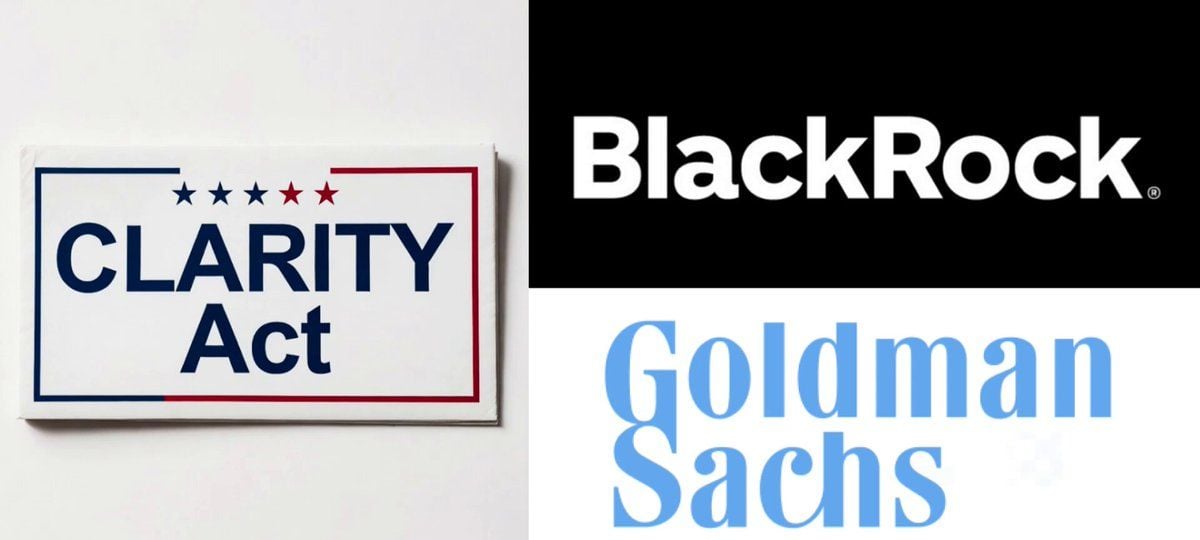
Wall Street Lines Up Behind Crypto Market Structure Bill A coalition of financial heavyweights representing more than $30 trillion in assets has thrown its weight behind the Digital Asset Mar
Wall Street Lines Up Behind Crypto Market Structure Bill
A coalition of financial heavyweights representing more than $30 trillion in assets has thrown its weight behind the Digital Asset Market Clarity Act, the most significant attempt yet to establish a federal regulatory framework for crypto markets in the United States.
BlackRock, Goldman Sachs, Fidelity, Charles Schwab, and Grayscale are among the firms endorsing H.R. 3633, a bill designed to draw clear jurisdictional lines between the SEC and CFTC over digital assets. The endorsements, each shaped by the firms' individual commercial interests, reflect a broad institutional push to end the regulatory uncertainty that has long hung over the sector.
Goldman Sachs Chairman and CEO David Solomon publicly backed the CLARITY Act, adding the support of a major Wall Street institution as senators debate the future of U.S. digital asset regulation.Solomon acknowledged the legislation is imperfect but argued it would create a level playing field, improve market stability, and allow digital asset markets to develop within a clearer federal framework.
Grayscale endorsed the legislation, describing the CLARITY Act as a legal foundation for developers, token issuers, and regulated digital-asset intermediaries.Charles Schwab's position emerged through strategist Jim Ferraioli, who identified the measure as a critical catalyst for Bitcoin and broader institutional adoption, while BlackRock research presented the proposal as an important part of the developing regulatory framework for tokenized assets.
August Recess Adds Urgency to Senate Vote
The CLARITY Act is the most advanced attempt yet to settle the biggest open question in U.S. crypto regulation, specifically whether a token answers to the SEC or the CFTC. It routes decentralized digital commodities to the CFTC and keeps fundraising and investment contracts with the SEC. The bill also introduces anti-money laundering requirements for digital asset market participants.
The bill passed the House in July 2025 and cleared the Senate Banking Committee 15-9 in May 2026. A full Senate vote now hinges on three unresolved issues: stablecoin yield, DeFi oversight, and an ethics provision aimed at officials profiting from crypto.
August 7, the last working day for the Senate before the August recess, is the real deadline, with August 10 the date when the window will visibly close.The timing of the endorsements is deliberate, as supporters of the legislation are applying pressure to keep the bill moving through the Senate before lawmakers scatter for the summer.
Not all of Wall Street is on board. Solomon's endorsement contrasts with criticism from JPMorgan CEO Jamie Dimon and other banking executives over provisions allowing crypto firms to offer yield-bearing stablecoins.The legislation still needs to pass the full Senate, where supporters will probably need 60 votes to overcome procedural opposition.
Sources:Crypto Briefing: BlackRock, Goldman Sachs, Fidelity, and others back the Clarity ActCoinDesk: Goldman Sachs CEO backs Clarity Act despite banking industry concernsDataWallet: CLARITY Act Explained, SEC and CFTC Crypto Rules in 2026