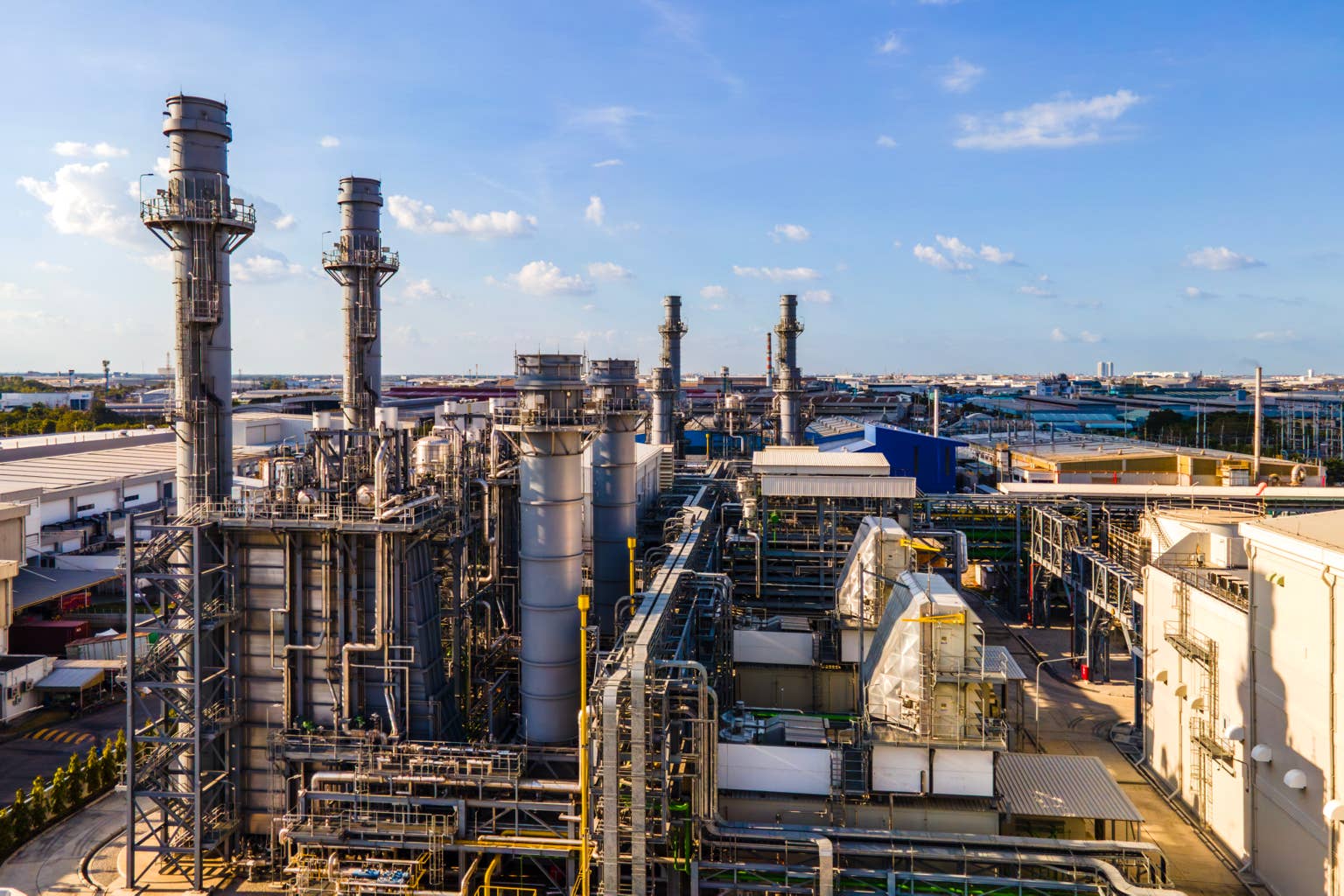
Ukraine’s largest drone barrage of the war knocked out crude distillation units at a 245,000 barrels-per-day Moscow refinery on Sunday, Sept. 20th, hours after Houthi missiles sent Riyadh to
Ukraine’s largest drone barrage of the war knocked out crude distillation units at a 245,000 barrels-per-day Moscow refinery on Sunday, Sept. 20th, hours after Houthi missiles sent Riyadh to its first air-raid already since July and President Trump cut a Camp David weekend short.
Speaking to TheStreet Roundtable, Roundtable 100 Blue Ribbon Committee analyst John Divine said the market had “kind of put (Ukraine) to the side for a bit,” and that if it comes back into focus, “oil is going to be expressed and likely higher, and that’s not going to be good for a continued push for the broader equity markets.”
View the original article to see embedded media.
The Monday happened. Crude fell 5.4% to $95.94 and Brent dropped to $100.34 as Trump floated meeting Iran’s president at the UN. The S&P 500 had its best day since early August, with energy being the only sector down, showing that the Iran war premium came out faster than the Moscow strike went in.
Related: Michael Saylor's Strategy restarts buying BTC
The VIX is the tell
That doesn’t break Divine’s framework so much as confirm its second half. His trigger isn’t a crude print, its S&P volatility.
"If we start to see VIX trading above $21, $22, $23, holding firm, that could be a sign that volatility is gonna break out, and effectively it's a hedge for downside movement in the S&P 500,” he said.
The VIX, which measures market volatility, closed Monday at $14.87. By Divine’s own test, equities aren’t pricing either war.
The pain is at the pump, not in stocks. Diesel hit a record $6.51 on Sept. 21, up 82% this year after Middle East and Ukraine supply shocks already pushed it past $6 on Sept. 11. Gasoline accounted for over a third of August’s 0.4% CPI increase, per the Bureau of Labor Statistics.
The emergency lever is almost gone
Washington’s one fast fix has been spent down over the last three administrations. The Strategic Petroleum Reserve (SPR) peaked near 727 million barrels.
Congressionally mandated sales during Trump’s first term drained roughly 57 million, and his 2020 plan to refill it with 77 million barrels at $20 per died in the Senate after then-minority leader Chuck Schumer called it a “bailout” for big oil.
Biden then authorized about 260 million barrels of releases, 50 million in late 2021, 30 million with the International Energy Agency (IEA) in March 2022, and a record 180 million over the six months after Russia invaded Ukraine. This took the reserve to a 40-year low near 347 million barrels before buying back roughly 59 million. Trump inherited about 395 million barrels in January 2025 and has since committed 172 million barrels in March plus a 53.3 million barrel exchange in May. The reserve fell below 300 million barrels in August, the lowest since 1983, and sits at 285 million today, about 40% of capacity. Divine says this lever has been “basically drained” and does not expect that the Trump admin will be able to use it to lower oil prices for consumers.
More news:
The hedge nobody is watching
The trade he thinks is being ignored is natural gas.
"Natural gas has been trading sideways for months and not really reacting to a lot of the stories that are coming out that are moving crude," he said. "If you're looking for a hedge, there's homework to be done there."
Henry Hub, which sets the standard for American natural gas prices, has been stuck below $3 all summer. The counterargument is storage. US inventories are 5.2% above the five-year average, and Hormuz LNG (liquid natural gas) flows just hit a six-month high, even as HSBC warns the strait is still running at 30% of pre-war volume.
Divine’s bottom line is that the oil markets are “begging the world to find some peace.” Monday’s drawdown was an indicator that it might.