The experience of Nigeria’s 157 million internet subscribers depends on their provider, location, population per tower, and network quality (4G or 5G). These factors determine how smoothly st
The experience of Nigeria’s 157 million internet subscribers depends on their provider, location, population per tower, and network quality (4G or 5G). These factors determine how smoothly streaming a 4-minute HD video on Netflix can be: 4.5 minutes in Lagos or Abuja, and 30 minutes in Northern Nigeria.
A quality-of-experience report by the Nigerian Communications Commission (NCC), in partnership with Ookla, analysed 739,294 real-world network tests across 17 months (June 2025 to May 2026) to map out Nigeria’s actual mobile footprint.
In summary, the report concludes that geographical location creates a digital divide. Significantly, a network provider’s infrastructure, such as towers, network quality, fibre deployments, and backhaul investment, plays a critical role in dictating Nigerian’s internet experience daily.
Also Read: Explainer: How telecom towers are installed in rural communities in Nigeria.
How the Big 4 feared
Over the 17 months, the top 4 mobile network operators (MNOs) provided relatively stable service in urban areas, while the quality gaps were obvious in suburban areas.
MTN Nigeria
 MNOs performance (Source: NCC-OOKLA Quality of Experience Q2 2026 report)
The leading telecom operator provided a slight regional balance with a focus on nationwide depth. Urban vs rural download speed during the 17 months averaged 25.2 Mbps to 17 Mbps, respectively, while upload speed closed in at 12.9 Mbps to 8.4 Mbps.
MTN shows why it’s the nationwide leader by maintaining consistency across the two locations.
Airtel Nigeria
Airtel stood along the middle line, with a low performance compared to MTN. It pulled a 17.4 Mbps for urban download speed as against 10 Mbps in rural areas. Upload speed in cities is clipped at 7.8 Mbps vs 5.4 Mbps in rural Nigeria.
Considering the number of subscribers it serves, Airtel showed overall low performance, with connection delay averaging 36 ms.
Globacom
The operator experienced several constraints, with urban download speed as low as 10.1 Mbps, the rural speed record for Airtel and short of MTN’s. Rural download speed closed in at 9.8 Mbps. Upload speeds were dragging at 4.6 Mbps vs 4.8 Mbps, showing a slight gap between the two regions and an attempt to balance internet delivery.
T2 mobile (9mobile)
The operator demonstrated strong performance in download speed of 18.9 Mbps in urban and 10.1 Mbps in rural areas. However, upload speeds were marred by connection fluctuations, with as low as 1 Mbps in urban areas as against 1.3 Mbps in rural areas. Delay time of connection averaged 77.5 ms.
Rural Nigeria is still playing the catch-up game
The digital divide is still defining the geographical gap, ensuring that millions of Nigerians in rural areas are third-class citizens in terms of quality internet network. The data confirms that living in a major city centre yields a faster and more responsive connection than living along rural or semi-urban corridors.
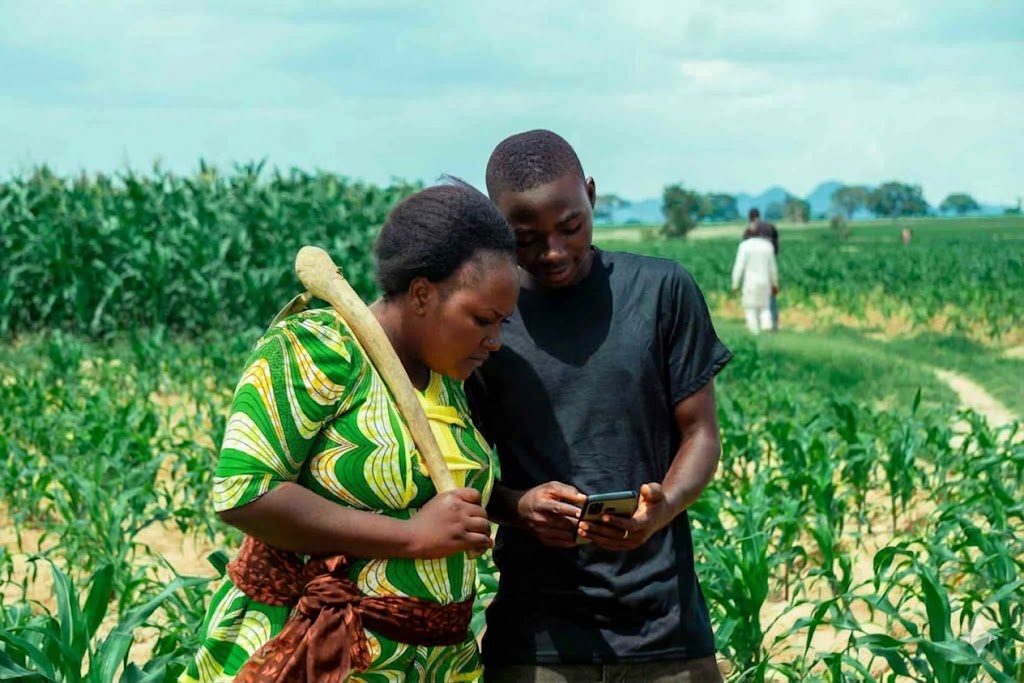
Despite the separation, rural performance might be gradually catching up, perhaps at a slow pace.
The report shows that rural network speeds improved modestly by roughly 0.2 megabytes per second (Mbps) per month over the 17-month study, showing a steady, positive trajectory and a need for sustained long-term performance to deliver average satisfaction.
One thing stood out.
The geographical landmass of rural areas and the cost of building a telecom tower in these regions remain critical.
Compared to urban settlements with concentrated population, Nigeria’s rural plain corridors span vast agricultural regions and northern transit routes. Across the 17-month report, the area saw average download speeds of 13.0 Mbps, upload speeds of 6.0 Mbps, and a high connection delay (latency) of 39 milliseconds (ms).
A typical Nigerian city is built on financial connection. Nigerians in cities such as Lagos, Abuja, Port Harcourt, Edo, Ibadan and others benefit from high tower density and technology deployments. This drove the download speed to 19.2 Mbps, upload speeds of 9.8 Mbps, and a connection delay of 31 ms.
 Internet connection: Rural and Urban performance (IM: NCC-OOKLA)
Overall, 5G internet connection remains restricted to dense city clusters (Lagos, Abuja and Port Harcourt), showing a high speed of 181.5 Mbps. While the 5G coverage gap continues to pose serious digital division, 4G LTE remains the nationwide backbone at 15.7 Mbps download speed and remains essential for digital inclusion.
On the other end, 2G/3G are gradually phasing out (at a slow pace) to free up spectrum for expanded 4G and 5G coverage.
Nigeria and its telecom operators need to balance the game, or at least reduce the connection gap between its geographical locations. Subscribers’ definition of a good internet experience is streaming or surfing the space without draggings
Also Read: Africa has an energy crisis, and its digital infrastructure might suffer the heaviest hit