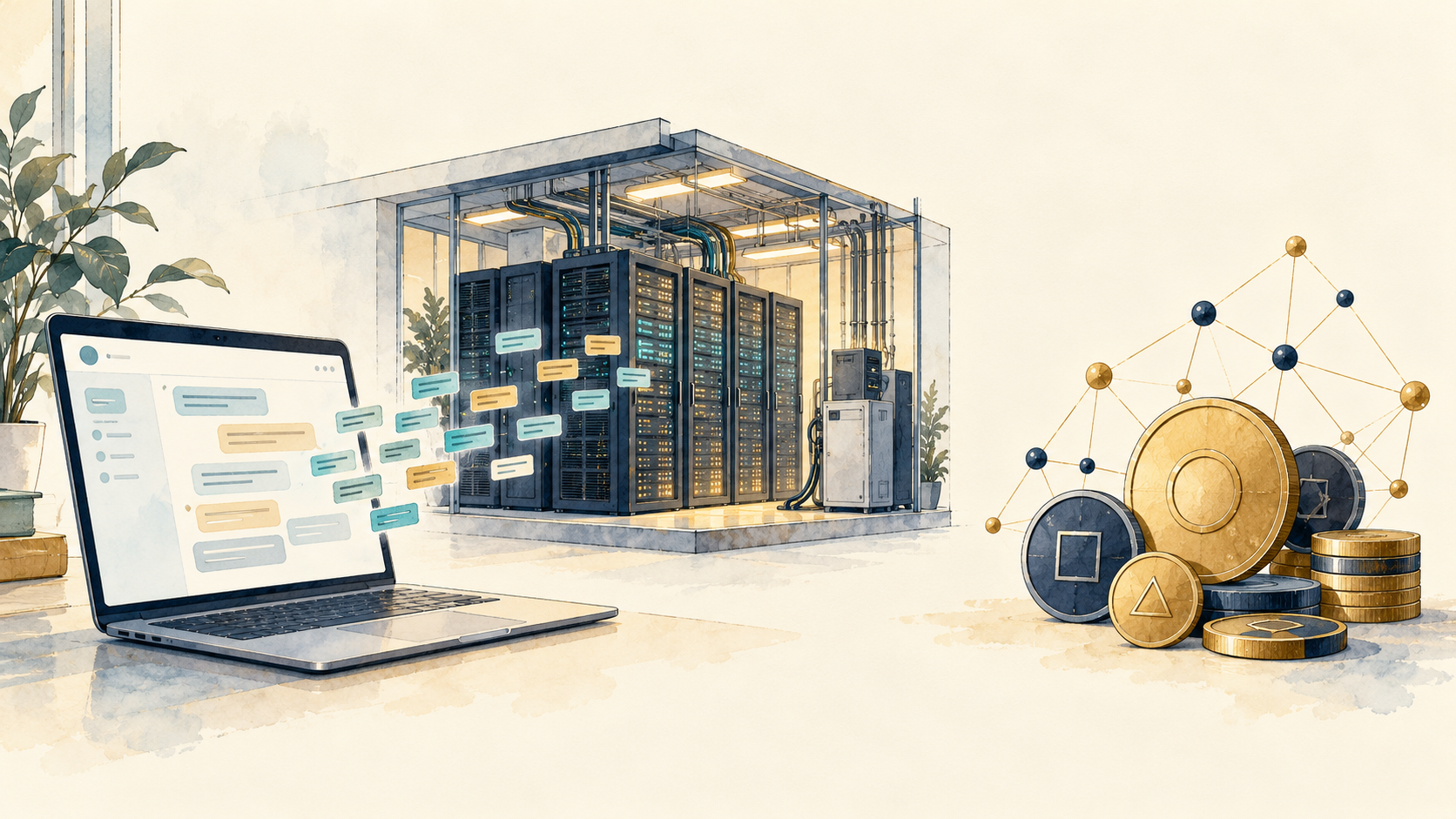
The word “token” can refer to very different things. Starting with the electricity and GPU computing behind an AI response, 51AIpower explains the AI token economy and how individuals can par
The word “token” can refer to very different things. Starting with the electricity and GPU computing behind an AI response, 51AIpower explains the AI token economy and how individuals can participate in AI infrastructure through power plans.
Search for “AI tokens,” and you may find two very different types of results. Some explain how AI models process text and calculate usage fees. Others display tokens associated with AI-related cryptocurrency projects, alongside prices and trading activity. Similar names do not mean similar functions. For anyone exploring the AI economy, the first step is understanding whether a token measures AI usage or represents a tradable asset.
51AIpower’s approach to the AI token economy focuses on the computing and electricity required to run models. Through Power Plans, individuals support the electricity and GPU computing needed by AI factories without purchasing equipment or supplying their own power. Rewards depend on plan terms and actual operating performance. Participation does not mean receiving a tradable cryptocurrency called an “AI token.”
Understanding this distinction makes it easier to see how AI applications, token usage, and infrastructure connect.
Suppose you ask AI to write a customer email. The model first needs to read your instructions, then generate the email. During this process, the input and output text are typically broken into smaller pieces called tokens.
One token does not necessarily equal one word. It may represent a whole word, part of a word, or a punctuation mark. Tokenization also varies across languages and models, so two passages of similar length may contain different numbers of tokens.
Think of tokens as a way to measure the content AI processes. Many AI APIs count input and output tokens separately and charge according to the selected model’s pricing. The length of a question, the amount of supporting material, and the detail required in an answer can all affect usage.
This helps explain why a short conversation and an analysis of a lengthy document may cost different amounts. The user sees a completed task; the service also tracks how much content the model processed.
In cryptocurrency markets, “AI tokens” generally refers to crypto assets associated with AI-related blockchain projects. Depending on the project, these assets may be used for payments, governance, or other functions. A token traded on an exchange is not the same thing as a token used to measure the text an AI model processes.
Comparison
Tokens Used by AI Models
AI-Related Crypto Tokens
What they represent
Units of content processed by a model
Crypto assets issued or used by blockchain projects
Common uses
Measuring inputs, outputs, and some API charges
Payments, governance, or other project functions
Are they generally tradable?
They are not assets traded on exchanges
Some are available on trading platforms
What users should examine
Model pricing, usage, and task requirements
Token utility, issuance, liquidity, and project risks
Some projects connect crypto tokens with computing services—for example, by allowing customers to pay for computing resources using a particular token. Even then, the asset used to pay and the tokens used to measure model usage remain separate concepts.
When encountering the phrase “AI token,” the most useful first question is therefore what it measures or what rights it gives its holder.
Tokens do not run a model by themselves. GPUs and other computing equipment perform the work, supported by electricity, cooling, networking, and software. When a user submits a request, the system uses these resources to generate a response.
Consider a store using an AI customer support assistant. A shopper asks about a product, the support system sends the question to a model, and the model returns an answer. As the number and length of questions change, token usage changes, along with the computing work required.
However, a token is not a reading on an electricity meter. Different models, hardware configurations, and tasks can require different amounts of energy to process the same number of tokens. There is no universal conversion from token count to electricity consumption.
NVIDIA’s discussion of AI tokenomics considers model selection, tokens produced per unit of power, and cost per token together. These measures show that operating an AI service depends not only on usage volume, but also on delivering useful work at a manageable cost.
51AIpower places individual participation at the electricity and GPU computing layer. Through Power Plans, users support infrastructure resources required by AI factories without buying GPUs, installing servers, or managing a data center.
Under the platform’s stated plan model, rewards are calculated using the electricity contribution and corresponding token output recorded under the applicable plan, with settlement reflecting actual operating performance. Users can view plan status and reward records through their accounts. Specific rules are governed by the selected plan’s terms.
This differs from purchasing an AI-related crypto token. A token buyer needs to understand the asset’s purpose and market risks. A participant in a 51AIpower plan needs to understand the platform’s operating arrangements, reward calculations, plan duration, and withdrawal conditions. Token output recorded within a plan does not represent a balance of tokens the user can sell on an exchange.
The approach reduces the need for individuals to manage equipment directly, but it does not eliminate risk. Platform performance, equipment utilization, and operating costs can still affect participation outcomes.
More people using AI may create additional demand for computing services, but that demand does not automatically become profit for every platform or plan. Service prices can change, hardware requires maintenance, and equipment may remain idle.
Two groups of similarly capable GPUs could process substantial volumes of tokens yet produce different financial results because of differences in customer demand, task scheduling, and electricity costs. Equipment capacity or token output alone is not enough to establish profitability.
NVIDIA identifies utilization, uptime, token throughput, and cost per token as important measures of AI factory economics. In practical terms, operators need to consider not only how much work their machines can perform, but also whether customers need that work, what they will pay, and how much it costs to deliver.
Understanding the AI token economy therefore means examining the relationship between usage, service revenue, and operating costs—not converting growth in AI adoption directly into an expected personal return.
51AIpower offers new users up to 200 free Starter Plan uses, limited to one per day. Users can register, verify their email address, and review the plan details after signing in. They can then use their daily allowance to activate a plan and explore account records and reward settlement.
Earnings generated through the Starter Plan are real and credited to the user’s account. The 200-use allowance represents opportunities to use the plan for free. It is not $200 in cash or 200 AI crypto tokens, and withdrawals remain subject to platform conditions.
After trying the process, users can decide whether to purchase paid Power Plans. Before participating, they should review plan durations, reward rules, early termination restrictions, and withdrawal requirements. A free trial can help explain how the platform works, but it does not establish that paid plans will be profitable.
“AI tokens” can appear on both a model’s pricing page and a cryptocurrency market dashboard. Recognizing the difference helps prevent AI usage from being mistaken for an asset—and industry growth from being mistaken for a guaranteed personal return.
51AIpower offers participation in AI infrastructure through power plans. Understanding this model means looking at the resources a plan supports, how rewards are calculated, and how the platform fulfills its terms, rather than focusing on the trading price of a token.
Risk Disclosure: AI infrastructure participation plans involve risks relating to platform performance, equipment operations, energy costs, and market demand. Returns are not guaranteed, and participants may lose money. A free trial does not establish that paid plans will be profitable. Plan durations, withdrawal conditions, and other restrictions are subject to platform terms. This article is promotional content for 51AIpower and does not constitute investment advice.
51AIpower is an AI infrastructure participation platform operated by Power Cloud Solutions Ltd. Through power plans, individuals support the electricity and GPU computing required by AI factories and receive rewards subject to plan terms and actual operating performance.
Website: https://51aipower.comContact: [email protected]