If you only read mainstream media headlines, you might think Nigeria and the United Kingdom are living through the same crypto revolution just because both countries appear regularly in discu
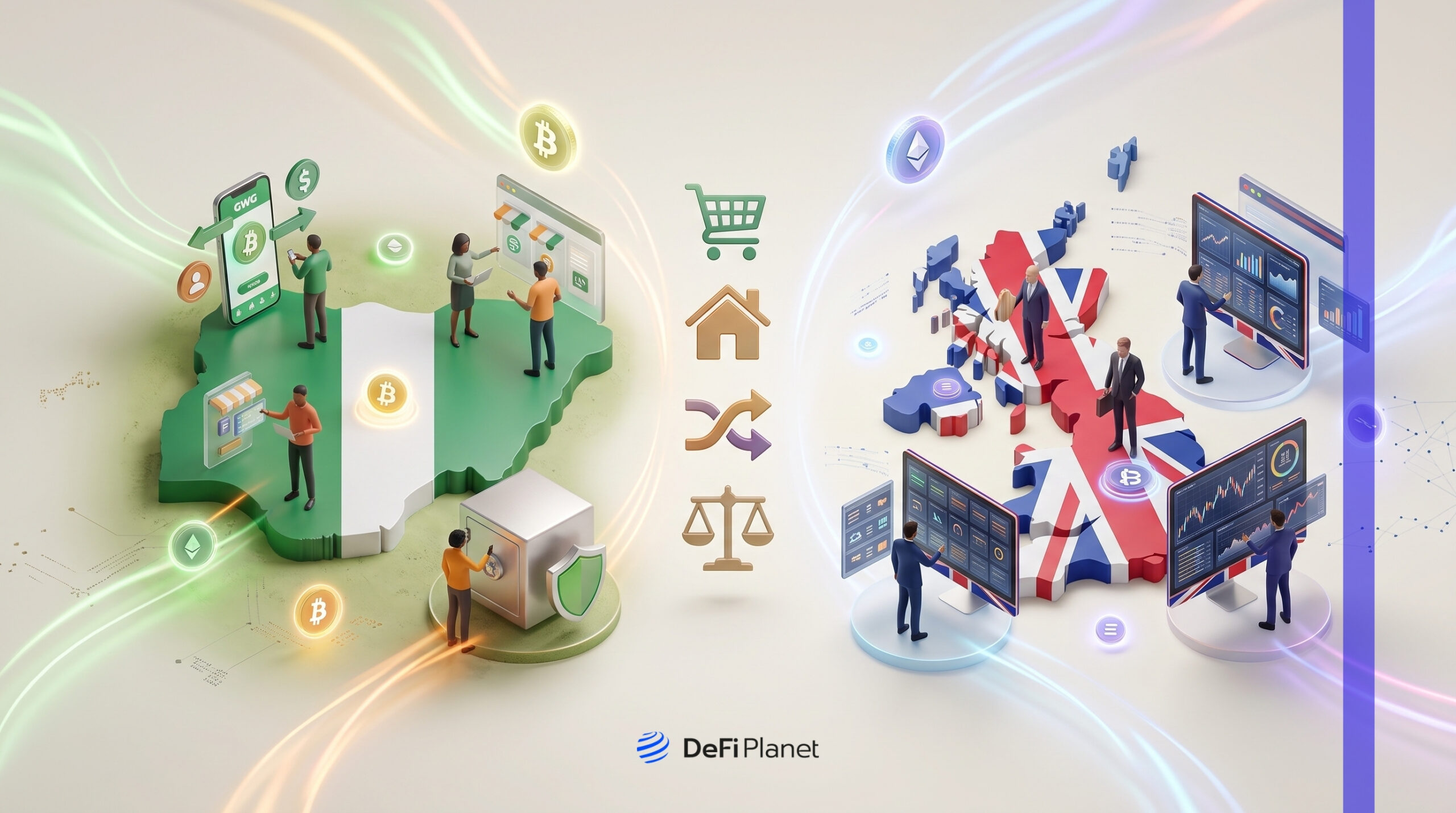
If you only read mainstream media headlines, you might think Nigeria and the United Kingdom are living through the same crypto revolution just because both countries appear regularly in discussions about digital assets. Nigeria is often ranked among the world’s biggest crypto adopters, while Britain is frequently described as one of Europe’s most mature crypto markets, and yet these headlines hide a simple truth: people in these two countries use crypto for completely different reasons.
For many Britons, crypto is an investment vehicle sitting beside stocks and ETFs. Most buy Bitcoin, hope it rises, and rarely spend it. But for many Nigerians, crypto is less about getting rich and more about solving everyday financial problems. It helps people access foreign exchange (mostly US dollars), receive money from abroad, pay international suppliers, protect savings from inflation, or move money when traditional banking becomes expensive or difficult.
This difference explains why Nigeria can rank above the UK in crypto adoption even though British investors collectively own far more crypto wealth. The two countries are measuring different kinds of participation, and Chainalysis‘ adoption rankings have emphasised grassroots usage and transaction activity, while UK surveys focus on the percentage of adults who own crypto. Understanding that distinction tells us far more about crypto’s future than any league table.
Nigeria vs United Kingdom at a Glance

Why Nigeria Ranks Higher Than Britain

One of crypto’s biggest misconceptions comes from the ChainalysisGlobal Crypto Adoption Index as people often assume the ranking measures which country owns the most crypto. That hasn’t been the case; instead, Chainalysis looks at indicators such as retail transaction volumes, peer-to-peer trading, and usage relative to a country’s economic size. Wealthy countries naturally transact larger dollar amounts, so the methodology adjusts for purchasing power and population to better capture grassroots adoption.
The UK’s Financial Conduct Authority (FCA) measures something different, it surveys adults and asks if individuals own crypto and this is because ownership and adoption are seldom the same thing. A London investor with £40,000 in Bitcoin who never touches it counts as a crypto owner but a Nigerian merchant who buys USDT every week to pay Chinese suppliers may own only a few hundred dollars’ worth of crypto but actively uses it every month and these are vastly different behaviours.
What Britons Actually Use Crypto For
If you asked the average crypto holder in Britain why they bought Bitcoin, the answer would probably sound familiar. “I think the price will go up,” and that is because crypto in the UK functions primarily as an investment product. FCA consumer researchconsistently shows that most UK crypto owners buy digital assets hoping they appreciate over time rather than using them for everyday payments and oftentime, you will find that the typical journey looks like this; Someone downloads Coinbase or Revolut, they purchase Ethereum or Bitcoin and occasionally check the price and then leave it untouched.
Crypto has become another speculative asset alongside shares and exchange-traded funds but DeFi participation remains relatively small and remittance usage also is limited because Britain’s banking infrastructure already makes domestic payments fast and reliable. Now, international transfers certainly do exist, but most people simply use Wise, banks or other regulated money transfer services with crypto rarely the first choice. That does not mean that Britain lacks crypto innovation, instead, innovation is increasingly happening inside the regulated financial markets through custody, tokenization, institutional trading and investments rather than daily consumer payments.
What Nigerians Actually Use Crypto For
Nigeria tells a very different story, one where crypto often begins with a problem with someone wanting to preserve savings after yet another naira depreciation or a freelancer needing payment from a US client, or a parent wanting to pay university tuition abroad or even traders needing dollars to buy inventory from China.
Traditional financial systems sometimes make these transactions slow, expensive or inaccessible but stablecoins provide another option; USDT has effectively become a digital dollar for many Nigerians because it combines dollar exposure with near instant settlement. That makes crypto useful even for people who have little interest in blockchain technology itself, although speculation still exists and many Nigerians trade Bitcoin and meme coins hoping for profits; but unlike in Britain, investment is only one part of a much broader use case.
Several structural factors have encouraged this behaviour, including foreign exchange shortages, naira volatility, expensive remittance costs and a strong freelance economy.
Stablecoins May Be the Real Story
When outsiders think about crypto, they usually imagine Bitcoin, but what many Nigerians think about are stablecoins and that distinction is important because, as Bitcoin is regarded as volatile by a vast majority, stablecoins attempt to maintain a fixed value, usually linked to the US dollar.
For someone worried about inflation rather than speculation, stablecoins solve a more immediate problem, which is why many African fintech founders increasingly see stablecoins as financial infrastructure rather than investment products, letting users experience cheaper, faster cross-border payments.
READ ALSO: The Bank of England Was Warned Its Stablecoin Rules Would Kill the Market and It Listened
The Apps People Actually Use
United Kingdom
The UK’s largest crypto platforms generally include:
- Coinbase
- Kraken
- Revolut Crypto
- Crypto.com
- eToro
You’ll notice something interesting: only three of these are traditional crypto exchanges. Revolut and eToro are broader financial platforms where crypto is simply another investment option, reflecting how British consumers think about digital assets.
Nigeria
Nigeria’s crypto ecosystem looks very different because digital assets are often used to solve real financial problems rather than simply generate investment returns. While trading remains popular, many users also rely on crypto to access US dollars, receive payments from abroad, pay international suppliers, send remittances, and preserve the value of their savings against naira depreciation.
Some of the most widely used platforms include:
- Binance: Despite its regulatory challenges in Nigeria, Binance remains one of the world’s largest crypto exchanges and continues to influence trading behaviour through its deep liquidity and global reach, with many Nigerian users historically relying on its P2P marketplace for buying and selling cryptocurrencies.
- Bybit: Following Binance’s regulatory difficulties, Bybit has attracted a growing number of Nigerian traders looking for spot trading, derivatives, and copy trading services.
- Quidax: One of Nigeria’s first homegrown crypto exchanges, Quidax has built its reputation by focusing on local users. The platform supports naira deposits and withdrawals and has pursued regulatory compliance under Nigeria’s evolving digital asset framework.
- Busha: Busha targets retail investors with a simple, beginner-friendly interface. It allows users to buy, sell, and store cryptocurrencies while also offering recurring investment features for long-term holders.
- Yellow Card: Although it operates across more than 20 African countries, Yellow Card has become a major player in Nigeria by focusing on stablecoin payments and cross-border transactions. Its services are widely used by freelancers, businesses, and individuals looking for a reliable way to move value across borders.
Beyond these exchanges, peer-to-peer (P2P) trading remains a cornerstone of Nigeria’s crypto economy, and even after regulatory changes and restrictions on certain platforms, many users continue to trade directly with one another because P2P markets offer flexible access to foreign currency, particularly USDT, often at competitive exchange rates. This flexibility has made P2P an important financial tool for freelancers receiving overseas payments, importers paying international suppliers, students paying tuition abroad, and families receiving remittances.
Regulation Is Also Moving in Different Directions
The UK and Nigeria spent years appearing cautious about crypto, but today, both are regulating it, but with different priorities. In Britain, the FCA has now finalized the UK’s most comprehensive crypto framework to date, covering trading platforms, custody, market abuse, consumer protection, and disclosure standards, with authorisation opening in September 2026 and the full regime taking effect in October 2027. The regulator says its objective is to encourage innovation while reducing consumer harm.
Nigeria is also responding, and the Investments and Securities Act 2025 formally recognizes digital assets within the country’s securities framework, giving the Securities and Exchange Commission clearer authority over virtual asset service providers, representing a significant evolution from earlier years when the Central Bank’s restrictions dominated the conversation.
The result has been interesting: both countries have become more crypto-friendly, but from different starting points. Britain is regulating a market dominated by investors, while Nigeria is regulating one where many users treat crypto as financial infrastructure.
The Biggest Difference Isn’t Technology
It is economic reality, because imagine asking someone in Manchester why they bought Bitcoin: you’ll hear something like, “I think it’ll double in five years,” But ask someone in Lagos why they bought USDT, and the response is very different, and the two answers reveal everything.
Crypto solves different problems depending on where you live; in developed economies with stable currencies and efficient banking systems, crypto competes with existing investments. In emerging economies facing inflation, currency depreciation and expensive cross-border payments, crypto often competes with the banking system itself, and that pretty much explains why adoption statistics alone tell only half the story.
So, Is the FCA Regulating Today’s Market or Tomorrow’s?
Britain’s new crypto framework, is one of the most comprehensive ever produced by a major regulator, yet there is an interesting question and that is: if most Britons simply buy crypto as an investment and rarely use it for payments, is such a sweeping regulatory framework responding to today’s market or preparing for a future one?
The answer is not straightforward, and supporters will argue that regulation should anticipate growth before risks become systemic. Critics counter that many of the proposed rules appear designed for a much larger consumer payments ecosystem than currently exists.
Nigeria presents the opposite picture: one where many users already rely on crypto for practical financial needs, yet regulation is only now catching up after years of uncertainty, a contrast that sets up the next question perfectly. If Britain is building rules for tomorrow while Nigeria is regulating behaviour that already exists today, which approach is more likely to produce the next generation of crypto businesses? The answer to that is best revealed as time goes on.
Disclaimer: This article is intended solely for informational purposes and should not be considered trading or investment advice. Nothing herein should be construed as financial, legal, or tax advice. Trading or investing in cryptocurrencies carries a considerable risk of financial loss. Always conduct due diligence.
Enjoyed this? BookmarkDeFi Planet, explore related topics, and follow us onTwitter,LinkedIn,Facebook,Instagram,Threads, and CoinMarketCap Community for seamless access to high-quality industry insights.
Take control of your crypto portfolio with DEFI PLANET PRO, DeFi Planet’s suite of analytics tools.
The post What Do People Actually Use Crypto For? Nigeria vs the United Kingdom appeared first on DeFi Planet.