If you have even half an eye on the internet right now, you’ve seen it. People you know showing up in videos they never recorded. Fake cops knocking on inboxes. Bots swarming airdrops. The li
If you have even half an eye on the internet right now, you’ve seen it. People you know showing up in videos they never recorded. Fake cops knocking on inboxes. Bots swarming airdrops. The line between human and machine is blurry.
This piece breaks down proof of personhood, the idea that a system can tell you are a real, unique human without demanding your whole identity. We’ll look at how it works, why it’s suddenly center stage, who’s shipping it, and how to judge the tradeoffs before you opt in.
By the end, you’ll know how PoP differs from KYC, what privacy tech actually helps, where it’s useful, and the red flags to avoid.
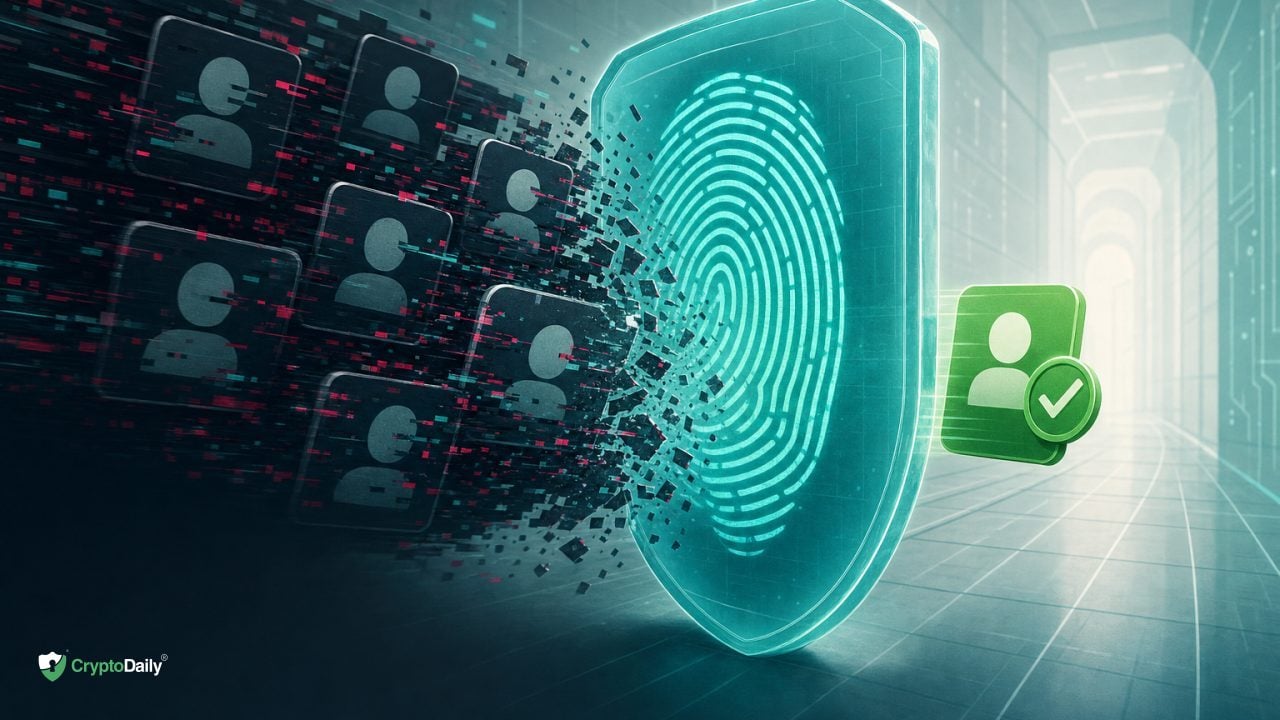
Proof of personhood (PoP) is a way to verify that an account is controlled by a single real human, usually without revealing who that human is. It beats bot swarms and Sybil attacks by issuing a one-per-person credential you can reuse across apps. In 2026, PoP matters because AI-generated deepfakes are exploding and regulators are forcing clearer labels on synthetic media, so platforms need stronger signals that a human is behind an action.
- Goal: one human, one credential, minimal personal data
- Used for airdrop protection, spam control, voting, and reputation
- Built with biometrics, web-of-trust, liveness tests, or cryptographic proofs
- Privacy hinges on on-device processing and zero-knowledge attestations
- Risks include data leaks, coercion, exclusion, and vendor lock-in
How does proof of personhood actually work?
There isn’t a single recipe. Most PoP systems mix two ideas: make sure you’re human right now, then bind that proof to a durable credential that’s hard to duplicate. How you do that can vary a lot.
Biometric flows scan a face, iris, or voice, then run liveness checks. The good ones keep templates on your device and only release a yes or no signal to a verifier. Web-of-trust flows skip biometrics and instead rely on social graphs and attestations. Friends or verified peers vouch for you, and sybil resistance comes from making it expensive to grow a large fake network.
There are also challenge-response methods designed to trip up generative models. Think time-limited puzzles, motion prompts, or device-bound cryptographic challenges that are easy for a person holding a phone but brittle for a bot farm.
Under the hood, the reusable part is usually a verifiable credential or a signed claim that your wallet can present. If the scheme supports zero-knowledge proofs, you can prove you hold a valid PoP without exposing anything else.
What separates proof of personhood from KYC and identity wallets?
People mix these up, which causes headaches. KYC tries to answer who you are according to a government database. PoP tries to answer if you are a unique human, full stop. Identity wallets sit somewhere else. They store credentials about you and let you share them selectively.
Here’s a quick side-by-side to keep the concepts straight.
Feature Proof of Personhood KYC/AML Verifiable Credentials/DID Core question Is this a unique human? Who is this person by legal identity? Can I present specific facts about me? Data exposure Minimal by design High (ID docs, selfies, PII) Selective disclosure possible Typical use Spam resistance, voting, airdrops Onboarding for regulated services Portability of claims across apps Privacy tech Zero-knowledge proofs, on-device biometrics Centralized databases, audits W3C standards, pairwise identifiers Failure mode Duplicate or coerced credentials Data breach, identity theft Correlation across verifiers
These can stack. A DeFi protocol might allow small limits with PoP alone, higher limits with a VC, and full access with KYC. The important part is understanding what you share and where it’s stored.
Can proof of personhood be private in practice?
It can be, but it’s not automatic. Privacy depends on three choices: where your biometric or claim is processed, what leaves your device, and how often a verifier needs to talk to a central server.
The stronger designs use privacy by default. Liveness and matching happen on the device. The network only learns that your device holds a valid, one-per-person credential, often via a zero-knowledge proof. When you present the proof later, you should be able to avoid correlating identifiers across different apps.
Weak designs centralize templates, need constant server checks, or leak metadata that can follow you around the web. Even if the math is strong, sloppy telemetry can deanonymize you. That includes IP addresses, timing fingerprints, or reuse of the same public key across sites.
Pro tip: If a PoP app cannot show you a clear data flow diagram and an audit confirming on-device processing and ZK-based verification, treat it as a high-leak system.
Who is building it today, and what changed in 2026?
The space is busier than it was a year ago. World, formerly Worldcoin, is the most visible biometrics-first network. Two things put it back in headlines this summer. First, Grayscale filed to launch a spot Worldcoin ETF on Nasdaq under GWLD on July 20, 2026, a move that pushed the token higher and signaled growing institutional interest (Decrypt).
Second, around its third anniversary, World announced a 52.5 million dollar private round led by Pantera to scale World ID and proof of personhood. The team has talked about tens of millions of users, and CoinMarketCap’s summary cited roughly 39 million as a directional marker (CoinMarketCap (CMC AI) — Worldcoin latest updates).
Outside that orbit, there are non-biometric approaches. Gitcoin Passport combines stamps from multiple sources to score uniqueness. BrightID leans on social graphs. Proof of Humanity and Idena have run experiments that tie human verification to on-chain registries and time-bound ceremonies. Civic and other credential providers integrate KYC and verifiable credentials where regulation demands it.
The macro backdrop also shifted. The FBI’s crime center issued a July 20, 2026 alert about deepfake videos and spoofed IC3 sites used to impersonate agents, a very public reminder that machine-made media is now weaponized at scale (FBI / IC3). And in Europe, the Commission published final transparency guidelines and iconography for the EU AI Act in July, with Article 50 labelling obligations taking effect from August 2, 2026 (EU AI Act Service Desk). Put together, you can see why platforms are reaching for stronger human signals.
Where could PoP help, and where does it backfire?
PoP shines where bots ruin the party. If you’re running an airdrop or a quadratic funding round, one-per-person credentials cut the attack surface. Social platforms can downrank or sandbox content that lacks a human stamp, which helps when AI spam is cheap. Forums can require a minimal PoP for posting but not for reading. That tends to lift the quality of replies fast.
It also makes marketplaces less gameable. Reviews, ratings, and reputation that tie back to an anti-Sybil proof become harder to farm. And in governance, you can combine PoP with stake weighting or delegation to limit whales from faking a crowd.
Backfire risk is real. Any system that can say you are a person can be abused to say you are not. That creates exclusion risks for people with nonstandard biometrics, limited device access, or no social graph in the right place. There is also the surveillance angle. PoP that leaks metadata basically becomes a tracking tag.
Finally, coercion. If an employer, landlord, or government demands your PoP credential, you can be forced to link your offline identity to online activity. That is why revocation, unlinkability, and the ability to hold multiple pairwise credentials matter.
How do I evaluate a PoP project before I opt in?
You do not need to be a cryptographer. A short checklist will catch most pitfalls. Get answers in writing if you can.
- On-device by default: Are liveness and matching done on your phone, with only a yes or no leaving the device?
- Zero-knowledge proofs: Can you present a valid PoP without revealing your identifier or biometric template?
- Data minimization: What is stored server-side? For how long? Is it encrypted with keys you control?
- Revocation and recovery: If your credential leaks or you switch devices, can you rotate without losing your reputation?
- Pairwise unlinkability: Does the wallet create unique identifiers per app to prevent cross-site correlation?
- Standards and portability: Are they using W3C Verifiable Credentials and DIDs so you can move elsewhere later?
- Open audits: Is there a recent, public security and privacy audit by a credible firm?
- Governance and jurisdiction: Who can change the rules, and under which legal system are disputes handled?
- Incentive design: How expensive is it to create fakes, and can attackers rent or sell verified accounts?
- Compliance posture: If you operate in the EU, can you meet AI Act transparency without exposing users?
If a project scores poorly on three or more of those, think twice. And if you cannot get clear documentation, that is usually your answer.
One of the EU’s official 'AI' icons ("AI GENERATED") for labelling AI‑generated/modified content — a visual compliance tool tied to Article 50 and the EU Code of Practice, useful for identifying deepfakes and synthetic media. — Source: European Commission — "EU Icons for labelling AI-generated content" (digital-strategy.ec.europa.eu)
Is proof of personhood worth it in 2026 for Web3 users?
For many use cases, yes, with caveats. If you want fairer airdrops, less spam, and saner governance, PoP can move the needle. The cost is friction. You may need to scan, show up to a ceremony, or connect social proofs. And you are trusting someone’s implementation to get privacy right.
The market is also maturing. Capital is flowing to teams that can scale human verification. The ETF filing tied to World and that new funding round show how fast PoP is entering mainstream investor conversations (Decrypt, CMC AI). At the same time, the regulatory floor just rose in the EU, and public agencies are saying the quiet part out loud about deepfakes. The direction is clear: apps will need a better way to tell humans from machines.
So is it worth it? If you care about privacy, pick designs that keep you in control and can prove it. If you are a builder, start with optionality. Design your UX so users can get value with or without PoP, then offer perks for verified humans. Everyone wins when the default is choice, not compulsion.
Common Mistakes
- Equating PoP with KYC: They solve different problems. Do not collect passports when you only need a one-per-person stamp.
- Centralizing biometrics: Storing templates server-side invites breaches and regulation headaches. Keep processing on-device.
- Ignoring metadata: Even perfect crypto leaks if you reuse keys or log IPs. Rotate identifiers and minimize logs.
- Single-point governance: If a company can flip a switch and change who counts as a person, you built a chokepoint. Use transparent, multi-stakeholder processes.
- No recovery plan: People lose phones. Without revocation and re-issuance, a leak bricks their identity or lets attackers impersonate them.
- All-or-nothing UX: Forcing PoP everywhere turns features into gatekeeping. Offer gradients and explain the benefits.
If you like independent reporting on identity, security, and on-chain markets, you can always find more analysis and context at Crypto Daily.
Frequently Asked Questions
Does a PoP credential reveal my real identity to apps?
It shouldn’t. A well designed PoP proves you are a unique human without disclosing your name or ID number. If an app asks for both PoP and KYC, they should be handled as separate credentials with clear consent screens.
Can a PoP account be sold or rented on the black market?
Attackers try. Good systems make resale painful with liveness checks, device binding, and periodic revalidations. Markets still pop up, so incentives matter. If the reward for faking humans is high and checks are rare, abuse will rise.
What happens if my device is stolen?
You need revocation and recovery. Ideally you can invalidate the stolen credential and re-issue on a new device using a secure backup or multi-factor recovery. If a project cannot explain that process, skip it.
Will the EU AI Act force everyone to use PoP?
No. The AI Act’s Article 50 focuses on labeling and transparency for AI-generated content, including icons and guidance for marking synthetic media starting August 2, 2026. That pushes platforms toward better provenance signals, but PoP is one of several tools, not a mandate.
Is biometric PoP the only viable route?
No. Biometrics are one path. Web-of-trust, challenge-response ceremonies, and multi-source reputation like Gitcoin Passport also work, especially when combined. Tradeoffs differ by culture, threat model, and app risk tolerance.
Can I use PoP with a hardware wallet?
Usually yes. The PoP credential can live in a mobile wallet, and you can link it to a separate cold wallet for signing. Just avoid reusing the same public key for everything to reduce correlation.
How do airdrops use PoP without doxxing wallets?
They issue allowlists based on zero-knowledge proofs of uniqueness, or they let you claim via a new, unlinked address after presenting a PoP proof. The goal is to stop multi-claiming without learning who you are.
Disclaimer: This article is provided for informational purposes only. It is not offered or intended to be used as legal, tax, investment, financial, or other advice.