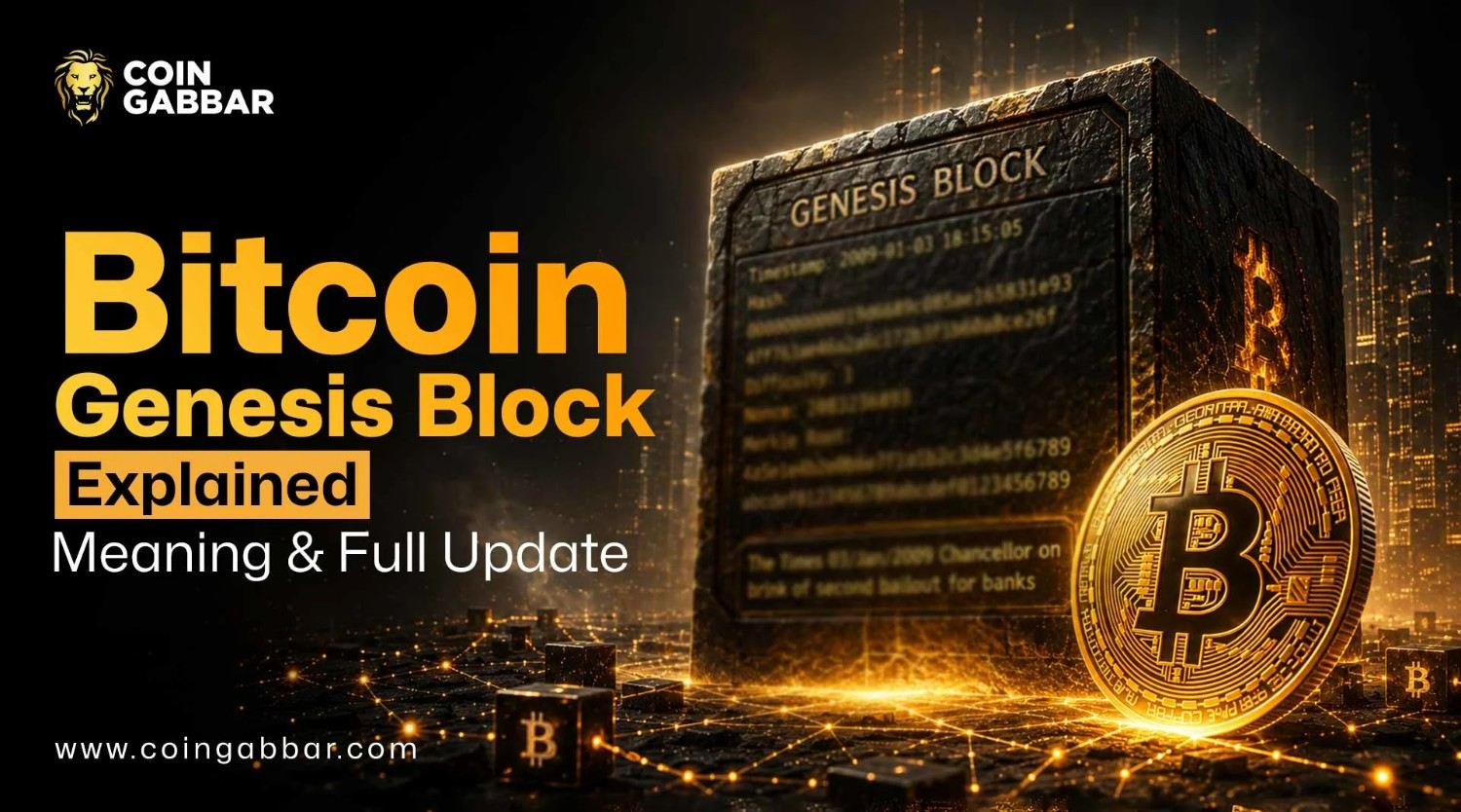
What Is the Genesis Block Bitcoin History: Its Importance and Features Bitcoin's story doesn't begin with a chart or a press release. It begins with a block-of code, mined on January 3, 2009,
What Is the Genesis Block Bitcoin History: Its Importance and Features
Bitcoin's story doesn't begin with a chart or a press release. It begins with a block-of code, mined on January 3, 2009, by someone the world still hasn't identified.
That code-block is what people now call the Genesis Block Bitcoin. Every wallet, every trade, every coin that's ever existed on the network traces back to this single starting point.
It's easy to forget that while staring at candlestick charts all day. But looking back at this one code-block explains a lot about how Bitcoin still operates today.
What Is the Genesis Block Bitcoin History?
Block Zero. Sounds simple, and technically it is, just the first entry ever written to Bitcoin's ledger, courtesy of Satoshi Nakamoto, whoever they turned out to be.
Here's the weird part, though. Every code-block after this one links back to whatever came before it. That's the whole "chain" concept. This one? Nothing to link to. Couldn't, since nothing existed yet.
Which is exactly why people keep pointing to it. Pull the Genesis Block Bitcoin was built out of the picture, and there's no chain left, no ledger, and nothing for the rest of Bitcoin to hang off.
Timing wasn't an accident either, or at least it doesn't feel like one. Just months after a global financial collapse, right when nobody trusted banks much at all.
The Meaning Behind the Genesis Block Bitcoin
Hidden inside the block's code is a short line of text, taken from a newspaper headline about a British bank bailout, dated the same day the code-block was mined.
It could simply be read as a timestamp. But most people who've studied it interpret it as something more deliberate, a quiet comment on how unstable the traditional banking system looked at that time.
That single line captures the entire reason Bitcoin exists. It wasn't created in isolation. It was created as a direct response to a broken financial system.
Key Features of the Genesis Block
A few things make this code-block genuinely different from every other one that's followed it since. Quick list:
No link back to a previous block, since there wasn't one
50 BTC reward that's sat frozen and unspendable ever since
The newspaper line, permanently hardcoded into the block
A six-day silence before Block-1 finally turned up
Doesn't read like an accident. It feels more like Satoshi was still figuring things out in real time, honestly, and that rough-around-the-edges quality is part of why the Genesis Block Bitcoin developers still pick apart today and it stays interesting.
Why the Genesis Block Still Matters Today
Bitcoin in 2009 and BTC now aren't really the same digital asset. Institutions hold it. Regulators watch it closely. Layer-2 networks push volume nobody would've guessed at back then.
Still, this one Code-block keeps getting brought up. Exchanges use it in beginner content. Educators lean on it. Ask anyone, "Where did Bitcoin actually begin?" and this is pretty much the only real answer going.
There's a bigger point buried in there too. The decentralization method wasn't tacked on later as a pitch; it was there from block-one, deliberate and hardcoded.
Limitations Worth Understanding
Not everything about this code-block adds up neatly, if we're being honest.
That frozen 50 BTC, for one. Nobody, not Satoshi, not the early devs, has ever explained why it's unspendable. It just sits there, locked, no official word either way.
Then there's the six-day gap before Block-1. Plenty of theories floating around. Zero confirmation.
Current Relevance in the Crypto World
If anything, curiosity about Bitcoin's origins has grown rather than faded, especially as the asset keeps working its way into mainstream portfolios.
Documentaries cover it. On-chain tools reference it constantly. Educational platforms keep circling back to the Genesis Block Bitcoin story whenever they're trying to explain the space to someone new.
And the question of who Satoshi really is ? Still very much alive. This code-block remains the earliest solid piece of evidence tied to Bitcoin's creator, whoever that turns out to be.
Future Outlook
Bitcoin's early history probably gets more attention going forward, not less. Newer investors tend to want the backstory, not just a price chart and a buy button.
More content built around this code-block seems likely too, especially as people keep trying to connect Bitcoin's technical beginnings with where it sits financially today.
Risk Factors to Consider
The code-block itself carries no financial risk; Bitcoin as an asset is a different story
Misinformation around hidden messages or Satoshi's identity spreads fast online.
Some newer investors lean too heavily on historical trivia when making decisions
Regulatory treatment still varies a lot from country to country, and it keeps changing
Conclusion
This isn't trivia for the sake of trivia. The Genesis Block Bitcoin was built on marks the actual starting point of everything BTC has since turned into, symbolic weight and all.
Want to understand how BTC really began? Forget the whitepaper for a second; forget the price charts too. Start here, with this one block.
Disclaimer
This article is for informational and educational purposes only and should not be considered financial or investment advice. Cryptocurrency markets are highly volatile, and readers should conduct their own research or consult a qualified financial advisor before making any investment decisions.