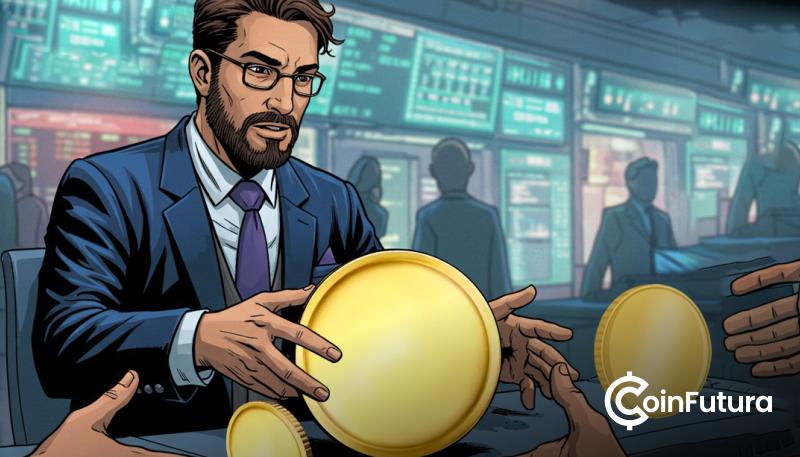
Tokenization is transforming the trading and investment of real assets, and this change may alter the face of trading and risk management. Furthermore, blockchain systems can increase commodi
Tokenization is transforming the trading and investment of real assets, and this change may alter the face of trading and risk management. Furthermore, blockchain systems can increase commodity exposure for both retail and institutional participants to be more accessible, flexible and transparent. But they will be of long-term value only if they are backed by robust custody, regulation, data and market infrastructure.
How Tokenized Commodities Connect Markets
Tokenized commodities are an exciting new innovation that links physical commodities to the blockchain markets, providing crypto investors with an alternative investment opportunity to stablecoins and digital assets. Each token can be either gold, oil, copper, crops, or other items which are in the custody of an approved and accountable professional custodian. The model thus combines commodity ownership with the transfer in the digital form, rules that can be programmed, records that are transparent and wide access in the crypto markets.
These tokens are unlike traditional cryptocurrencies as they are subject to the off chain reserves, legal rights, audits, and terms of redemption for each owner. But blockchain records can offer better visibility, clarity on ownership and settlement coordination of transactions between the platforms, brokers, custodians and investors involved. Therefore, by connecting directly to the measurable production and economic activity, tokenized commodities could bolster crypto markets.
Wider Access and Faster Trading
Fractional ownership can lower entry barriers, thus providing small investors a way to gain access to commodities that were previously out of their reach due to size and cost of contracts. Furthermore, investors would be able to trade continuously on the blockchain, apart from the regular trading hours of exchanges and national boundaries and trading systems. This increased access could help increase liquidity, but trading volume remains a function of demand, regulation, market makers and platform quality.
Tokenized markets can also decrease intermediaries and smart contracts can automate transfers, payments, and possession updates in line to agreed upon conditions. So, settlement can accelerate and administrative expenses, paperwork, reconciliation lagtime, and manual error can be reduced in all financial systems. However, there are still challenges to make transactions truly 'instant' when it comes to banking checks, compliance checks, custody procedures, network congestion and redemption steps.
DeFi Collateral and Risk Management
Tokenized commodities could be valuable collateral for decentralized finance and lending protocols could accept verified and secure tokens as collateral. For instance, tokenized gold could facilitate stablecoin loans, while investors could maintain their current commodity exposure in challenging times. So while introducing capital efficiency through integration with DeFi, it does raise smart contract, oracle and liquidation risks for users.
These assets are also available to engage in hybrid hedging, and traders can, in one wallet, store Bitcoin and tokenized precious metals. This can help ease risk management during uncertainty or inflationary expectations, and portfolio adjustments can be made in that wallet. Safe-haven claims, however, are subject to conditions, and tokens could trade at premiums or discounts to reserves, experience liquidity issues or issues with custody and issuers.
Custody, Regulation, and Investor Trust
Trust is the problem, but blockchain has no way to prove, say, the quality of a commodity, its insurance, or the rightful owner. So the investor still needs to use a custodian, auditor, issuer, insurer, warehouse operator and redemption agent to ensure that they have correct off-chain information and manage it. If an essential party fails, the token's value could go down and the blockchain record may be correct and technically secure.
Regulation also varies by country, and a single token could be subject to simultaneously multiple rules or rules in more than one area. It is critically important that there are clear legal rules in place, and that token holders have enforceable claims under the legal rules in case of insolvency, ownership claims, a shortage of the reserve of tokens, or in case of redemption requests. As a result, these will influence the confidence of both institutional and retail crypto investors, especially with regards to strong disclosures, independent audits, segregated reserves, and transparent redemption policies.
Market Expansion and Long-Term Outlook
Beyond precious metals, the commodity tokenization is anticipated to be expanded to other commodity sectors, such as agriculture, energy, industrial materials, environmental assets and verified supply chain finance products. But different sectors have unique storage, transit, grading, spoilage, site, insurance and pricing issues for issuers and token holders. So gold tokens can grow at a rate higher than oil, crops or industrial metals; and they must be handled and quality checked.
However, uses of sustainability can also expand, particularly via tokenized carbon credits, verifiable production histories, and full visibility of the supply chain for buyers. However, accurate environmental statements need to be supported by credible information, high quality standards, impartial evaluations and safeguards against double counting or misleading reporting. Furthermore, the environmental benefit attributed to token issuers and platforms can be lowered using blockchain consumption and substandard verification mechanisms.
As this technology develops further, tokenized commodities might help expand the crypto markets into a far more extensive, interrelated and growth oriented ecosystem, with a significantly decreased reliance on speculative digital assets. However this will require more clarity around the law, a secure infrastructure, credible backing, reliable pricing, and regular demand from institutions and individuals. In the end, tokenised commodities could prove to be valuable market instruments, and prudent regulation and management will be key for the positive global effect.
The post What Tokenized Commodities Mean for the Future of Crypto Markets appears on Coin Futura. Visit our website to read more interesting articles about cryptocurrency, blockchain technology, and digital assets.