What You Actually Own When You Buy a Tokenized Stock on a Crypto Exchange
Binance’s bStocks are certificates tied to an underlying share’s value, not direct shares themselves, according to the exchange’s own explainer Dividends paid on the underlying shares reach b
A
AnonymousCryptoCompass newsroom
October 29, 2026
3 min read
NEWS
CryptoCompass editorial visual for policy coverage.
Binance’s bStocks are certificates tied to an underlying share’s value, not direct shares themselves, according to the exchange’s own explainer
Dividends paid on the underlying shares reach bStocks holders net of a 30 percent US withholding tax, automatically reinvested through a mechanism Binance calls a Multiplier
bStocks are not offered to US persons and are structured specifically under an Abu Dhabi Global Market prospectus rather than US securities law
Anyone buying a tokenized stock product on a crypto exchange is often buying something meaningfully different from the real underlying share, even when the product is marketed around a familiar company name. Binance’s own explainer of its bStocks product offers one of the clearer breakdowns available of exactly what a buyer is and is not getting, a distinction worth understanding before treating any tokenized stock product as equivalent to owning the real thing.
According to Binance’s own materials, each bStock is a certificate representing an interest in an underlying US share, rather than the share itself. Binance says these underlying shares are held one-to-one at a regulated custodian, meaning in principle each outstanding bStock token corresponds to an actual share sitting in custody somewhere, structured as a backed financial product rather than a purely synthetic derivative with no underlying asset at all.
Even with that backing, a bStock holder does not receive the same rights a direct shareholder would have. The explainer does not describe bStocks as carrying shareholder voting rights in the underlying company, a right that would typically accompany direct share ownership. Dividend treatment is also notably different from a typical brokerage account: when the underlying company pays a dividend, bStocks holders receive that payment net of a 30 percent US withholding tax, a rate commonly applied to dividend payments made to non-US persons under US tax rules, and that net dividend amount is automatically reinvested through a mechanism Binance calls a Multiplier rather than being paid out directly as cash the way a conventional brokerage dividend typically works.
The legal structure underpinning bStocks reinforces just how different this product is from simply owning stock through a traditional broker. Binance issues the tokens under an approved prospectus specific to the Abu Dhabi Global Market, a financial free zone, rather than under US securities law, and the product is explicitly not offered to US persons or within the United States at all. That jurisdictional structure means the regulatory protections and legal remedies available to a bStocks holder differ from those available to someone who owns the underlying share directly through a US-regulated brokerage account.
None of this makes a backed product like bStocks equivalent to the purely synthetic stock perpetual contracts some other exchanges offer, which carry no underlying share backing at all, but it does mean that even a backed, certificate-style tokenized stock product falls meaningfully short of full direct share ownership in several specific, named ways. The explainer, published on Binance’s own learn page, lays out these distinctions as part of its own description of how the product works.
While the controversial cryptocurrency project has introduced multiple ecosystem developments so far this year, the team has not yet confirmed one of its most significant advancements. All ey
Key takeaways Claude users may face mandatory identity verification checks Anthropic requires government IDs and sometimes live selfies New safeguards raise questions about privacy and access
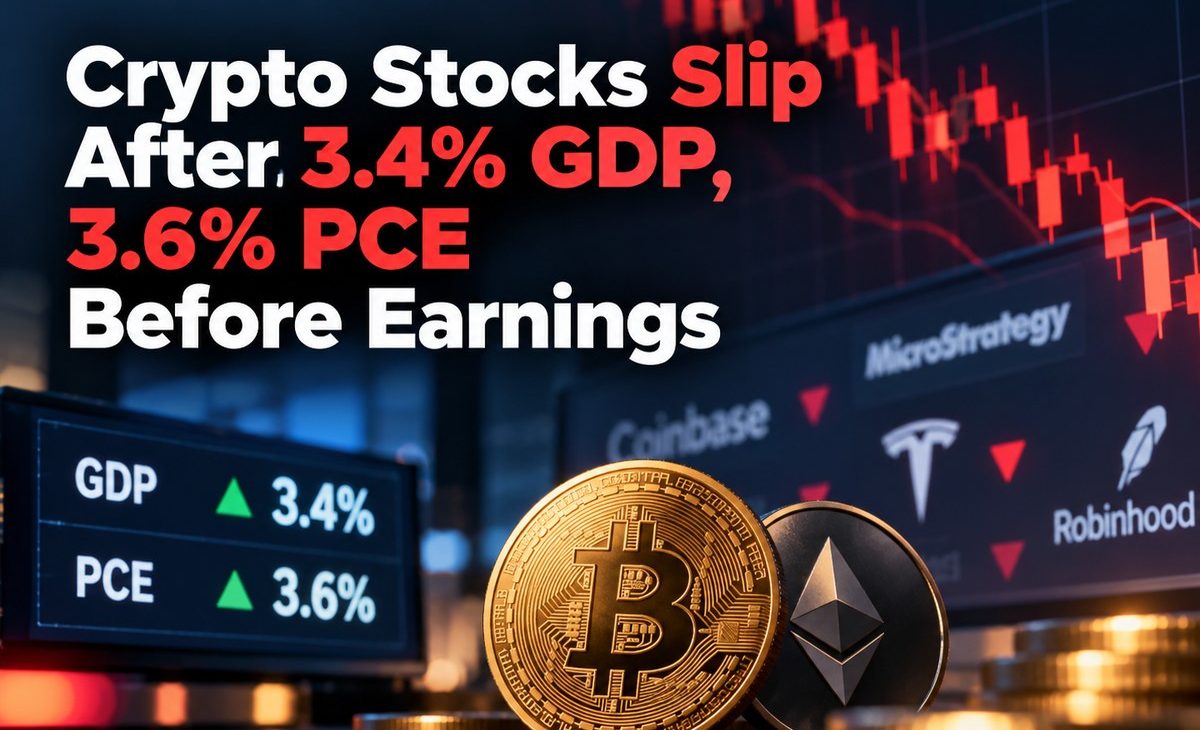
The U.S. economy grew at a 3.4% annual rate in the third quarter and inflation picked up to 3.6% in September, the Bureau of Economic Analysis reported on Thursday, October 29, hours before c