Following a rejection from the consolidated zone between $8.50 and $10, the Avalanche (AVAX) price has been facing massive selling pressure. The bulls attempted hard to prevent a continued be
Following a rejection from the consolidated zone between $8.50 and $10, the Avalanche (AVAX) price has been facing massive selling pressure. The bulls attempted hard to prevent a continued bearish action, while the latest pullback has intensified the possibility of a deeper correction. Moreover, the token has remained under heavy pressure this cycle, continuing to lag behind major cryptos like Solana (SOL), TRON (TRX), and BNB despite maintaining strong ecosystem development.
While rival Layer-1 tokens have benefited from stronger narratives, liquidity inflows, and user-driven momentum, the AVAX price has drained heavily from the yearly highs and is currently trading near the local lows around $6. This raises a question about the current demand for the token, which appears to be fading.
Avalanche continues to struggle as selling pressure keeps outweighing buyer interest, leaving the token stuck in a broader downtrend. After facing strong rejection from the $12–$12.5 order block earlier this year, AVAX has consistently printed lower highs and lower lows—a sign that momentum has remained weak compared to other major altcoins. The latest breakdown below the $9 order block was particularly important, as that zone had acted as a key support base for weeks. Once that level gave way, price quickly slid toward the $6 region, showing how fragile market confidence has become.
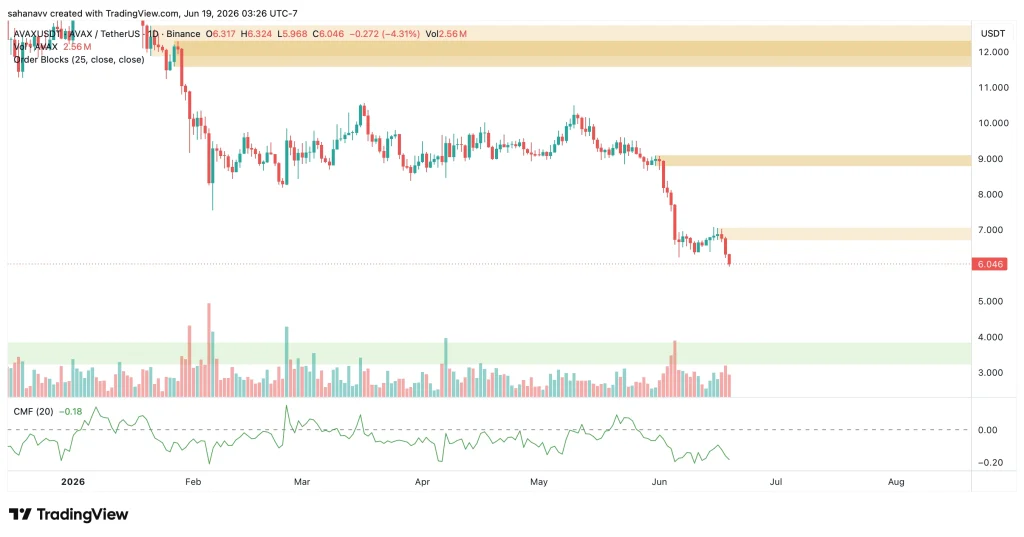
Right now, AVAX is trying to stabilize, but the bounce back into the $6.8–$7.0 order block doesn’t yet look convincing. Instead, it feels more like a short-term relief move rather than the start of a stronger recovery, especially with money flow indicators still pointing to capital leaving the asset. For bulls, reclaiming this nearby order block is the first real test. If they fail, the pressure could build for another drop below $6, which may drag AVAX toward the $3.5–$4 demand zone. Until buyers can start reclaiming these lost levels, Avalanche remains one of the weaker names in the market.
Avalanche’s Weak Structure Keeps It Behind Market Leaders
In the bigger picture, Avalanche’s inability to hold key order blocks and generate strong buying interest highlights why it has lagged behind stronger altcoins like SOL, BNB, and TRX. While those assets have managed to reclaim important resistance levels and attract fresh liquidity, AVAX continues to trade defensively, with sellers controlling most rallies. Unless the token can reclaim its nearby supply zones and rebuild momentum, the risk of deeper downside remains elevated—keeping Avalanche in a weaker position within the broader market cycle.