When Project Bridge, the 90,000km nationwide fibre rollout, is witnessing its most viable development in months, the federal government has introduced another twist to its plot. The Minister
When Project Bridge, the 90,000km nationwide fibre rollout, is witnessing its most viable development in months, the federal government has introduced another twist to its plot.
The Minister of Communication, Innovation and Digital Economy, Bosun Tijani, has shared that the Nigerian government is extending Project Bridge to Burkina Faso. The ambition is to find a pathway to reduce internet connectivity costs in Burkina Faso by almost 50%. With this, the West African country can reduce its connectivity gap.
In its approach, the minister revealed via a social media post on Thursday that the combined team will model a connectivity route through Nigeria-Niger-Burkina Faso and Nigeria-Benin-Burkina Faso. He noted that the ambition is to identify a pathway to reduce the cost of internet connectivity in Burkina Faso by almost 50%.
“Our objective is to leverage Nigeria’s growing digital infrastructure and capabilities to create shared prosperity across our borders, deepen regional economic integration, and position Nigeria as a trusted digital gateway to West Africa and the Sahel,” he said.

Nigeria’s Minister of Communication, Innovation and Digital Economy, Bosun Tijani and Burkinabè Minister for Digital Transition, Posts & Communication, H.E. Dr Aminata Zerbo-Sabané
At the heart of the conversation with the Burkinabè Minister for Digital Transition, Posts & Communication, H.E. Dr Aminata Zerbo-Sabané, was the agreement to establish a Technical Working Committee to develop a framework for the initiative.
Beyond Project Bridge, Nigeria will be sharing its 3MTT model to deepen Burkina Faso’s digital skills and talent. The partnership includes strengthening links between startup ecosystems, collaborating on Burkina Faso’s Innovation Campus and establishing joint work on AI, local-language technologies and cybersecurity.
Project Bridge: A big win for Burkina Faso
At the expense of Nigeria, the partnership signifies a great achievement for the West African country.
Burkina Faso holds an overall mobile network coverage of 85%, while high-speed internet gaps remain wide, with 3G covering 64% and 4G covering 46% of the country.
In a market driven by Orange Burkina, Moov Africa, and Telecel Faso, the country has 29.3 million active mobile connections in a total population of roughly 24.6 million people, showing the impact of multiple SIM card ownership per user.

Ouagadougou, Burkina Faso
However, there’s a significant internet usage gap. Only about 28% of the population uses the internet, constrained by poor rural electricity, regional insecurity, and community resistance to new tower installations. Other issues are vandalism, security challenges and a deficit in broadband infrastructure.
While there are state initiatives like PACTDIGITAL and the Universal Access and Service Fund (FASU) that target the rollout of hundreds of 4G telecom sites, the coverage gap persists. Failure to achieve an enormous 4G network deployment still buries the talk of 5G. Burkina Faso is not expected to witness 5G in the next two years.
For Aminata Zerbo-Sabané and Burkina Faso, expanding robust 4G coverage remains the focal ambition and Project Bridge might be what it needs to bring more of its citizens to the digital world.
Nigeria is extending a project it has yet to deploy at home
While trying to extend bilateral relationships is a means of expanding diplomatic terms, criticisms arise when the host nation is not at liberty to grant such relief.
Conversation around Nigeria’s Project Bridge started in January 2025. Since then, the initiative of deploying 90,000 kilometres of new fibre optic backbone infrastructure nationwide has received over $900 million in financing commitments from international development partners such as the World Bank Group, African Development Bank, and European Bank for Reconstruction and Development (EBRD).
Almost 2 years on, Project Bridge is still awaiting an active rollout in Nigeria.

Nigeria’s Minister of Communication, Innovation and Digital Economy, Bosun Tijani, while arriving in Burkina Faso
Last week, in a briefing after meeting with President Bola Tinubu, the minister shared that the federal government will begin the rollout of the $2 billion fibre project across the country in the coming weeks.
“In a few weeks, Nigerians will begin to see us laying fibre across the country. This project will transform Nigeria for good,” he said.
Also Read: FG to transform Nigerian universities into tech and innovation hubs under $2bn Project BRIDGE.
An attempt to extend an initiative that’s yet to witness a single kilometre of rollout in Nigeria sounds like a misplaced priority. At least, such consideration should come after deployment and a guarantee of full implementation in Nigeria.
Currently, Nigeria faces significant coverage gaps in rural communities owing to infrastructure deficit and the cost of building telecom towers in rural areas. Despite the recent surge in smartphone acquisition, poor network coverage in rural Nigeria remains a challenge that continues to widen the digital divide. This led to the recent announcement that of rolling out 3,700 towers nationwide, primarily for rural and underserved communities.
Also, the 5G coverage gap remains a major challenge in 2026. At a time when most Nigerians are acquiring 5G-enabled devices, most are still unconnected. In such cases, capable smartphones are downgraded to the 4G network. In fact, only half of 5G-enabled devices in Nigeria’s top three cities are connected to the 5G network. While telecom operators keep deploying supported infrastructure, the pace of internet demand is rising faster than their capabilities.
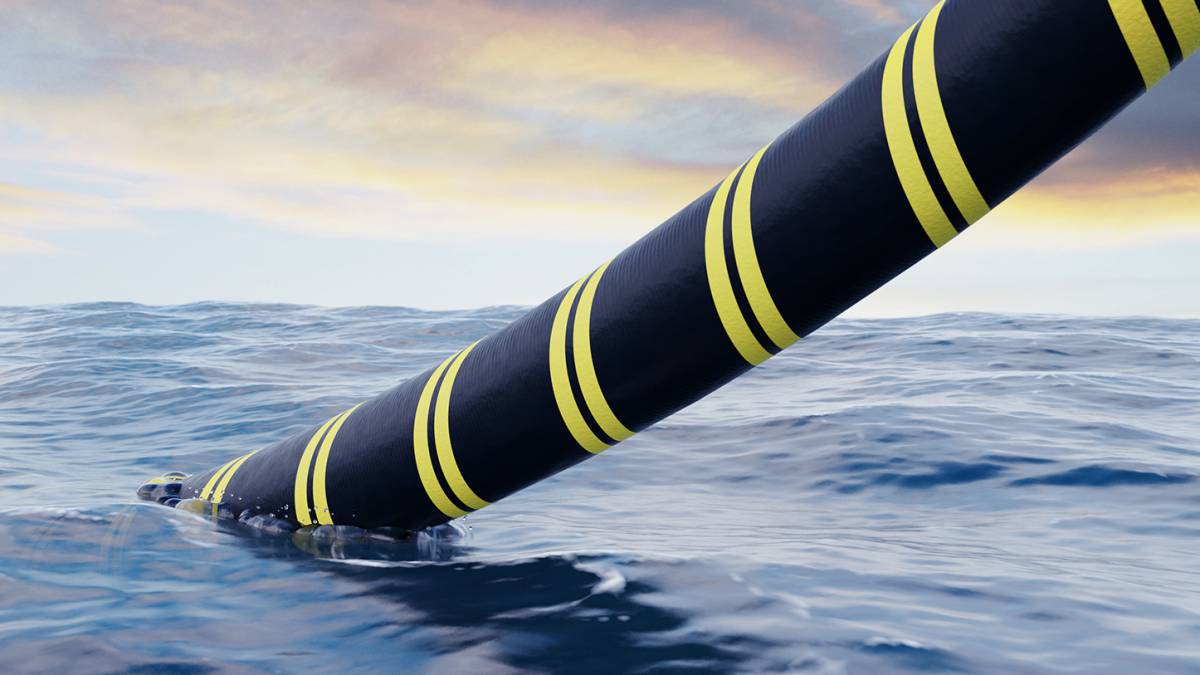
Project Bridge is tipped to expand Nigeria’s broadband connectivity and particularly reduce the coverage gap. While the Burkina Faso project is still at its conversation and mapping stage, extending the initiative to another country while it’s still testing the waters in Nigeria spells misplaced priorities.
It’s not the time for Nigeria to start pouring its scarce innovations into other countries. It’s time to build a strong connectivity backbone at a time when digital infrastructure dictates the pace of true economic growth.