The rains are already here, and the forecasts are grim. The Nigerian Meteorological Agency (NiMet) recently released its 2026 Seasonal Climate Prediction, putting the country on high alert. T
The rains are already here, and the forecasts are grim. The Nigerian Meteorological Agency (NiMet) recently released its 2026 Seasonal Climate Prediction, putting the country on high alert. The data points to a longer rainy season across 13 states, including Lagos, Benue, and Kaduna. Furthermore, NiMet warned that early heavy rains hitting hardened, dry soils will trigger severe flash floods across 19 states.
The threat level is exceptionally high. The federal government has identified 14,118 communities across 33 states and the Federal Capital Territory (FCT) as being at direct risk of severe flooding this year.
Against this backdrop, the National Emergency Management Agency (NEMA) is overhauling its operational playbook. On Tuesday, June 2, 2026, Vice President Kashim Shettima announced a strategic partnership with SpaceX during a courtesy visit to the Presidential Villa, where he received a delegation comprising the technical team from NEMA and SpaceX, led by the Director General of NEMA, Hajiya Zubaida Umar, and Peter Kroetger from SpaceX.
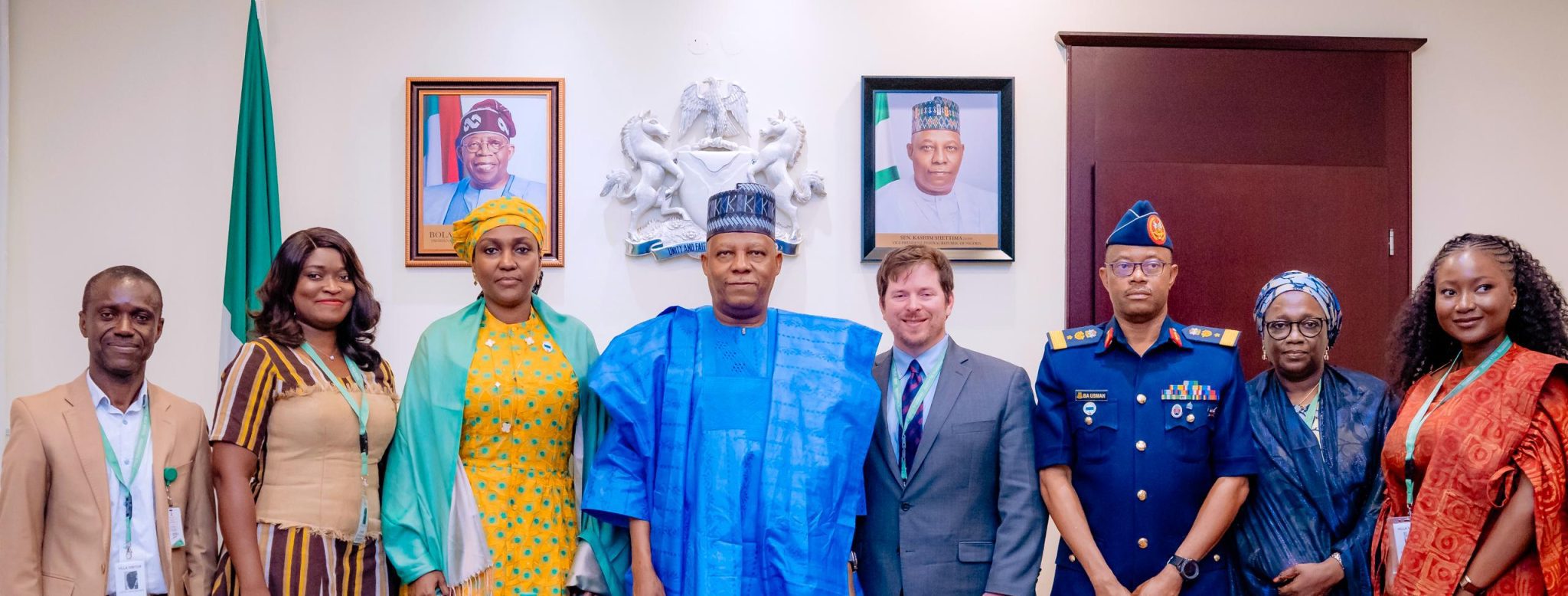
Vice President Kashim Shettima, during a courtesy visit by NEMA and SpaceX – Photo credit: State House Press Unit
The vice president lauded SpaceX’s donation of specialised communication equipment, including 91 Starlink satellite internet terminals, to the National Emergency Management Agency (NEMA). He described Nigeria’s partnership with SpaceX’s Starlink, one of the world’s largest satellite internet constellations, in enhancing emergency and disaster management in Nigeria as a collaboration that would improve NEMA’s response time and effective coordination, which he noted “is vital in emergency interventions in the country”.
NEMA and SpaceX’s partnership: The cost of communication blackouts during an emergency
Some observers might view 91 satellite dishes as a tiny drop in the ocean, given Nigeria’s sheer size. But from a digital infrastructure standpoint, this is exactly what frontline responders need.
To understand why satellite internet matters in a flood, we need to examine what went wrong four years ago. The 2022 floods remain the deadliest in Nigeria’s recent history. The disaster affected all 36 states and the FCT. Over 600 people lost their lives, and roughly 1.4 million residents were displaced.
The economic damage was immense. The government valued the direct economic loss at roughly $6.68 billion, with total housing, property, and agricultural losses estimated at around ₦13 trillion by disaster management experts. Entire harvests were washed away, triggering food inflation that the country is still battling today.
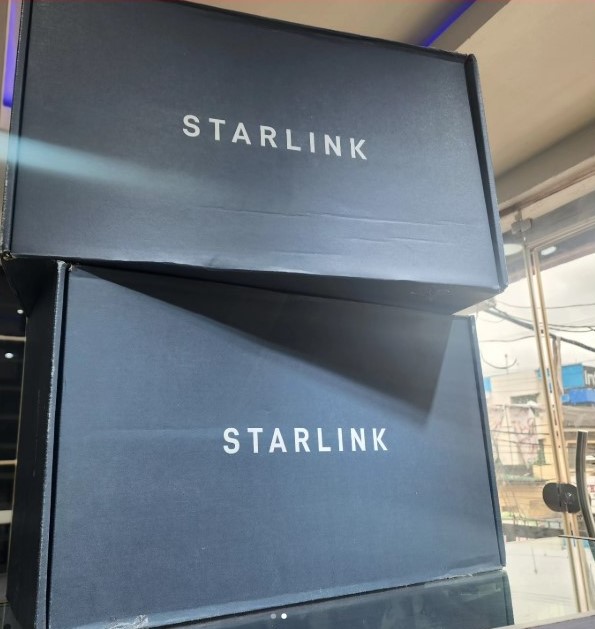
Starlink walk-in centre at Computer Village, Lagos
Behind those grim statistics was a severe communication blackout. Floodwaters are inherently hostile to terrestrial networks. When rivers overflow, they submerge fibre-optic cables. They knock out power grids supplying mobile network masts. When communities went under in 2022, their cellular signals died with them.
NEMA rescue teams often went in blind. Without a reliable network, local emergency workers could not transmit situational reports. Coordinating rescue boats, tracking displaced persons, and directing helicopters became a logistical nightmare.
SpaceX’s Starlink bypasses ground networks entirely. It relies on a constellation of low-earth orbit (LEO) satellites. This means the internet connection stays active even when local cell towers wash away or the national grid collapses.
NEMA is deploying these units to its command-and-control centres and 50 critical flashpoints across the country. The deployment includes both standard terminals and highly portable mini versions.
The technical specifications of this hardware matter just as much as the connection itself. Traditional VSAT (Very Small Aperture Terminal) satellite dishes are bulky. They require static installation, complex calibration, and a heavy power supply. This makes them useless for mobile rescue units moving through flooded terrain in small boats.
Also read: Pricing and delivery capacity limits Starlink’s dominance in Nigeria’s internet market
The Starlink systems solve this mobility issue. The flat-panel antennas auto-align with the LEO satellites overhead in minutes. They draw minimal power. A rescue team in a remote, flooded area of Bayelsa can establish a high-speed Wi-Fi network using a standard solar generator or a vehicle battery.
This hardware ensures constant high-speed, low-latency internet in the field. When a rescue team reaches a submerged community, they will not have to hunt for a 4G signal. They can instantly stream live drone footage of the destruction back to Abuja. They can sync databases of relief materials in real time. They can pinpoint exact GPS coordinates for medical airdrops.
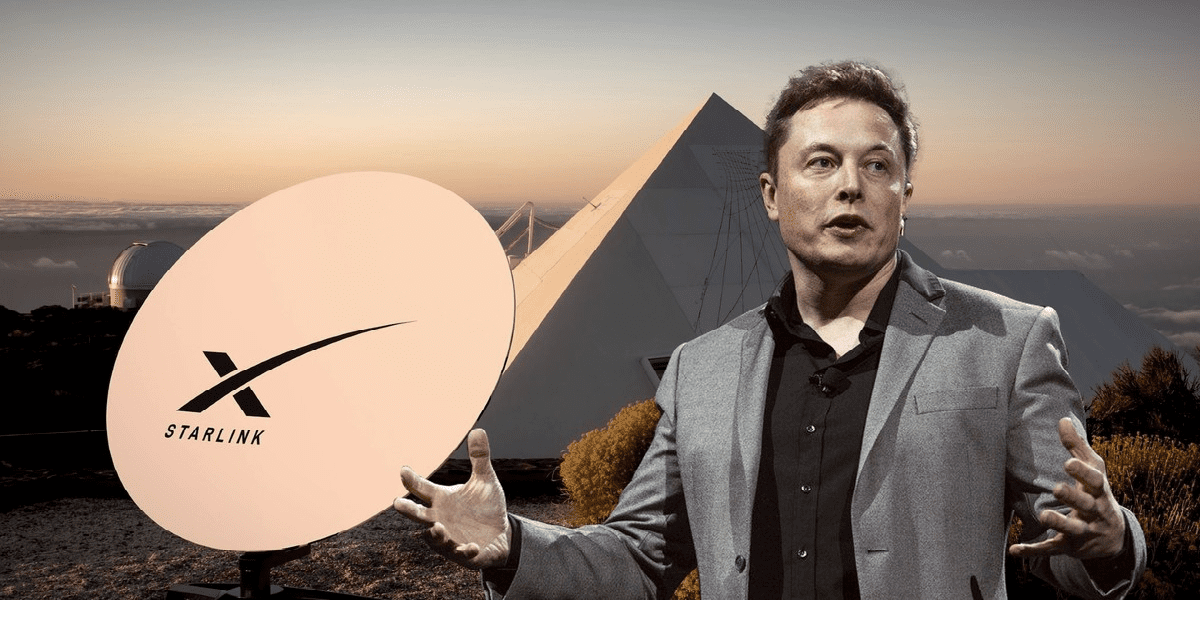
Elon Musk
The primary focus here is operational speed. Survival rates drop sharply in the golden hours immediately following a flash flood. Reliable internet allows local water gauge data to transmit instantly. This enables early warnings, allowing communities to evacuate before rivers breach their banks. It effectively moves NEMA from a reactive agency to a proactive one.
Furthermore, transparent data collection builds international trust. Global aid organisations disburse relief funds much faster when they receive accurate, real-time damage assessments backed by high-resolution video evidence and live mapping.
Although technology cannot stop natural disasters like climate change, nor fix poor urban land-use planning or rebuild inadequate drainage systems overnight. Yet, the NEMA and SpaceX partnership fixes a very specific, deadly problem. Emergency responders will no longer face communication blackouts in the middle of a crisis. By keeping the network alive when everything else fails, the agency finally has the digital tools to coordinate a modern rescue effort. It is a necessary infrastructure upgrade that gives Nigeria a fighting chance to save lives and limit the economic fallout this rainy season.