Key Takeaways Uber has reached an agreement to purchase workplace meal provider ezCater in a transaction valued at $2.3 billion, paid entirely in cash. ezCater operates a network exceeding 14
Key Takeaways
- Uber has reached an agreement to purchase workplace meal provider ezCater in a transaction valued at $2.3 billion, paid entirely in cash.
- ezCater operates a network exceeding 140,000 restaurant partners throughout the United States.
- The catering platform recorded gross bookings surpassing $2.5 billion during the trailing twelve-month period.
- Orders placed through ezCater average more than $400, significantly higher than typical delivery transactions.
- This acquisition comes months after Uber’s announcement of a $14.8 billion agreement to purchase Delivery Hero.
Shares of Uber initially declined 0.69% during early market hours Tuesday before recovering to finish 0.4% higher, following the company’s announcement of a $2.3 billion all-cash acquisition of catering specialist ezCater.
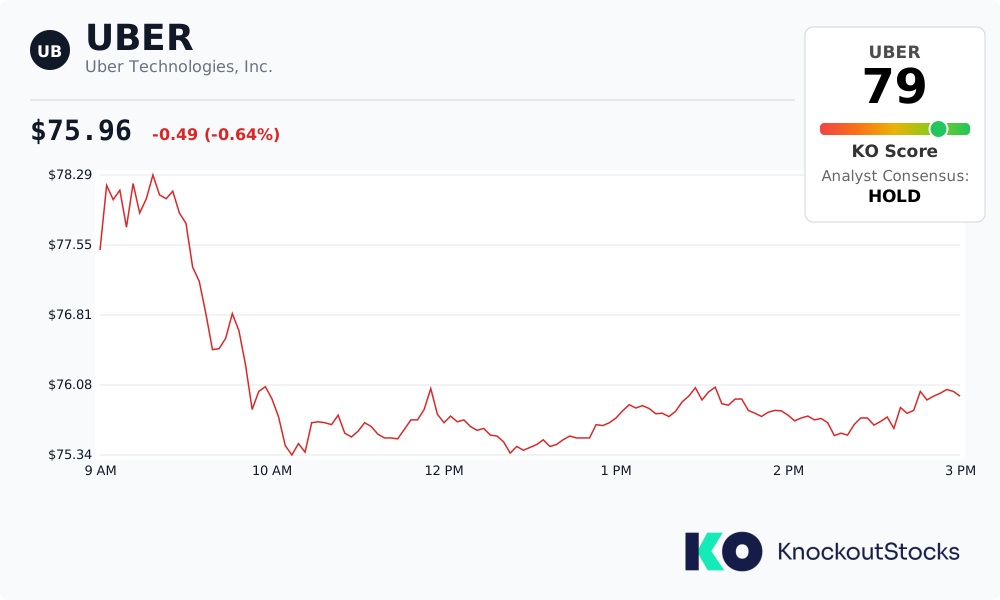 Uber Technologies, Inc., UBER
The transaction marks Uber’s strategic entry into workplace dining and bulk food orders, a segment where the company has maintained limited presence until now. ezCater specializes in linking businesses with restaurant partners for catering needs, serving everything from small conference room gatherings to comprehensive corporate meal programs.
The integration plan calls for embedding ezCater’s specialized catering infrastructure into Uber Eats and Uber for Business platforms. This combination will unite ezCater’s established restaurant partnerships with Uber’s substantial base of enterprise customers.
The Boston-based catering platform maintains relationships with over 140,000 restaurant locations nationwide. During the past year, ezCater processed more than $2.5 billion in total gross bookings while maintaining a high-teens growth trajectory.
ezCater currently operates at a profit when measured on a non-GAAP basis. Uber’s leadership indicated the acquisition will enhance overall profitability metrics rather than dilute them.
The typical transaction on ezCater’s platform surpasses $400 per order. This figure dramatically exceeds standard individual food delivery orders, creating the margin improvement opportunity Uber anticipates.
“Catering is a big business, and can be a huge revenue stream for restaurants,” Uber CEO Dara Khosrowshahi said in a statement.
Nihad Rahman, CEO of ezCater, expressed enthusiasm about integrating the company’s catering specialization into Uber’s “global ecosystem of customers, merchants, and couriers.”
J.P. Morgan Securities is serving as financial advisor to Uber in this transaction. Evercore is representing ezCater’s interests.
The timeline for completing this acquisition spans the next several months. Standard regulatory clearances and customary closing requirements must still be satisfied.
Uber’s Aggressive M&A Strategy in Food Delivery
The ezCater purchase represents Uber’s second major food delivery acquisition in 2025. Earlier in July, the technology giant reached terms to purchase Delivery Hero in a transaction valuing the German company at $14.8 billion.
The Delivery Hero agreement would stretch Uber’s combined ride-sharing and food delivery operations from 79 markets to 99 globally. Delivery Hero processed $42 billion in gross bookings throughout 2025, representing substantial scale.
Unlike the rapidly moving ezCater transaction, the Delivery Hero purchase faces a longer approval process and isn’t expected to finalize until the second half of 2027, subject to regulatory clearance.
CEO Khosrowshahi has been signaling this strategic direction for some time. During an August presentation, he characterized large-group food orders as a “massive addressable opportunity” and previewed Uber Eats’ evolution “beyond the individual meal.”
Those remarks align precisely with the ezCater transaction. Corporate catering represents exactly the type of substantial, repeat business Khosrowshahi referenced in his earlier comments.
Uber’s delivery division has emerged as a key growth driver recently. During the quarter ending June 30, delivery gross bookings increased 25%, propelled by higher transaction volumes and expanded user engagement.
During that quarterly earnings discussion, Khosrowshahi identified large group orders and in-store pickup options as priority expansion areas, the Wall Street Journal reported. The ezCater acquisition represents the most tangible execution of that strategic vision.
Combined, the ezCater and Delivery Hero transactions demonstrate Uber’s substantial financial commitment this year toward expanding its food delivery operations beyond individual meal orders. Both acquisitions await final regulatory approval before closing.
The post Why Uber (UBER) Just Spent $2.3 Billion on Corporate Meal Platform ezCater appeared first on Blockonomi.