TLDR: The wrapped Monero token fell more than 99% as a wallet that received XMR1 from the creator address sold roughly $13.5 million worth. The wallet still held about 4.83 million of the 5.2
TLDR:
- The wrapped Monero token fell more than 99% as a wallet that received XMR1 from the creator address sold roughly $13.5 million worth.
- The wallet still held about 4.83 million of the 5.2 million tokens it received when checked its activity at 07:51 UTC.
- Hyperliquid’s Monero futures held near $482 even as buyers paid about $0.91 for XMR1 on the spot market accessible through Wagyu.
- The transfers left open who authorized the sales, how much customers lost, and whether anyone used compromised credentials to move the tokens.
Wagyu’s wrapped Monero token, XMR1, fell more than 99% on Friday, November 20. A wallet that received tokens from the issuer’s address sold about $13.5 million worth on Hyperliquid.
In roughly half an hour, the price buyers paid for XMR1 fell from nearly $488 to $1. The token fetched about $0.91. Meanwhile, Hyperliquid’s separate Monero futures contract held near $482. For anyone checking a Monero price chart that morning, the choice of ticker made a difference of roughly $481.
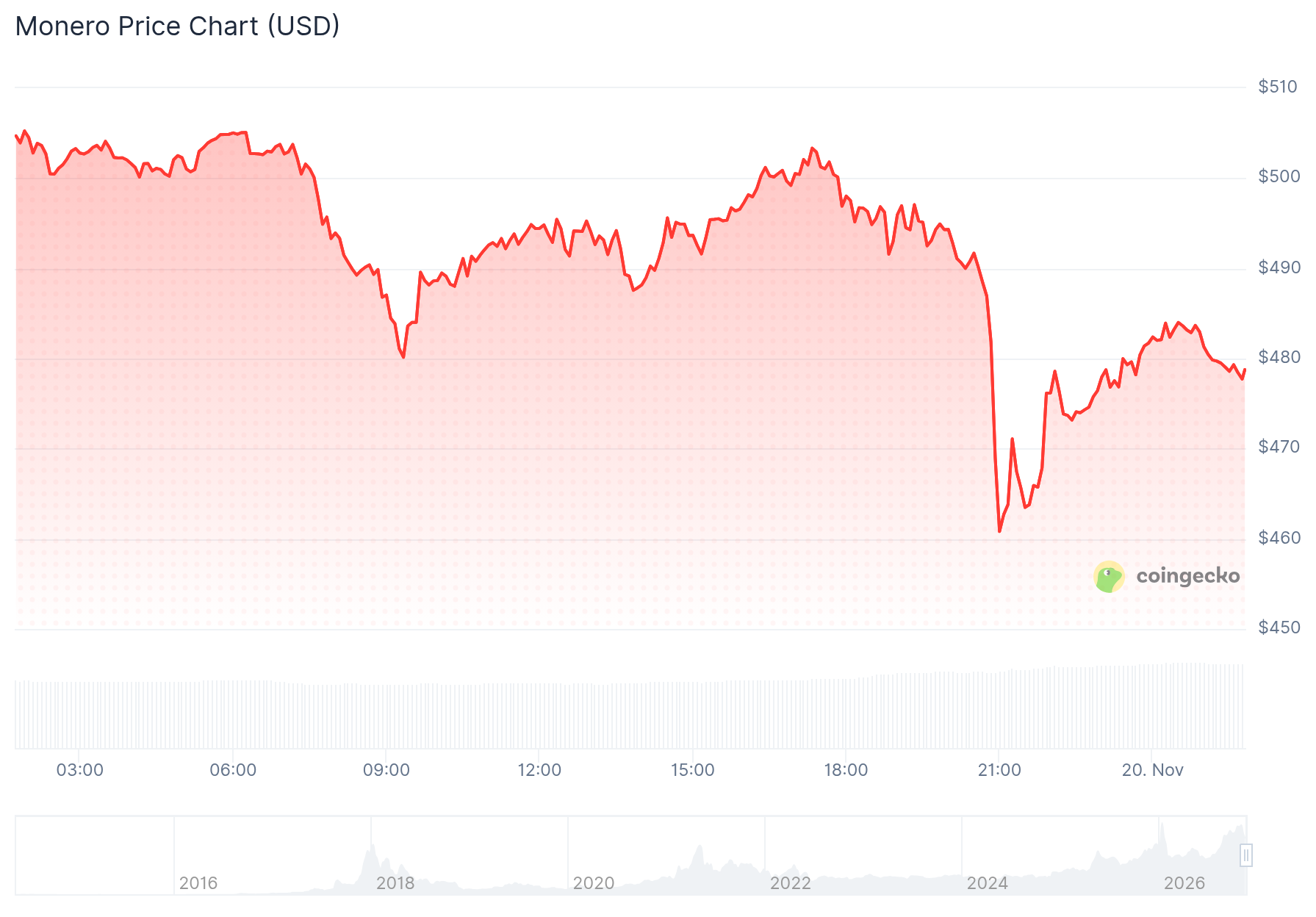
Monero (XMR) Price
How the Wrapped Monero Token Fell from Nearly $488 to $1
The creator address sent the wallet 5.2 million tokens across three transfers. By 07:51 UTC, its transaction history showed sales of about 364,000 tokens. The wallet still held roughly 4.83 million units of the wrapped Monero token when the records were reviewed.
That means the wallet had sold about seven of every 100 tokens it received. Roughly 93% of the transferred tokens remained, allowing for rounding in the reported figures. The balance shows how much the wallet held at that hour. Whether whoever controlled it intended to sell any more remained unclear.
The proceeds also shed light on how sharply prices varied during the sale. Dividing $13.5 million by 364,000 gives an average of roughly $37 per token. Some buyers paid close to $488 for the wrapped Monero token, while later buyers paid around a dollar. Applying either price to the entire batch would give a misleading account of what the seller collected.
Customer losses are a separate question. Estimating them would require knowing what individual buyers paid and whether they later sold or redeemed their tokens. The wallet records identify the address that supplied the tokens, but who authorized the transfers remained unknown on Friday morning. Reports suggest that the possibility of compromised credentials also remained unresolved.
Why XMR1 and Monero Futures Showed Different Prices
Wagyu gives users two ways to exchange the wrapped Monero token. A holder can sell XMR1 to a buyer through Wagyu’s interface, which routes orders to Hyperliquid. A holder seeking native Monero can instead request a conversion through the Wagyu bridge. That route depends on Wagyu completing the exchange.

Wrapped Monero down 99%. Source: Wagyu
Earlier in November, the two markets had quoted similar prices. Underhyper recorded XMR1 within about 0.1% of the Monero perpetual futures price on November 4. It also reported about $17.7 million in XMR1 volume against USDC over the preceding 24 hours. By Friday morning, one dollar would cover the quoted price of a wrapped Monero token on the spot market.
A buyer at $1 could therefore acquire 100 units for $100 before fees. Receiving native coins for those units would still require the bridge to process the request. Friday’s sales history documented prices buyers paid, leaving the outcome of any such conversion an open question.
The gap left two distinct prices visible on the same platform. The futures quote showed what market participants would pay for exposure to Monero through a contract. The spot quote showed what a buyer would pay someone selling the Wagyu token. Neither price established whether a holder could complete a redemption through the issuer that morning.
Wagyu had acknowledged a separate privacy incident on October 28. The disclosure covered three months of swap activity. Researchers at Hudson Rock examined records for 38,628 orders, including 4,580 completed swaps into Monero. Those entries linked public deposit transactions with customers’ Monero receiving addresses and IP addresses.
Wagyu said at the time that swaps continued and customer funds remained unaffected. As of Friday afternoon, no public evidence linked the October data exposure to the wallet transfers.
The post Wrapped Monero Token Sinks Below $1 as XMR Futures Hold Near $482 appeared first on Blockonomi.