XRP order flow is carrying a 7.23% buying imbalance while roughly $24 million in leveraged long positions sit exposed to a downside flush, a positioning setup that skews toward volatility rat
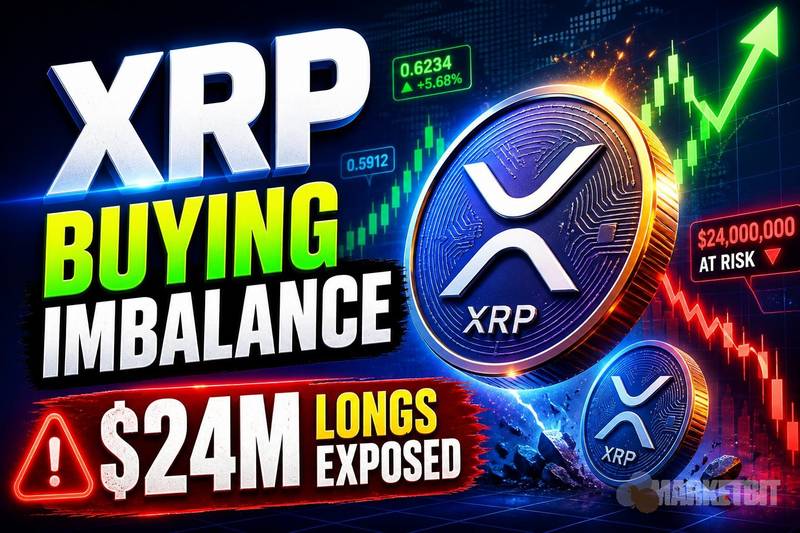
XRP order flow is carrying a 7.23% buying imbalance while roughly $24 million in leveraged long positions sit exposed to a downside flush, a positioning setup that skews toward volatility rather than a confirmed continuation higher.
The imbalance and the long exposure figure were reported by u.today, which framed the buying rush as a structural tilt in XRP order flow rather than a verified directional signal. For related coverage, see Arthur Hayes Says Bitcoin Could Hit $500K If the Fed 'Drops the Lies'.
Why a 7.23% buying imbalance is a setup, not a signal
A buying imbalance means bid-side flow is outweighing ask-side flow, in this case by 7.23% per the same u.today report. Stronger bid pressure lifts price on the margin but does not, by itself, confirm a sustained breakout. For related coverage, see SEC Token Securities Lifecycle Policy Could Reshape Crypto Projects.
Crowded long-side positioning cuts both ways. When buyers dominate order flow and momentum stalls, the same one-sided book that pushed price up becomes the fuel for a reversal as late longs get squeezed. For related coverage, see Bitcoin Nears $80,000 as ETF Bid Fades Into the Weekend.
How $24 million in longs became exposed
The exposed figure is the roughly $24 million in long positions flagged in the reporting, the capital most at risk if XRP loses near-term support. Exposed here means these leveraged longs sit close enough to their liquidation prices that a modest drawdown can force them out.
Once those levels break, forced selling can compound the initial move, the mechanism behind a long squeeze. Liquidation pressure builds on derivatives venues that track XRP positioning, monitored on aggregators such as Coinglass.
The dynamic mirrors the leverage-driven cascades seen across the market, including the recent session in which a rally liquidated $1.22 billion in short positions, the same forced-unwind mechanics running in the opposite direction.
What XRP traders should watch next
The near-term question is whether buyers defend the levels the imbalance was built on. If support holds, the bid-side tilt can extend the move; if it breaks, the exposed longs convert the imbalance into downside acceleration.
Short-term sentiment can flip quickly once a liquidation cascade begins, turning a crowded long book into a self-reinforcing sell-off. The exposed positioning makes nearby support and resistance zones the decisive levels to track.
Positioning risk sits alongside a separate, steadier demand signal: XRP ETFs recently attracted nearly $40 million in fresh capital, a spot flow that operates independently of the leveraged derivatives book now under scrutiny.
With verification on the flow data still partial, the read remains conditional: the buying imbalance can either sustain upside or unwind sharply if buyers fail to hold their levels.
Disclaimer: This article is for informational purposes only and does not constitute financial or investment advice. Cryptocurrency and digital asset markets carry significant risk. Always do your own research before making decisions.
Read original article on marketbit.net