Reports circulating in political and financial media suggest former SEC Chair Jay Clayton is being considered for a role overseeing artificial intelligence policy in the United States, a deve
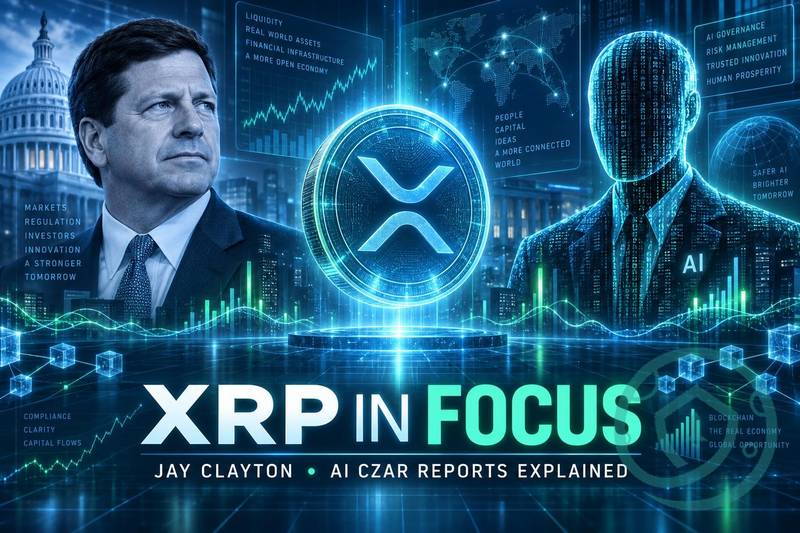
Reports circulating in political and financial media suggest former SEC Chair Jay Clayton is being considered for a role overseeing artificial intelligence policy in the United States, a development that has drawn attention from XRP market observers given Clayton's direct history with the token's regulatory treatment.
What the Jay Clayton AI czar reports say, and what remains unconfirmed
The reports describe Clayton as a potential candidate for a senior federal AI coordination role, sometimes described informally as an "AI czar," though no official appointment has been announced. No confirmed remit, title, reporting structure, or timeline has been publicly established as of this writing. For related coverage, see Cyber Revolution Summit Saudi Arabia 2026.
Clayton served as SEC Chair from 2017 to 2020. The agency's December 2020 complaint against Ripple Labs, filed in the final weeks of his tenure, alleged that XRP was sold as an unregistered security, initiating a multi-year legal dispute that became a landmark case for digital asset classification in the United States. For related coverage, see Cyber Revolution Summit Morocco 2026.
What is not established by available evidence
No direct link between a prospective AI policy role and any XRP-specific regulatory outcome has been supplied in available reporting. The headline pairing of Clayton with XRP reflects market interpretation, not a documented policy signal. An AI coordination mandate would not, on its face, carry jurisdiction over securities enforcement or digital asset classification. For related coverage, see CRYPTOCON SYDNEY RETURNS TO ICC SYDNEY WITH FREE GENERAL ADMISSION FOR 2026.
Why XRP watchers may be paying attention
Clayton's name carries specific weight inside the XRP community because the 2020 SEC complaint, filed during his final days as chair, is the event that defined years of legal and market uncertainty for the token. Any news attaching his name to a new federal role surfaces that association, even when the new role sits outside securities law entirely.
The broader context also matters for observers at the intersection of AI and crypto infrastructure. A federal AI coordination role could shape compute procurement policy, data governance frameworks, and the regulatory perimeter around AI agents that interact with on-chain systems. Those downstream effects, rather than direct XRP policy, are where crypto-adjacent AI infrastructure protocols such as those tracked on major market aggregators would feel the impact first.
XRP's regulatory trajectory has already drawn attention in contexts well beyond the original Ripple lawsuit. The SEC's handling of the XRP ETF review process and the Teucrium short fund delay illustrated how agency posture continues to shape market structure for the token independent of any single official's tenure.
Market participants treating the Clayton AI czar reports as a regulatory signal for XRP are extrapolating beyond what the available evidence supports. A federal AI role does not reopen the Ripple case, alter the existing court record, or shift SEC enforcement priorities on its own. Any such reading would be speculative.
For comparison, broader shifts in digital asset market dynamics, including cases where one asset's ETF structure outpaced XRP by significant margins, have historically been driven by regulatory filings and fund flows, not personnel reports.
What to watch for next
Three concrete confirmation points would upgrade this from a report to an actionable development: an official announcement of an appointment, a defined mandate that specifies whether the role covers digital assets or AI-blockchain infrastructure, and any public statement from Clayton addressing decentralized systems or token markets. Until those exist, the story remains in the category of personnel speculation with historical resonance for XRP holders rather than a discrete policy catalyst.
The convergence of AI governance and crypto infrastructure is a real and expanding policy frontier, covering inference compute procurement, AI agent wallets, and on-chain model governance. Whether a Clayton appointment would engage that frontier, or remain confined to traditional technology sectors, is the question that makes this report relevant to readers tracking the AI-crypto stack.
Disclaimer: This article is for informational purposes only and does not constitute financial or investment advice. Cryptocurrency and digital asset markets carry significant risk. Always do your own research before making decisions.
Read original article on aicryptocore.com