XRP Ledger's latest server software update has cleared the bar that matters most for network upgrades. But its adoption across the wider node network is lagging behind. The XRP Ledger is the
XRP Ledger's latest server software update has cleared the bar that matters most for network upgrades. But its adoption across the wider node network is lagging behind.
The XRP Ledger is the blockchain behind XRP, and it needs a network of computers to keep running. A "node" is one of those computers that stores a copy of the ledger's transaction history and helps pass information around the network, similar to how one computer on a shared file system keeps a synced copy of everyone's documents.
An "upgrade" like v3.2.0 is simply a new version of the software that those computers run, the same way your phone gets an iOS or Android update.
Not every node has to update instantly, and for a while, older and newer versions run side by side.
Related: XRP ledger gets shocking low score in new ranking
Validators clear the threshold, nodes don't
The software rolled out on June 15 was built to lower operating costs, improve stability, and make the network more appealing to institutional users. But the adoption tells two different stories depending on who's counting.
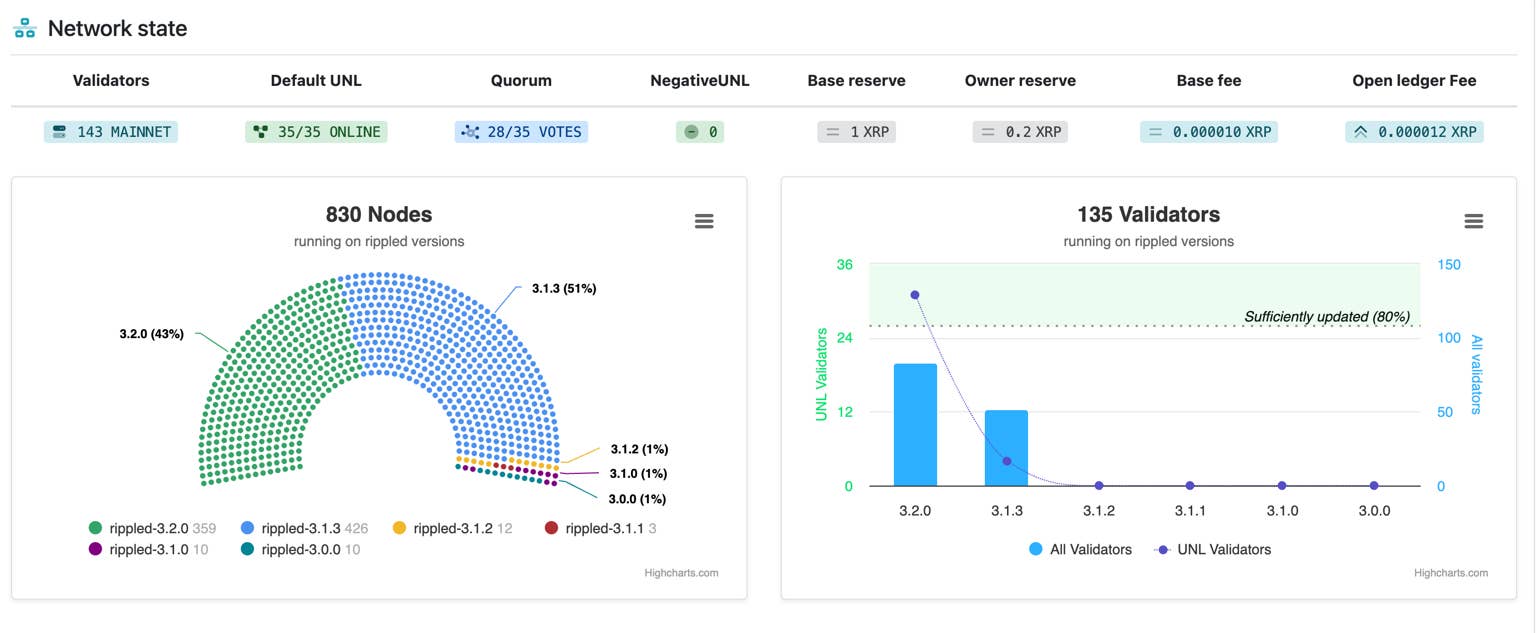
Of roughly 833 active nodes on the ledger, only about 43% are running v3.2.0, while 51% remain on the older v3.1.3, according to XRPScan data.
XRP nodes and validators as seen on XRPScan
But raw node numbers aren't what decides whether an upgrade actually takes hold across the network. That job belongs to a smaller, trusted group of nodes called the Unique Node List (UNL), or validators.
Think of them as the senior editors who get final sign-off on what makes it into the ledger's official record, versus the much larger group of nodes that just keep a copy of that record.
There are 35 validators on the default UNL, and 31 of them, or about 89%, have already moved to the new upgrade. That comfortably clears the 80% threshold the network requires. This will be sustained for two straight weeks, before a change is considered locked in.
Trending on TheStreet Roundtable
A security fix is still waiting on votes
Bundled with the software, but moving on a separate track, is something called an amendment called fixCleanup3_2_0.
Unlike the software rollout itself, an amendment is a formal on-ledger vote. Think of it like Congress voting on a bill rather than simply installing an update. Validators have to actively vote it in, and it needs that same 80% supermajority to pass.
This particular amendment packages several security fixes for newer features on the ledger, including single-asset vaults (a way to pool funds), permissioned decentralized exchanges (trading platforms with access controls), multi-purpose tokens, and the lending protocol that lets users borrow against tokenized assets.
It also adds checks meant to stop deleted accounts from leaving stray data behind, a bit like making sure a deleted file doesn't leave broken shortcuts scattered around a computer.
Ripple has voted in favor of the amendment, but a validator upgrading its software and that same validator voting the amendment through are two separate actions. And right now, only the first one is close to done.
Why the gap matters
Validators that don't upgrade before the amendment eventually carry the risk of falling into what the ledger calls an amendment-blocked state. It is essentially getting locked out of participating in the network, similar to how an old app can stop working once it falls too far behind on required updates.
That risk keeps the slower node-level adoption worth watching even though the validator numbers look solid.
For now, the upgrade has the support it needs where it counts, but the security fixes riding along with it are still waiting for the rest of the network to catch up.
Related: American veterans to receive $10,000 in XRP from Ripple